
Why Skills Matter More Than Titles In eLearning Careers
Employers are no longer zeroing in on work history or degrees when reviewing CVs. There's been a major shift toward skills-based hiring as organizations prioritize capabilities over credentials. They're looking for people who can navigate challenges and achieve shared goals thanks to their real-world experience and core competencies. While educational pursuits factor into the equation, there's no substitute for the unique talents you've built over the course of your career. The secret to successful eLearning job hunting is showcasing the top skills employers are looking for that you already possess, and honing the ones that are missing from this 2026 list.
What skills do employers want, and how do you make your CV stand out from the rest? Instructional Design, content strategy, and AI know-how are just a few of the things that pop off the screen when employers peruse your application.
At A Glance
- Employers focus more on skills than job titles in eLearning hiring.
- Technical, analytical, and experience design skills are increasingly important.
- Soft skills like communication and adaptability remain critical.
- Strong portfolios help candidates stand out more than formal qualifications.
How Employers Evaluate Top Skills Ιn eLearning Candidates
Here are a few factors that come into play when employers are assessing your skillsets.
1. CVs Vs. Portfolios That Showcase The Top Skills Employers Look For
CVs are usually more for verifying what you've done rather than how you did or how well you performed in past roles. For example, how many years have you held a position? On the other hand, portfolios dive deeper into how you achieved outcomes, problems you solved, and methods you used.
2. Practical Experience & Tools
How did you leverage the latest technologies to accomplish goals and learning objectives? Employers want to know how you applied eLearning skills in real-world situations. For instance, have you worked with SMEs? Did you deliver projects within budget? How have you handled stakeholder feedback? Do you know when to use certain tools and why?
3. Transferable Skills Across Roles
Whether you're new to eLearning or are a seasoned EdTech pro embarking on a new career path, employers need to know that you possess core skills that can be applied in other contexts. As an example, your communication skills make you an SME, but they also enable you to convert business goals into learning objectives as an eLearning developer.
Top Technical eLearning Skills Employers Look For
From mastering Instructional Design principles to making the most of AI, here are the technical skills employers look for in education.
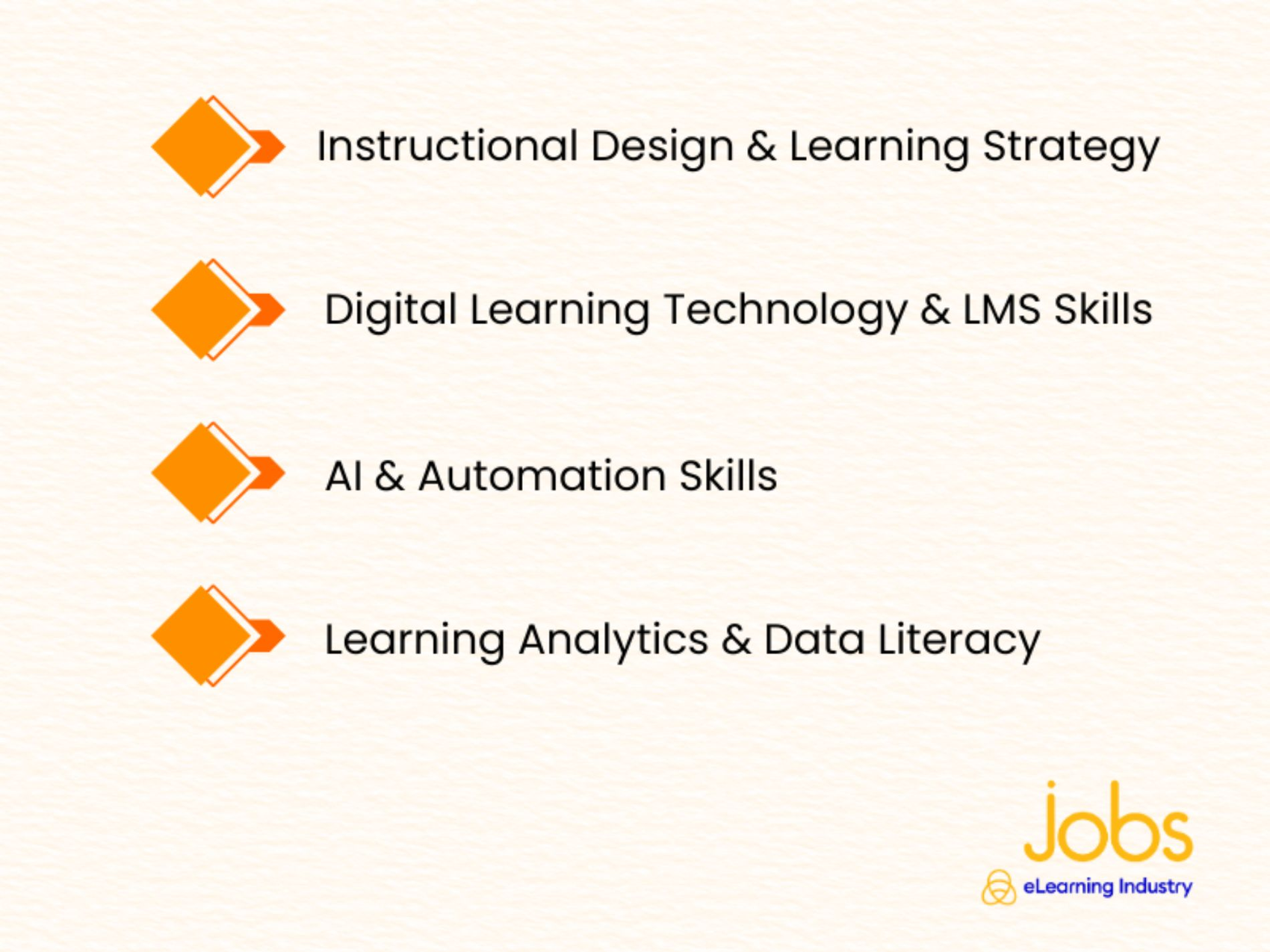
1. Instructional Design & Learning Strategy
One of the decision-making factors that carries the most weight is whether eLearning pros can actually create experiences that drive real performance improvement. Core Instructional Design skills include needs analysis, writing measurable learning objectives based on organizational aims, structuring content to make information stick, and selecting appropriate instructional methodologies and assessments.
It's not merely a matter of covering all the key takeaways, but delivering the information in a way that enables learners to truly connect with the content. Relevance, context, and preferences are all crucial aspects to consider. This approach ensures that training programs address real gaps and support behavioral change, not just knowledge transfer. These digital learning skills remain foundational because tools, technologies, ID models, and formats evolve, but the ability to pinpoint problems and design purposeful, scalable L&D solutions underpins the entire development process.
2. Digital Learning Technology & LMS Skills
Digital learning technology and LMS skills center on using (and sometimes adapting) learning platforms to deliver engaging, scalable training. This includes working with a tech stack of LMSs, LXPs, and authoring tools to manage users, track learning data, and build interactive digital content. You also need to be able to determine whether tools will seamlessly integrate with your existing platforms to avoid tech barriers.
Platform adaptability is another essential part of these eLearning skills, as organizations often change systems or integrate multiple technologies into their software suite to meet their evolving needs. Learning pros must quickly acclimate to new tools and understand not just what they can do, but how they support different learning strategies. Lastly, tech fluency is nonnegotiable because L&D relies on seamless delivery, accurate tracking, and a learner-centric experience by implementing the right tech for the task.
3. AI & Automation Skills In Digital Learning
These skills employers look for in education hinge on using AI-powered tools to streamline how organizations design, deliver, and maintain L&D initiatives. For instance, AI-assisted content creation supports faster drafting of learning materials, quizzes, scripts, and multimedia. This gives designers the time and resources to focus more on strategy and quality, rather than carrying out mundane tasks.
Automation and AI also enable greater personalization and learning efficiency. Adaptive learning paths, targeted recommendations, streamlined content updates, and more advanced data analysis are just a few examples of AI applications. Employers increasingly ask for these skills because AI helps teams scale learning, cut down development time, and quickly adapt to changing business needs without compromising learner experience.
4. Learning Analytics & Data Literacy
Using evidence to evaluate and improve learning initiatives is one of the most critical components of L&D. Metrics like completion rates, assessment scores, user engagement, and performance outcomes help you determine whether milestones are being met and if you may need to adjust content accordingly. For instance, slow learner progression might indicate that a module is too challenging or that learners are disinterested because it lacks relevance.
Reporting impact also involves clearly communicating these insights to stakeholders, linking learning results to business goals, and driving performance improvements. It goes beyond merely evaluating charts and graphs to pinpoint training pain points. In fact, this is one of the top skills employers are looking for because it allows you to turn raw data into action plans that may involve content refreshers, new delivery methods, and updated learning strategies. This ensures that learning is not just handed over to employees based on assumptions, but continuously optimized based on meaningful, actionable insights.
In-Demand Creative & Experience Design Skills Employers Look For
Paving a career path in eLearning also requires a healthy dose of creativity and design know-how. Let's look at the top skills for eLearning professionals that cover strategy, storytelling, and learner-experience building.
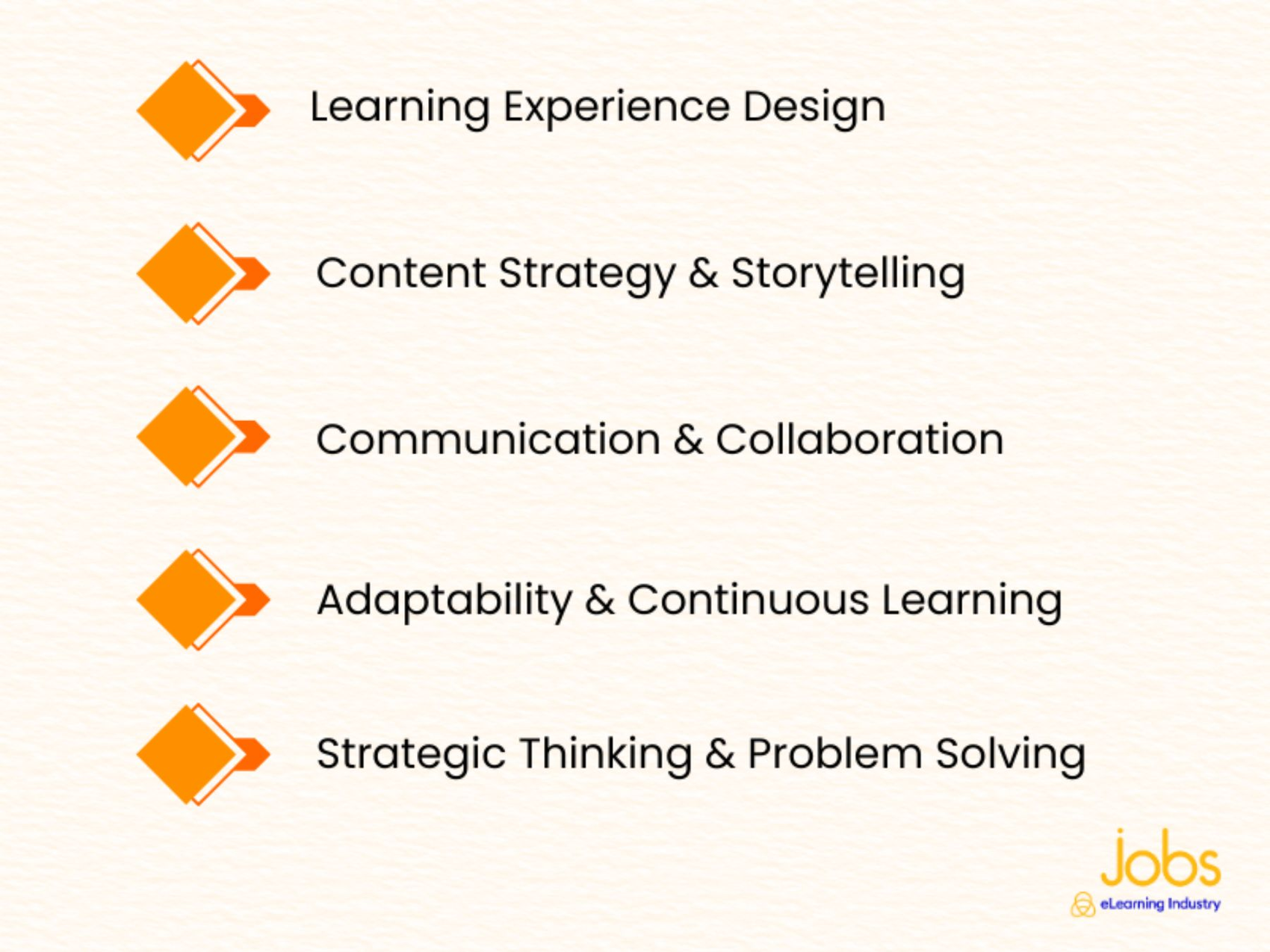
5. Learning Experience Design (LX & UX Thinking)
Learning Experience (LX) design applies UX-centered thinking to build meaningful L&D journeys that are learner-centric. At its core, learners' needs, goals, motivations, and prior knowledge lay the groundwork to create content and activities that resonate with every member of your audience. As such, a variety of soft skills fall under this umbrella, ranging from empathy to active listening.
Engagement and usability are central to LX design in order to create purposeful experiences. Ensuring a clear structure, intuitive interfaces, accessible design, and timely feedback helps reduce cognitive load and keep learners focused on the task at hand. These eLearning skills give you the power to create seamless, engaging learning experiences that support understanding, retention, and real-world application.
6. Content Strategy & Storytelling
You must be able to design learning materials that are coherent and impactful to achieve the objectives. Structuring learning journeys involves organizing content into logical sequences that guide learners from foundational concepts to a deeper understanding of the subject matter. Likewise, storytelling techniques help to contextualize all of the key takeaways, making learning more relatable and memorable on a personal level. For example, you might use simple language, practical examples, and well-defined objectives to boost comprehension and avoid overload. By focusing on structure, pacing, and narrative flow, these Instructional Design skills help transform even the most complex topics into compelling learning experiences.
Top Soft Skills Employers Look For In eLearning Professionals
Which soft skills for eLearning professionals should you hone to make your CV even stronger? It's time to delve into interpersonal abilities that are integral for eLearning jobs.
7. Communication & Collaboration
Working with Subject Matter Experts and stakeholders requires clear communication to collect insights, clarify expectations, and turn expertise into learner-friendly content. However, strong collaboration is just as critical to ensure that everyone is aligned when it comes to the learning objectives, organizational goals, and technical constraints. These digital learning skills involve active listening, giving and receiving feedback, and balancing a wide range of perspectives. Building your communication and collaboration skills also helps create smoother project workflows, avoid misunderstandings, and build trust among team members. In short, this soft-skill combo allows you to develop high-quality eLearning experiences that are relevant, accurate, and cater to both learner needs and stakeholder priorities.
8. Adaptability & Continuous Learning
A prerequisite for any eLearning career is the ability to quickly adapt to new technologies, instructional approaches, and learner expectations based on organizational needs. Keeping up with the latest tools and trends involves researching emerging platforms, authoring tools, and learning technologies, as well as testing out new features. First and foremost, it's about experimentation, problem-solving, and ongoing skill development to improve the quality of your work and come up with innovative learning solutions. Every employer is looking for candidates who can keep learning initiatives current and engaging to meet business demands.
9. Strategic Thinking & Problem Solving
Understanding the "why" behind training requests is always an essential step in the development process. Therefore, you need to pinpoint knowledge gaps, clarify business goals, and narrow down the desired outcomes. This is one of the top skills employers look for because it focuses on identifying the root cause rather than the symptoms.
Truly strategic thinkers are able to analyze constraints, learner needs, and available resources. Then, strong problem-solving skills come into play to choose eLearning approaches that are targeted and promote continuous improvement. Together, these future skills for eLearning careers help L&D pros deliver impactful learning experiences that solve problems, drive performance, and demonstrate measurable value for organizations.
How To Build And Demonstrate The Top Skills Employers Look For
First things first, you need to differentiate between upskilling and reskilling. While upskilling deepens your current skillset and level of expertise, reskilling helps you pivot into new job roles and take on new responsibilities. You should also adopt a portfolio-first mindset by creating real projects, not just listing certificates you've earned over the course of your career. For example, including storyboards, courses, evaluations, and performance solutions that have solved actual problems. Keep in mind that your portfolio should tell a clear narrative of your process and the impact it achieved. Last but not least, focus on showing skills clearly on your CV by aligning achievements with job requirements. Be sure to include metrics, tools, and outcomes rather than generic tasks for titles, and continuously update examples as technologies evolve.
How Employers Assess Top eLearning Skills During Hiring
Employers typically assess the top skills for eLearning professionals through multiple rounds of vetting. This is all designed to validate expertise, practical thinking, decision-making, and even cultural fit. CV screening is often the first filter, where recruiters look for relevant technical expertise and whether your talents align with the role. Then, assignments and case studies test how candidates approach real problems. For instance, are you able to build a learning solution that improves engagement and achieves measurable outcomes? Finally, interviews and real-world scenarios explore a variety of creative and soft skills, including decision-making, collaboration, and adaptability. You should be able to explain your process and justify the choices you made to demonstrate that your skills translate into meaningful workplace impact.
Find Roles That Match Your Skillset
You've invested time, energy, and resources into curating your skillset. Make sure that all your hard work has paid off by choosing the best job-hunting approach. As an example, opt for a job posting platform that allows you to see jobs matching your skills to speed up the search and focus on roles that align with your expertise.
You should also prepare your CV for better role matches, such as highlighting skill strengths that pertain to certain expectations and responsibilities. Lastly, continuous learning is a big part of forging successful careers in this field. So, always be on the lookout for talent-building opportunities that make you even more competitive in the job seekers' market.
Are you currently job hunting in L&D? Upload your resume to highlight your strongest skills!