What Makes A Great Cover Letter In 2026
In 2026, a great cover letter is based on speed, clarity, and relevance. Recruiters skim quickly, so the opening lines need to immediately state who you are, the role you want, and the value you are going to bring. Long introductions and generic enthusiasm simply won't hold their attention, and you must be able to show specific impact. Another key component of cover letter samples is opting for relevance over formality. Instead of polished but vague terms and jargon, candidates should align their letters with the job description, highlight measurable achievements, and demonstrate how their talents connect with the company's needs. When it comes to tone, it's often best to be slightly conversational to make it feel authentic.
Using templates can help you maintain a consistent structure and ensure you include key elements, such as a strong hook or a clear call to action. However, you need to customize templates rather than just copying them to adjust keywords, examples, and tone to match each role. That's where this guide steps in, offering cover letter samples and templates you can use to land an interview.
Key Takeaways
- A strong cover letter focuses on relevance, not length.
- Templates help structure your message quickly.
- Customization is key for better results.
- Real examples make it easier to write your own.
Cover Letter Sample Template For Any Job
A strong universal cover letter template works for almost any job because it gives you a clear structure that you can easily customize.
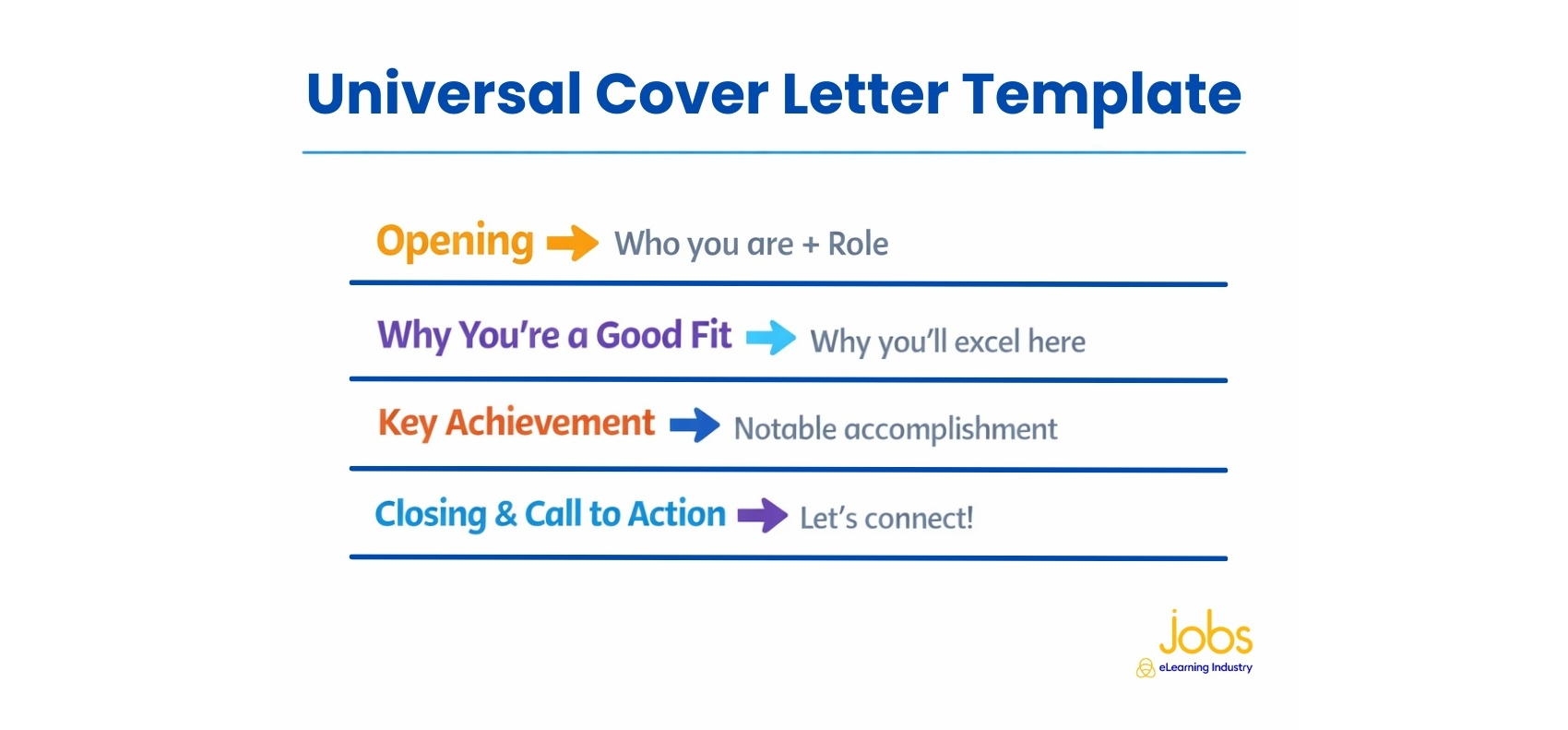
Universal Cover Letter Template
Opening (who you are + role): Start with a brief opening that introduces who you are and the role you're applying for. This should be direct and tailored. So, avoid generic phrases.
Why you're a good fit: Next, explain why you're a good fit. Connect your skills and experience to the company's needs, showing you understand the role. The goal is to keep it concise but specific.
Key achievement: Include one key achievement that demonstrates your value. This could be a measurable result or a meaningful contribution that proves your impact.
Closing + CTA: Close with a confident summary and a clear call to action. You should express interest in discussing the role further and thank the reader for taking the time to review it.
This structure keeps your letter focused and adaptable across different industries while still allowing for personalization.
Quick Cover Letter Formula
Hook → Role match → Key achievement → Clear closing
 How To Customize This Template For Any Job
The first step in customizing this cover letter template is adjusting the tone to match the company culture. A startup may expect a more conversational, energetic voice, while a corporate role may require a more polished and formal approach. Paying attention to how the company communicates in job listings, social media posts, and on its site helps you strike the right balance.
Next, match the job description by identifying keywords, required skills, and priorities mentioned in the posting, then reflect them naturally in your letter. This shows that you're aligned and increases your chances of passing automated screening tools.
It's just as important to highlight only the most relevant skills. Instead of listing everything, focus on experiences that directly connect to the role. Choose examples that demonstrate clear value and real-world impact. Taking all of these steps can help you avoid "template misuse" that might make your cover letter feel like a copy-and-paste job.
Cover Letter Samples By Role
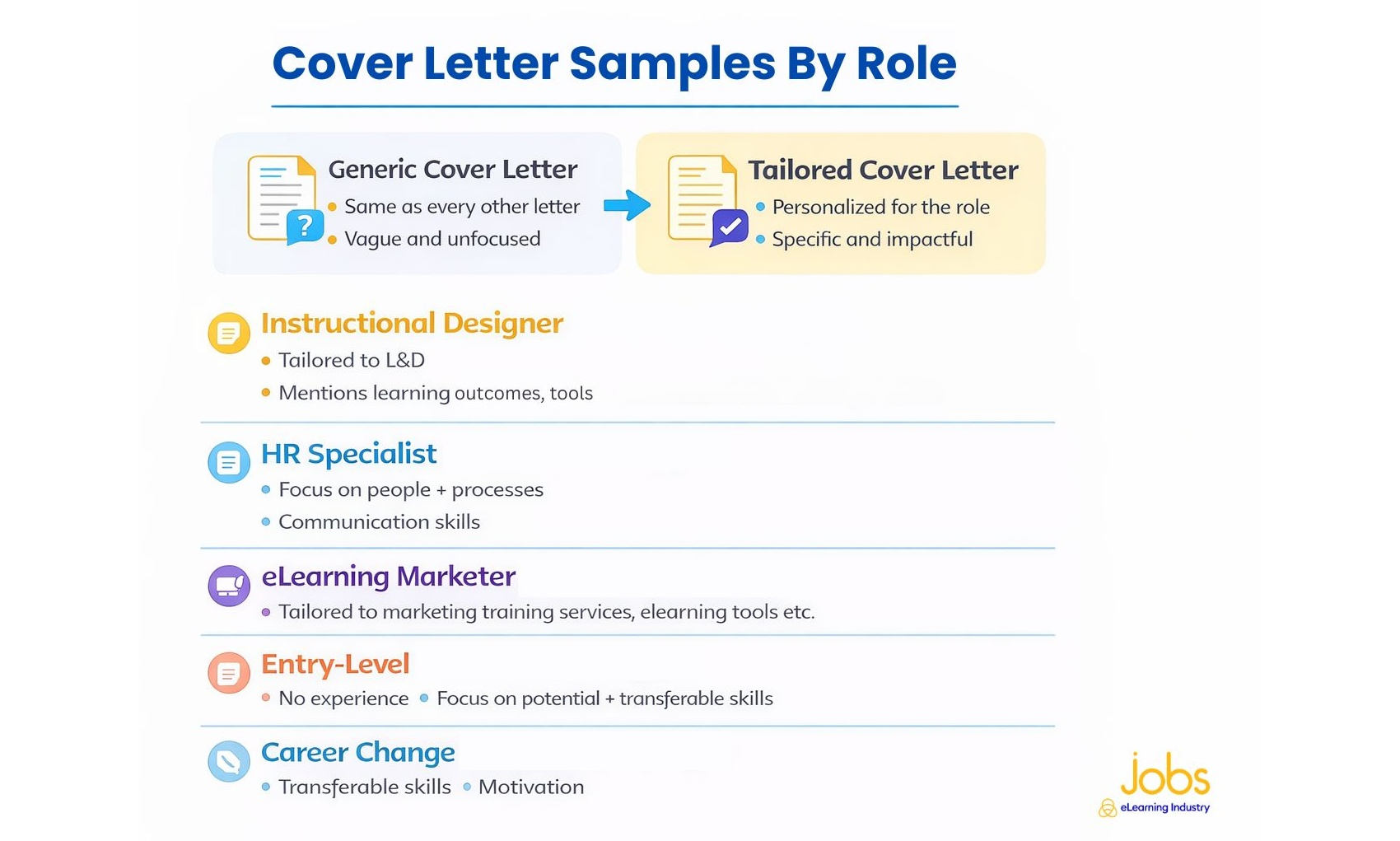
Cover letters have the greatest impact when they reflect the expectations, language, and priorities of a specific role. While a strong structure is key when planning how to write a cover letter, the content should shift depending on the position. Below are tailored cover letter samples 2026 by role that focus on what hiring managers in the L&D field are looking for.
Instructional Designer Cover Letter Sample
Dear Hiring Manager,
Designing learning experiences that deliver measurable outcomes has been the focus of my work in L&D. With hands-on experience building engaging, learner-centered content, I am excited about the opportunity to contribute to your team as an Instructional Designer.
In my previous role, I partnered with Subject Matter Experts to turn complex concepts into structured, accessible training programs. Using tools such as A, B, and various LMS platforms, I developed interactive modules that clearly aligned with learning objectives. These programs led to improved learner engagement and increased knowledge retention and course completion rates.
My approach combines Instructional Design principles with data-driven evaluation. I regularly assess learning outcomes and refine content based on feedback and performance metrics to ensure that training delivers real business impact.
Your organization's focus on continuous development aligns with my passion for creating meaningful learning solutions. I would welcome the opportunity to contribute my expertise and skillset to your L&D initiatives.
Sincerely,
[Your Name]
HR Specialist Cover Letter Sample
Dear Hiring Manager,
Supporting both people and processes is the foundation of Human Resources, and this balance has guided my experience as an HR professional. The opportunity to contribute as an HR Specialist is particularly exciting given your organization's commitment to employee engagement and operational excellence.
My background includes managing recruitment coordination, onboarding, and employee relations while ensuring compliance with internal policies. I have worked to streamline HR processes and improve efficiency without compromising the employee experience. For example, refining onboarding workflows for my previous employer reduced administrative delays and helped new hires integrate more smoothly into their teams.
Strong communication skills have been critical in my work. Whether addressing employee concerns, facilitating discussions, or collaborating with leadership, I have always focused on clarity, empathy, and professionalism. This approach has helped build trust and maintain a positive workplace culture.
I am looking forward to bringing my skills in communication, organization, and process improvement to your HR team. Thank you for your time and consideration.
Sincerely,
[Your Name]
eLearning Marketer Cover Letter Sample
Dear Hiring Manager,
Connecting learners with meaningful training solutions calls for both marketing insight and an understanding of digital education. With experience promoting eLearning products and services, I am excited about the opportunity to contribute as an eLearning Marketer.
In previous roles, I developed targeted campaigns to increase visibility and enrollment for online courses. By combining content marketing, email strategies, and social media outreach, I improved engagement and conversion rates. I also used analytics tools to refine messaging and ensure that campaigns resonated with specific audience segments.
Collaboration with Instructional Designers and product teams enabled me to clearly communicate the course's value, including its learning outcomes and practical benefits. My familiarity with eLearning platforms and tools helps me translate technical features into compelling, user-focused messaging for campaigns.
Your organization's innovative approach to training services reflects my passion for marketing solutions that drive real learning impact. I would welcome the opportunity to help expand your reach and connect more learners to your offerings.
Sincerely,
[Your Name]
Entry-Level Cover Letter Sample
Dear Hiring Manager,
Starting a professional career in your organization offers me an exciting opportunity to apply my skills, grow, and contribute to meaningful work. Although I am at the beginning of my career, I bring strong transferable skills, curiosity, and a willingness to learn quickly.
During my academic experience, I worked on projects that required teamwork, problem-solving, and clear communication. One notable example involved collaborating with a group to analyze data and present recommendations, which strengthened both my analytical thinking and ability to convey ideas clearly.
I have also developed strong organizational and time management skills by balancing coursework and extracurricular activities. These experiences have prepared me to adapt to new challenges and contribute in a professional setting.
What draws me most to your company is its focus on development and innovation. I am eager to learn from experienced professionals while adding value through my dedication and fresh perspective.
Thank you for considering my application. I look forward to the possibility of contributing to your team.
Sincerely,
[Your Name]
Career Change Cover Letter Sample
Dear Hiring Manager,
Transitioning into this field is driven by both professional growth and a strong interest in the work your organization is doing. While my background is in a different industry, the skills I have developed are highly transferable and relevant to this role.
In my previous field, I relied on strong problem-solving, communication, and project management skills. I regularly coordinated tasks across teams, managed deadlines, and adapted to changing priorities, skills directly linked to this position. In addition, I have taken proactive steps to build knowledge in this new area through courses and independent learning.
This career change is not a sudden shift but a well-considered move toward work that better aligns with my interests and long-term goals. I am motivated, adaptable, and ready to apply my existing strengths in a new context.
I would welcome the opportunity to discuss how my background and perspective can contribute to your team. Thank you for your time and consideration.
Sincerely,
[Your Name]
These samples show how a single format can be modified across roles by concentrating on what matters most: outcomes for Instructional Designers, people and processes for HR, conversion and messaging for marketers, potential for entry-level candidates, and transferable talents for career changers. The key is not to rewrite absolutely everything, but to shift focus so each letter feels targeted, relevant, and custom-tailored.
Upload your CV and get matched with jobs!
 What Recruiters Actually Look For In A Cover Letter
Recruiters are looking for substance over style. The first thing they scan for is relevance. A strong letter clearly connects your background to the specific role, and shows you know what the job requires and how you fit.
Clarity is just as important. Recruiters often skim letters quickly, so your message needs to be direct and easy to follow. Simple language, short paragraphs, and a clear structure make it easier for them to quickly understand your value.
They also look for proof of impact. Instead of simply listing responsibilities in job cover letter examples, highlight results, such as what you improved, solved, or achieved. Even one concrete example can make a big difference and help your letter stand out. Last but not least, motivation matters. Recruiters want to see why you're interested in that role or company, not just any job. This signals that you're genuine and want to put in the effort.
What doesn't matter as much is length and overly fancy language. A concise, focused letter with real substance will always fare better than a long, polished one full of fluff.
Common Cover Letter Mistakes To Avoid
One of the most common cover letter mistakes is relying on copy-paste templates without editing them. While templates can provide structure, not tailoring them to the job or company makes your application feel impersonal and careless. Keep in mind that recruiters can quickly spot generic wording that doesn't show genuine interest.
Another pitfall to avoid is being too generic. Phrases like "I am a hardworking team player" or "I am passionate about this opportunity" don't add much value unless they're backed by specific examples. Employers are looking for candidates who clearly understand the role and can explain why they are a strong fit.
Another frequent mistake is simply repeating content from the CV. A cover letter should complement your resume, not repeat it word-for-word. Instead of listing the same experiences, use the letter to highlight key achievements, explain career transitions, or demonstrate how your skills align with the company's needs.
Finally, steer clear of overly long paragraphs. Dense blocks of text are difficult to read and may prevent hiring managers from fully engaging. Clear, concise paragraphs improve readability and ensure your main points stand out, even at a glance.
How To Write A Cover Letter That Gets Interviews
Writing a cover letter that leads to interviews starts by making a great first impression. When writing the opening, avoid predictable phrases like "I am writing to apply…" and instead start with something engaging and specific. For example, briefly mention a key achievement, a shared value with the company, or a clear reason you're actually excited about the job.
Another important element in cover letter examples is focusing on results rather than simply listing responsibilities. Employers are less interested in what you were supposed to do and more interested in what you actually accomplished in past roles. Instead of saying you "managed eLearning social media accounts," highlight outcomes like "increased engagement by 40% over three months."
An effective cover letter is typically around 200–300 words. This is long enough to convey value but still short enough to hold their attention. Aim for concise paragraphs and straightforward language. Also, each sentence should serve a purpose and earn its place in your letter, whether it showcases your achievements, aligns your skills with the role, or expresses a genuine interest in the company.
Use Your Cover Letter To Stand Out In Competitive Roles
In competitive job markets, a carefully crafted cover letter can be what sets you apart. The key is tailoring your approach for each application. Instead of sending the same letter to every hiring manager, tailor your message to the company's values, the job's priorities, and the organization's tone and messaging.
You should also match your skills to the employer's specific needs. Read the job description and identify what the company is really looking for, whether it's someone who has strong problem-solving skills, leadership experience, or technical expertise. Then, highlight examples that directly show them how your ability addresses those needs.
Lastly, think of your CV and cover letter as a total package rather than separate documents. Your CV provides structure by mapping out your experience, education, and skills, while your cover letter adds context and personality. Use it to explain key achievements, clarify career choices, or emphasize how your background fits the job. This dynamic duo of documents works together to create a stronger, more compelling idea of who you are and what you bring to the table, which increases your chances of landing an interview.