
Why Job Interview Preparation Matters More In 2026
Are you currently on a mission to explore open roles? In 2026, interview preparation matters more than ever because the hiring landscape is more competitive and selective. Global access to remote roles means candidates no longer compete locally, but nationally and internationally.
With AI-assisted screening, structured interviews, and data-driven assessments becoming standard across the recruitment board, only well-prepared candidates who know the top job interview questions move to the next phase. Another major shift is the surge in skills-based hiring. Employers now prioritize demonstrated ability over degrees or job titles. Practical assessments, portfolio reviews, and real-world problem-solving exercises are the norm today.
In this competitive job seekers' market, preparation beats memorization. Recruiters can easily spot scripted answers. What stands out is structured thinking, clear communication, and relevant examples that are backed by experience.
This guide features job interview questions and answers, common mistakes to avoid, and prep tips to help you land your next role.
Key Takeaways
- Employers evaluate both skills and problem-solving ability.
- Behavioral interview questions are increasingly common.
- Structured answers using real examples improve outcomes.
- Preparation tailored to the role significantly increases success.
Top Job Interview Questions In 2026
Interviewing requires more than polished responses. It involves structured thinking, business awareness, and authentic communication. The strongest candidates prepare structured answers, use real examples with outcomes, connect goals with company strategy, and show their confidence without sounding scripted. By mastering these top job interview questions 2026, you can increase your chances of standing out from the crowd.
1. Tell Me About Yourself
This question sets the tone for the interview. Employers are not asking for your whole life story. They want a concise professional summary that explains who you are, what you do, and why you're relevant to the position. They are assessing your communication skills, confidence, and ability to prioritize important information. Instead of repeating everything verbatim on your resume or sharing personal history, give them a structured response that highlights your career progression and value.
It's usually best to go with a Present–Past–Future framework:
Present: Briefly describe your current role and key focus.
Past: Highlight 1–2 experiences that prepared you for this opportunity.
Future: Connect your background to why this role excites you.
Try to avoid sharing unrelated personal details, rambling without structure, and (of course) speaking negatively about previous employers.
Practical example:
"I'm currently a project coordinator managing cross-functional teams to deliver digital eLearning campaigns on schedule. Previously, I worked in operations, developing strong process-optimization skills that reduced turnaround time by 20%. I'm now looking to bring my analytical and leadership experience to a role where I can drive strategic initiatives, which is why I'm applying for this position."
2. Why Do You Want This Job?
Employers want to understand your motivation. They are assessing whether you are genuinely interested and understand the company's mission or are simply applying broadly to multiple job postings. Generic answers are easy to spot, especially with structured scoring systems in place. Well-prepared candidates show that they've done their homework and can explain how their skills support company objectives.
You should be able to:
- Demonstrate research of the company's strategy, including their products or services, as well as their corporate values
- Know about their recent initiatives or expansion plans
- Show alignment between your background and the role's responsibilities
- Explain why this position fits your long-term goals
Avoid generic responses like "It's a great company." Instead, reference specific initiatives, products, or growth areas that actually interest you.
Practical example:
"I'm drawn to this role because of your company's expansion into AI-driven learning analytics. My background in data analysis and automation aligns with this. I'm excited about working with a team that is shaping how businesses leverage real-time insights to improve L&D outcomes."
3. What Are Your Strengths And Weaknesses?
This is often one of the hardest interview questions to answer. You need to frame your strengths strategically. So, choose ones that are relevant to the job description, and then back them up with measurable examples. Employers look for applied skills versus abstract traits. For instance, saying that you're "hardworking" is a general response. On the other hand, telling the interviewer that you "excel at simplifying complex data into actionable insights. In my current role, I built a learning dashboard that reduced reporting time by 30%," is a solid answer.
You also need to be able to discuss weaknesses honestly. Identify a real (but manageable) area of improvement, then explain the steps you're taking to improve in your job interview question response. Once again, avoid vague answers like "I'm a perfectionist" or "I work too hard."
Practical example:
"One of my strengths is stakeholder communication. I've led monthly cross-department meetings that improved transparency and reduced delays by 15%. A weakness I identified earlier in my career was delegating tasks. I had a tendency to take on too much myself. So, I've since started using task-tracking tools and now assign more responsibilities to improve productivity within the team."
4. Describe A Challenge You Faced At Work
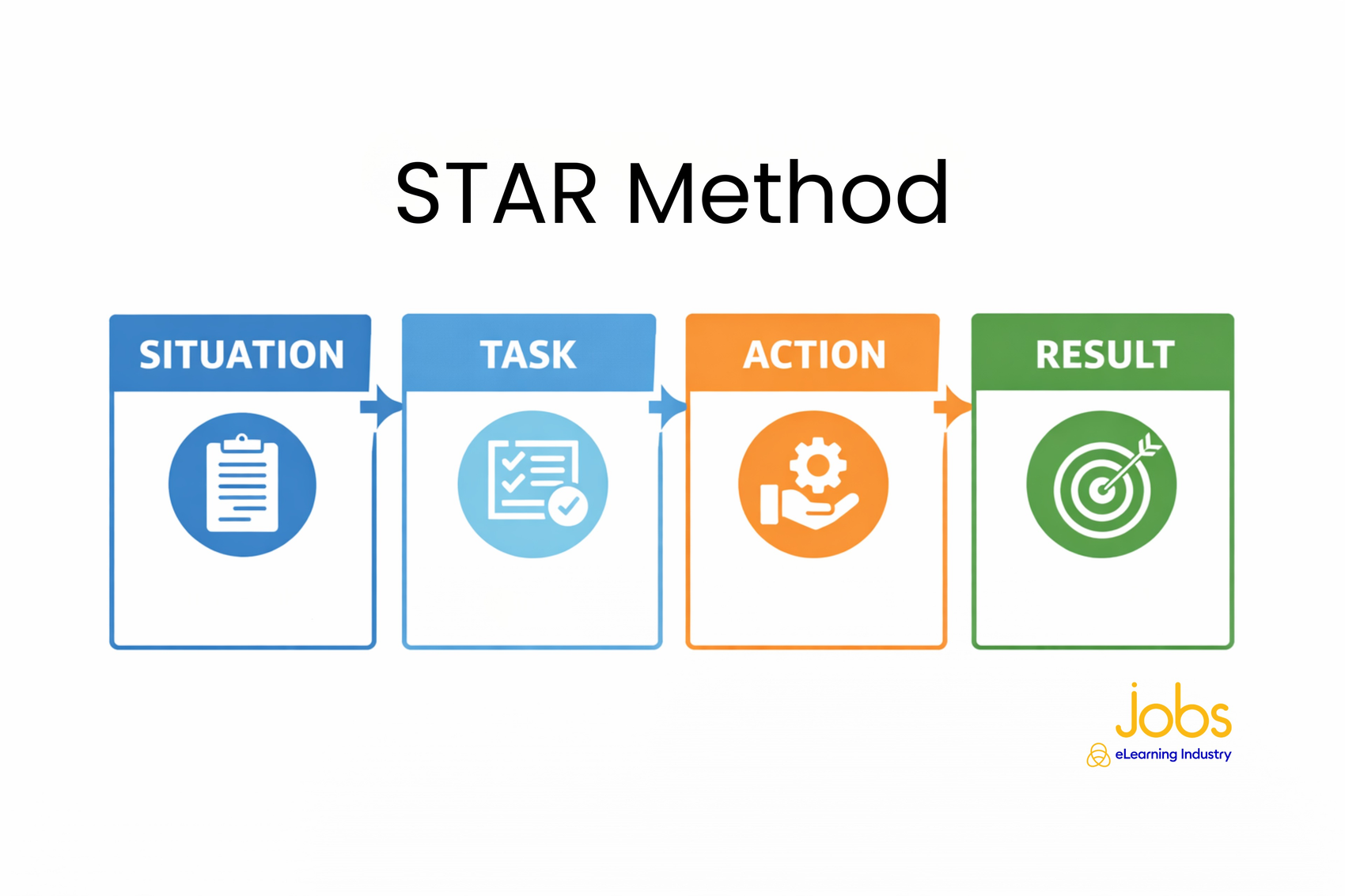
Behavioral questions are more common today, as employers believe past performance predicts future behavior. The ideal way to respond is by using the STAR method (Situation, Task, Action, Result) to make sure that your answer is organized and focused on results. Employers are looking for resilience, accountability, and problem-solving skills in this part of the interview. Here's a quick breakdown of STAR:
- Situation: Explain the context.
- Task: Highlight what your responsibility was.
- Action: Outline what you did.
- Result: Explain the measurable outcome that was achieved.
Practical example:
"During an eLearning software product launch, our team faced unexpected development delays (Situation). As the project lead, I was responsible for keeping the timeline intact (Task). I coordinated with internal teams and external stakeholders, revised delivery schedules, and adjusted internal milestones (Action). As a result, we launched only one week behind schedule instead of a projected month-long delay, which allowed us to retain 90% of the projected revenue (Result)."
 5. Why Should We Hire You?
This common job interview question is your chance to differentiate yourself. Many candidates list qualifications, but you need to connect capabilities to business value. Employers want to understand how you'll contribute to the outcomes, not just complete tasks. You should highlight a key strength, show proof of past impact, and link your skills to the company's needs. Here are a few focus areas when crafting your interview response:
- Revenue growth
- Cost savings
- Productivity Improvements
- Risk reduction
- Customer satisfaction
Practical example:
"You should hire me because I bring technical expertise and strategic thinking. In my last role, I automated L&D reporting processes that saved 10 hours per week and improved accuracy. Given your focus on scaling operations, I can contribute to optimizing workflows and driving long-term growth from day one."
6. Where Do You See Yourself In 5 Years?
The key with this top job interview question is to show that you're ambitious without any red flags. For instance, if you plan to leave soon, expect a quick promotion without merit, or if you're unsure where your career is heading. You also need to align with the company's growth by including the skills you want to develop, responsibilities you can take on, and how you'll help them achieve their goals.
Practical example:
"In five years, I see myself leading larger strategic L&D projects and mentoring junior team members. I'm especially interested in developing my expertise in learning analytics to create even more impactful training programs that bridge gaps and improve employee performance."
7. Tell Me About A Time You Worked In A Team
Teamwork is particularly crucial in hybrid and remote environments. This question helps hiring managers evaluate communication, adaptability, and accountability. A big part of this is conflict resolution, which includes awareness and respect for diverse points of view. Focus on your specific role within the team, how you handled differing opinions, and the measurable outcome the team achieved through solid collaboration.
Practical example (using the STAR format):
"Our L&D and IT teams had differing priorities during a compliance training rollout (Situation). As the project coordinator (Task), I organized a joint planning session to align expectations (Action). We clarified deliverables and set shared performance metrics. The training program was launched on schedule, with a 50% reduction in seat time, and we improved interdepartmental communication (Result)."
8. What Are Your Salary Expectations?
It's best to go with a research-based answer strategy. Fortunately, online compensation tools and salary transparency regulations make it easier to set your expectations before the interview. You should review salary data on a platform with a good track record, factor in location and level of experience, and set a range you're comfortable with.
A mistake that many candidates make is anchoring too low. Avoid a single number and respond with a range that you've already researched to show them that you're prepared and don't undervalue your capabilities. That said, you should also keep things flexible when it comes to negotiations.
Practical example:
"Based on my experience, market research, and the responsibilities outlined in the job posting, I believe a range between $85,000 and $95,000 is appropriate. However, I'm open to discussing the full compensation package."
9. Do You Have Any Questions for Us?
This final question is often underestimated when prepping for interviews, but employers see it as a way to gauge your curiosity and engagement. Thoughtful questions signal to them that you've prepared and have a long-term interest in the role. Here are a few areas you can cover in this portion of the interview:
- Team goals and challenges
- Performance expectations
- Company growth plans
- Professional development opportunities
- Success metrics for the role
Practical examples:
- "What does success look like in the first 6 months?"
- "What are the team's biggest priorities this year?"
- "How do you support employee growth and development?"
Avoid questions that involve basic information that's readily available online or that show recruiters you're already thinking about PTO and benefits.
Top Job Interview Questions: Behavioral Vs Technical Questions
Understanding the difference between behavioral and technical interview questions is so important because they evaluate very different aspects of your qualifications.
Technical interview questions focus on job-specific knowledge and hard skills. These may include coding challenges, case studies, or role-specific problem-solving tasks. Hiring managers use technical questions to evaluate your competency, accuracy, and level of expertise. For example, technology-driven organizations often test practical skills through real-world simulations or assessments to determine if a candidate can perform certain tasks.
On the other hand, behavioral questions help interviewers understand how a candidate has handled past situations. These questions typically begin with phrases like "Tell me about a time when…" and center more on communication, adaptability, leadership, and problem-solving. Employers look at qualities such as emotional intelligence, collaboration, and decision-making by spotting patterns in past behavior.
Behavioral questions usually take center stage in interviews because having technical skills alone is no longer enough. Many employers recognize that technical abilities can be trained or upgraded, but soft skills like as resilience, teamwork, and accountability are harder to develop quickly. Behavioral questions also help hiring managers predict how candidates will respond to pressure, conflict, stress, and change if they do land the job.

How To Structure Strong Interview Answers
As mentioned earlier, using the STAR method interview answers helps you provide clear, relevant, and concise responses. Not to mention, avoid rambling on if interview anxiety is a factor. As a quick refresher, start by briefly describing the context (Situation) and the responsibility you took on (Task). Then explain the specific steps involved (Action), and conclude with measurable outcomes (Result).
Also, many hiring managers want outcome-focused answers that tell them not just what you did but what you accomplished. Whenever possible, quantify the impact. For example, mention percentage improvements, revenue growth, or increases in customer satisfaction scores.
Finally, clarity should always take priority over elaborate storytelling. While context is helpful for interviewers, involved backstories distract from the message you're really trying to get across. So, keep explanations concise and focus on decisions, actions, and outcomes instead of unnecessary details.
Virtual Job Interview Questions And Preparation Tips
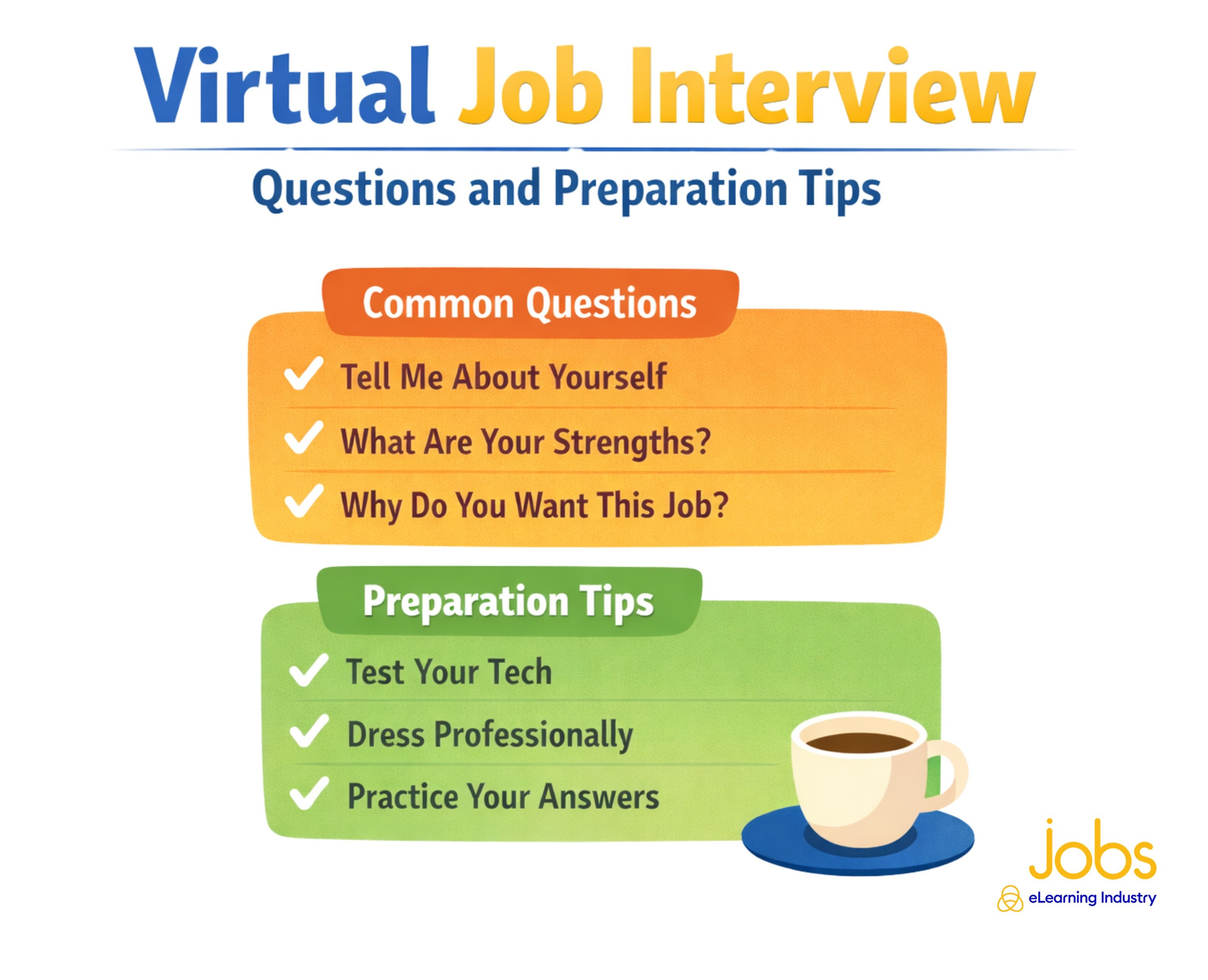
Understanding remote interview etiquette is the first step to landing the right job. Dress professionally, just as you would for an in-person meeting, and choose a quiet, well-lit space where you won't be distracted. Keep eye contact by looking at the camera rather than the screen, and avoid interrupting the interviewer. It's a good idea to log in a few minutes early to show that you're punctual and respect the interviewer's time.
A reliable technical setup is also essential. Test your internet connection, microphone, and camera in advance. Familiarize yourself with the interview platform, and make sure your device is fully charged or plugged in. You should also close any unnecessary applications to prevent notifications or lag during the interview.
Some of the most common virtual pitfalls to be aware of are poor lighting, distracting backgrounds, multitasking, and reading from a script. Instead, practice answering common interview questions naturally, and have a backup plan in case you get disconnected. For example, ensure that you have the interviewer's email address on hand or a standby device.
Common Interview Mistakes To Avoid
A frequent error that candidates make is overtalking. While it's important to provide detailed answers, speaking for too long without pause can make you seem unfocused. Stick with clear, concise responses that directly address the question, and pay attention to the interviewer's non-verbal cues.
Being too vague is another common issue. General statements like "I'm a hard worker" or "I'm a team player" don't have much impact unless you provide specific examples. Use brief stories or measurable achievements to showcase your skills. Concrete details help employers understand how you think and what you can contribute to the organization.
Additionally, not researching the role or the company can make you appear less credible. Interviewers expect candidates to understand the job description and company values. Not preparing thoughtful questions ahead of time or showing limited knowledge about the organization signals that you aren't interested in the position.
Finally, memorizing scripts can make your answers sound robotic and rehearsed. While you should always practice beforehand, delivering responses word-for-word can make you even more nervous if you forget your lines. Instead, memorize the key points and speak naturally so that they can also see your personality.
How To Prepare For A Job Interview Step By Step
Start by reviewing the job description and pay close attention to the required skills, qualifications, and responsibilities. Highlight key terms to determine what the employer values and understand exactly what they are looking for in a candidate. The next step is to match your skills and experiences to the role. Make a list of your strengths, accomplishments, and past job responsibilities that align with the role. Think about how your background aligns with the company's needs.
Once you've gathered your notes and know how to answer interview questions, practice your responses out loud to fine-tune your wording and pace. One of the top job interview tips 2026 is to record yourself or practice with someone else to get feedback on your tone and body language. Finally, prepare specific examples that demonstrate your abilities and level of expertise. Use real situations from your work history, education, or volunteer experience to show your problem-solving, teamwork, or leadership skills.
Find Jobs And Prepare For Your Next Interview
A good starting point is identifying relevant roles that match your skills, interests, and long-term goals. Job boards, company websites, and professional networks can help you find positions that genuinely fit your background rather than casting the application net too wide.
Once you have a shortlist of job opportunities, delve deeper into the job requirements. Evaluate the responsibilities, required qualifications, and preferred skills highlighted in the posting. Keep an eye out for repeated words or terms, as they often reflect the employer's top priorities. You should also research the company's mission and culture to better understand what they value in candidates.
When preparing for the interview, tailor your responses based on all of your findings. Ultimately, you need to prove to the hiring manager that you have the experience and skill sets they're looking for by using concrete examples that link your achievements to the role's responsibilities.
Now that you know which questions potential employers will ask, and which mistakes to steer clear of, it's time to start applying for jobs with confidence!