Why eLearning Is A Growing Career Path
eLearning careers are in such high demand because organizations know that digital learning can help them navigate change, tackle emerging challenges, and cut compliance risks. Not to mention, reduce employee turnover, upskill and reskill at scale, and maximize ROI. This makes it the ideal time to break into the industry, especially if you're switching careers and are looking for jobs that blend creativity, technical know-how, and design. You can even transfer your skills over from fields such as teaching, HR, communications, and IT. However, you need to know how to get a job in eLearning to reap the benefits, like clear career pathways, strong compensation packages, and remote-friendly roles.
This guide delves into the Learning and Development jobs to consider, how to find the right role for your talents, skills employers look for, and much more. We'll walk you through all the steps you need to take to determine if you're qualified and embark on your eLearning career path today.
Don't forget, create an account to start exploring eLearning roles today!
At A Glance
- eLearning offers multiple career paths across corporate, EdTech, and L&D roles
- Skills and practical experience matter more to hiring managers than formal degrees
- Building a portfolio is key to entering the field
- A structured, role-focused job search improves success rates
What Is eLearning And What Jobs Exist?
eLearning involves using digital technologies to design, deliver, and manage learning experiences that can be accessed anytime, anywhere. It goes beyond creating modules and tracking completions. Today, eLearning includes interactive modules, videos, scenarios, simulations, mobile-friendly support tools, virtual classrooms, and data-driven personalization. Organizations use digital learning for onboarding, compliance, leadership development, and continuous upskilling, which makes it an essential part of both education and corporate learning strategies.
Here's a quick breakdown of eLearning jobs for beginners:
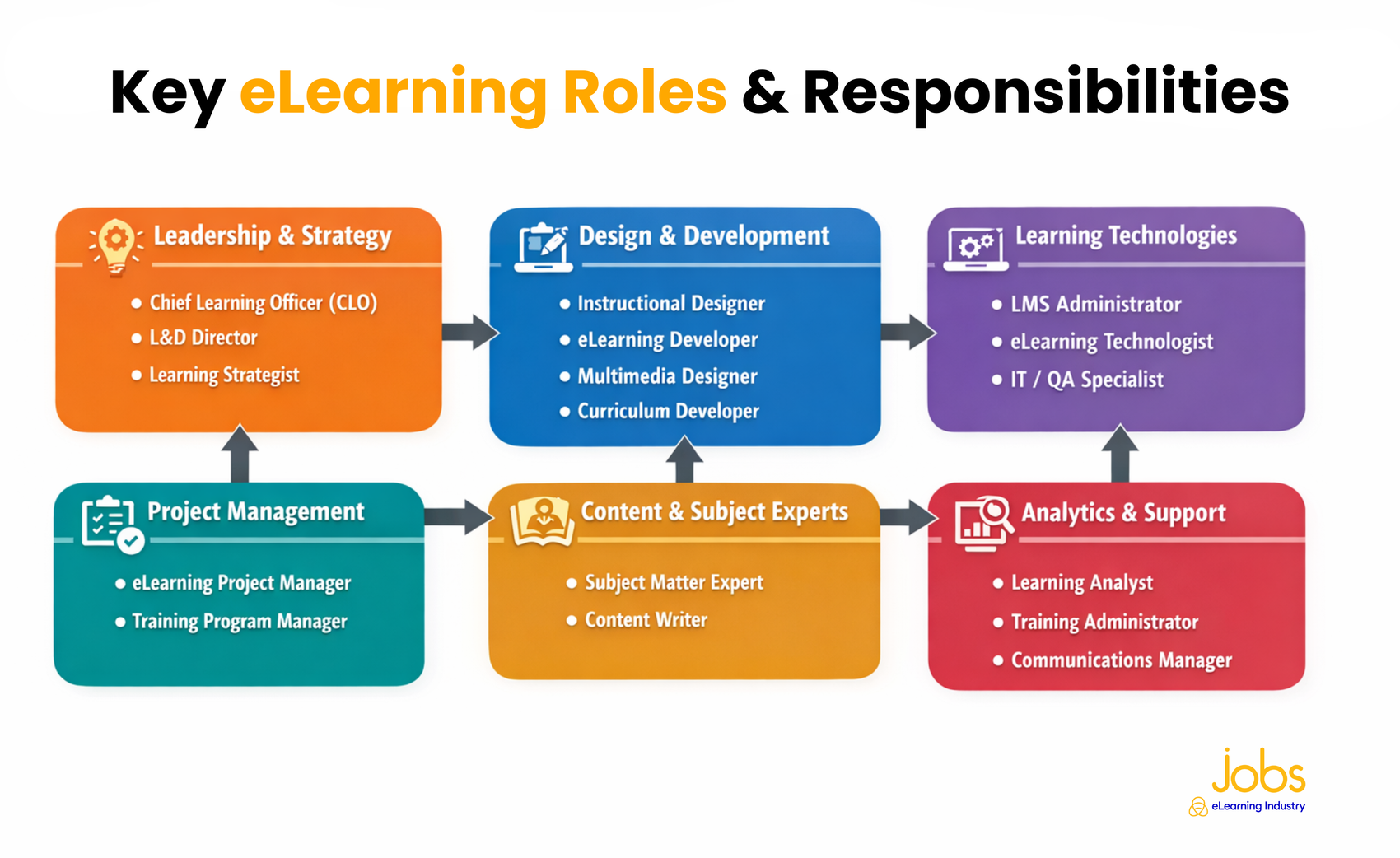
Instructional Designers analyze learning needs, define clear objectives, structure content, and leverage the right theories and models to deliver meaningful learning experiences.
Learning and Development Specialists take a broader, strategic role to connect learning initiatives with organizational goals, performance gaps, skill needs, and workforce development objectives.
eLearning Developers build courses using authoring tools, multimedia, interactions, and assessments to gauge progress and proficiency. They typically work closely with designers to ensure that content is engaging and achieves desired outcomes.
LMS Administrators manage Learning Management Systems and provide user support. This involves handling course uploads, user access, reporting, integrations, and system maintenance to ensure that learning programs run smoothly.
Learning Experience Designer (LXD) career paths blend Instructional Design with User Experience (UX) principles. It centers on learner motivation, engagement, accessibility, and the emotional impact of L&D initiatives. The aim is to create learner-centered experiences that are intuitive, relevant, and meaningful for every member of the audience.
How To Get A Job In eLearning: Understanding The eLearning Career Path
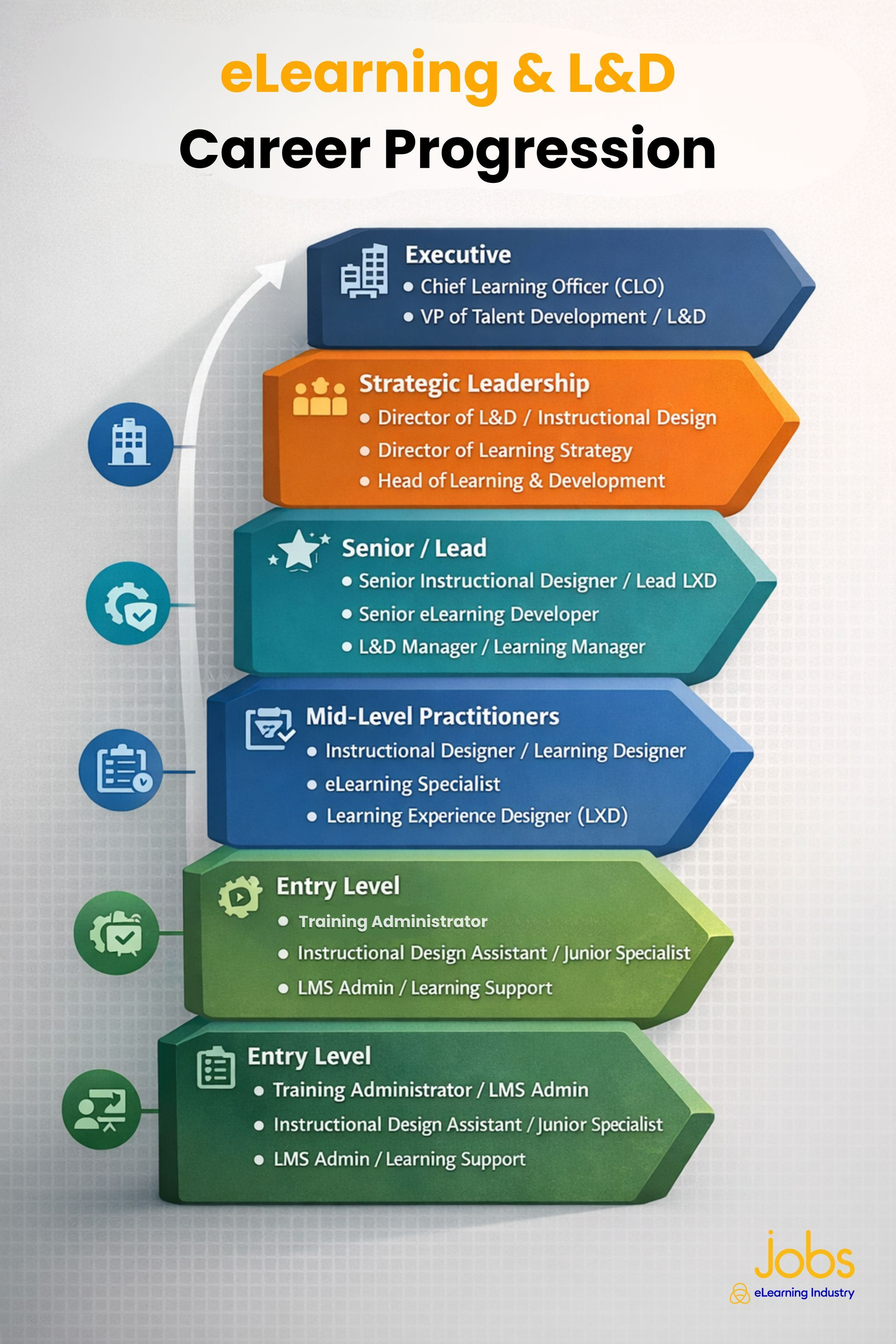
It's important to acknowledge how eLearning roles evolve with experience and specialization when you're thinking about how to start a career in eLearning. Entry-level positions, such as learning coordinators or junior Instructional Designers, typically focus more on content support and basic course development. Mid-level roles take on full project ownership, stakeholder collaboration, and improvements based on collected data. Moving up, senior roles often lead strategy, development teams, and holistic learning ecosystems.
Some of the best ways to advance are working in corporate L&D teams, building learning products for EdTech companies, or pursuing freelance paths if you're looking for more flexibility and project diversity. For example, a junior designer might move into the role of Learning Experience Designer, then take on L&D management or independent consulting as their eLearning expertise, real-world experience, and leadership skills grow.
But first things first. Let's go through the steps for how to get a job in eLearning, including how to build a strong resume and organize your job search.
Step 1: Identify The Right eLearning Role For You
Conducting a skills-based self-assessment that looks beyond job titles and focuses on what you do well and enjoy is a great way to kick things off. Begin by listing your strengths across various areas, including writing, analysis, design, technology, communication, and project management. Think about the type of work that makes you feel fulfilled versus things you typically avoid. This helps narrow roles that align with both capability and motivation.
eLearning careers generally fall into three main paths: creative, technical, or strategic. However, there is often some overlap. Creative roles are best for people who enjoy storytelling, content design, visuals, and learner engagement, such as Instructional designers or Learning Experience Designers. Technical roles are ideal for those who are comfortable with authoring tools, multimedia production, learning platforms, and tech troubleshooting, which often align with eLearning developer or LMS administrator positions. Strategic roles focus on performance analysis, learning strategy, and business alignment, making them a good match for L&D specialist jobs.
Another job selection factor is matching background to roles so that you're able to bring your knowledge, experience, and skillsets with you. For instance, educators often move into Instructional Design or LXD roles by applying their teaching, curriculum planning, and assessment expertise. Designers, videographers, or developers may gravitate to eLearning development. Likewise, HR, operations, or management pros often choose roles that focus heavily on L&D strategy due to their understanding of organizational needs and their ability to connect business objectives with learning initiatives.
Step 2: Build The Skills Employers Look For
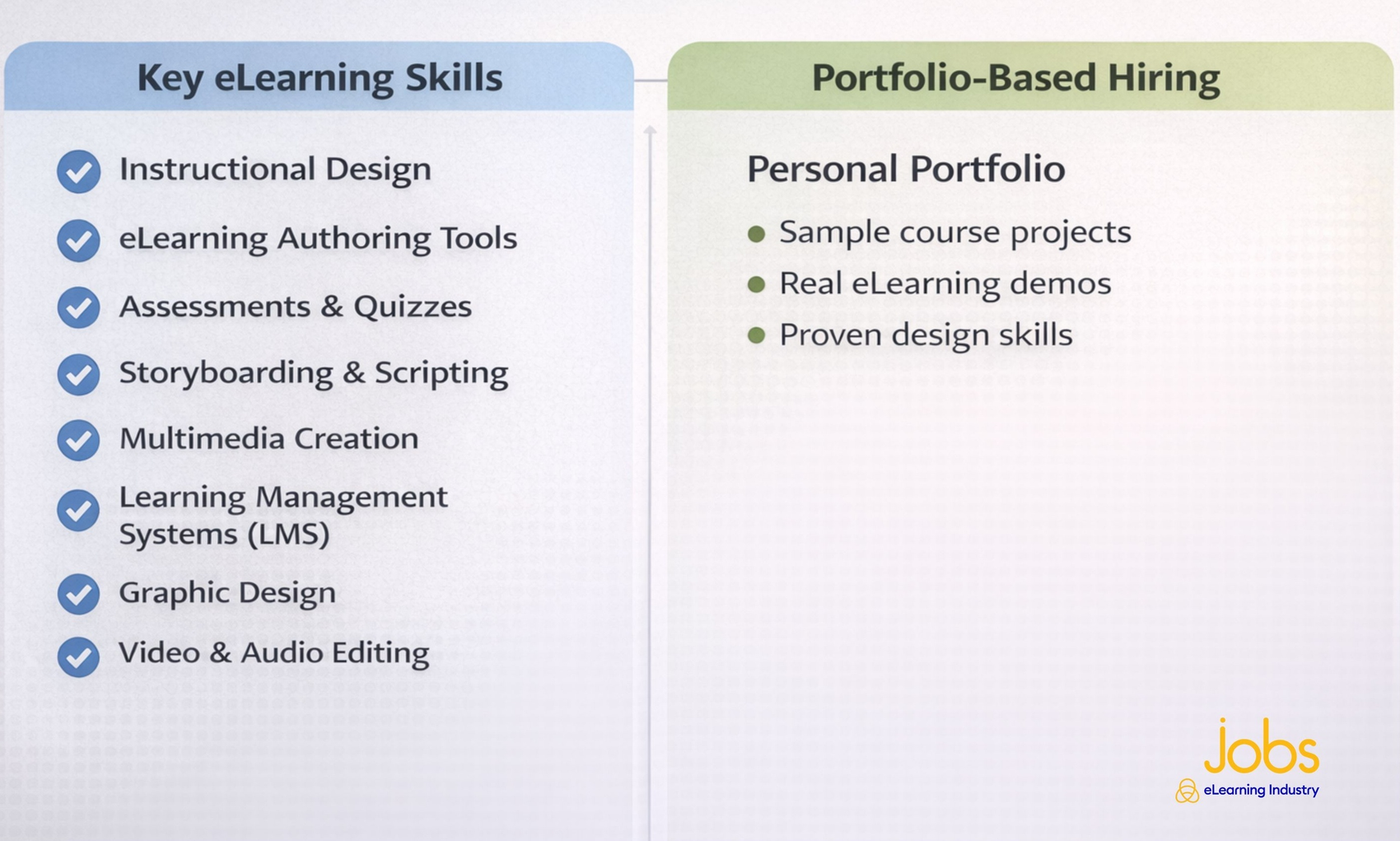
Cultivating skills needed for eLearning jobs requires a balance of instructional expertise, technical capability, and strong interpersonal skills. For Instructional Design roles, core skills include needs analysis, writing learning objectives, designing assessments, and applying learning theory to real-world problems. Employers value these top skills because they allow you to translate complex information into structured, learner-focused experiences that drive measurable outcomes.
Technical and digital learning skills are equally essential. You must be familiar with authoring tools, Learning Management Systems, accessibility standards, and basic data analysis to design, build, and evaluate digital learning programs. Understanding formats that are shaping the future of L&D, such as microlearning, mobile learning, and AI, can increase your chances of landing the right job.
Last but not least, soft skills play a critical role across career paths. Clear communication, stakeholder management, and team collaboration are essential when working with SMEs and business leaders. Time management, adaptability, and problem-solving help ensure learning initiatives stay on track. However, employers also look for L&D pros who are curious, reflective, and open to feedback, as continuous development is a job requirement for any eLearning position.
Step 3: Gain Practical Experience (Even Without A Job)
Gathering practical eLearning experience without a formal role is doable through hands-on practice. Building a strong portfolio is one of the most effective strategies, but you don't necessarily need L&D work history. For instance, you can complete sample projects, such as short eLearning modules, storyboards, needs analyses, or learning plans, to demonstrate how you think, design, and solve realistic learning problems. These examples don't need to come from paid projects, but they should still highlight the context, goals, and outcomes.
Additionally, volunteering, freelance work, and side projects provide valuable experience. Offer your expertise to nonprofits, community groups, and small businesses that need help with training materials, onboarding resources, and knowledge refreshers. Freelance platforms or personal networks can also lead to small projects that build your credibility and allow you to apply skills in the real world. These opportunities expose you to real stakeholders, feedback, and constraints that you're likely to encounter in future eLearning jobs.
Another idea is to repurpose your existing experience. For example, utilize your background in multimedia design to transform classroom lessons, workshops, presentations, or job aids into digital learning experiences by applying Instructional Design principles. Even previous non-eLearning roles can help you showcase your communication, process documentation, and knowledge-sharing skills if you're able to put them into context.
Step 4: Build A Strong CV And Portfolio For Your eLearning Career Path
What makes a good job resume? Building a solid CV and portfolio for eLearning roles calls for clarity, relevance, and a focus on measurable impact. So, what should you include and what should you leave out? It's best to prioritize skills, tools, and accomplishments that directly relate to Learning and Development. Highlight measurable outcomes that you achieved, such as performance improvements, reduced training time, or increased learner participation. Try to avoid long task lists, outdated tools, or unrelated experience that might make employers think you're unsure about your eLearning career path aims. Opt for clear, concise descriptions versus long paragraphs when you're considering how to build a strong resume.
A skills-first CV structure works particularly well for eLearning careers. Begin with a professional summary and a dedicated skills section that highlights your Instructional Design capabilities, the digital learning tools you typically use, and key competencies. This might include analysis, evaluation, and stakeholder collaboration that allow recruiters and applicant tracking systems to quickly determine if your talents align with the role. Work experience should also mesh with these skills. In fact, you can demonstrate how they were applied in real contexts rather than simply including a laundry list of responsibilities or titles you held.
Role-Specific Examples For eLearning Career Path Portfolios
When it comes to portfolios, make them as role-specific as possible. Instructional Designers can map out needs analyses, learning objectives, storyboards, and post-training evaluation plans. L&D specialists can showcase learning strategies, frameworks, and examples of how the programs they implemented aligned with business outcomes. Likewise, eLearning developers can explain interactive modules, technical builds, and multimedia work, while LMS administrators should include custom system configurations, reporting dashboards, and process documentation to demonstrate the "how." Finally, Learning Experience designers should emphasize learner journeys, engagement strategies, accessibility, and user-centered design decisions throughout the development process. However, it's also important to explain why you took certain approaches for every example for Instructional Design jobs.
Step 5: Apply Strategically For eLearning Jobs
Knowing where to begin your job search is the first and most critical step (after fine-tuning your CV, of course). Aside from general job boards, you can also peruse company career pages, professional L&D communities, network referrals, and niche forums. That said, one of the best ways to cast the net just wide enough is to use an industry-specific job board, but more on that later.
Believe it or not, one of the most common mistakes people make when starting a job hunt is to skim through the role's expectations and responsibilities. Reading job descriptions carefully is critical. You need to look beyond the title to identify repeated skills, tools, and outcomes. Keep in mind that these keywords reflect what the employer values and what applicant tracking systems scan for during the initial filtering. As such, incorporate relevant terms naturally into your CV, especially within your skills and experience sections. However, you need to avoid keyword stuffing and incorporate language that suits the role so that systems and hiring managers know when they've found a match.
Some of the things to avoid are submitting a generic CV, ignoring portfolio requests, or failing to follow application instructions. This often shows recruiters that you either lack attention to detail or simply don't care enough about the position to put in the required effort. Another tip for how to get hired is to explain impact or results rather than just mentioning tools or solutions. Tailoring each application to the specific role, aligning your experience with the job requirements, and providing well-organized work samples significantly enhances your visibility and credibility.
What Is A Good Cover Letter? Insider Bonus Tip
Tailoring your cover letter to the company and briefly explaining why you want the job are great starting points. You should also keep it short (aim for a single page) and point out your key skills or strengths. Another idea for what to put in a resume cover letter is a small, but professional, dose of your personality without being too casual.
Step 6: Prepare For eLearning Job Interviews
You should start preparing for interviews before submitting your application. Do your homework to dive deeper into the role and how employers assess capabilities. Typical interview questions usually cover how you design learning solutions, work with stakeholders, and measure the effectiveness of L&D initiatives. Also, you may be asked to explain your design process, tool choices, or adapt content for different learning audiences. Be ready for behavioral questions that commonly focus on collaboration, problem-solving, managing feedback, and dealing with stressful work situations.
Additionally, many employers now include assignments or case studies. These may involve reviewing existing training, creating a brief design plan, developing a sample module, or outlining how you would address a performance or knowledge gap. The goal is to evaluate your thought process and decision-making skills to achieve the learning objectives. Lastly, be sure to manage your time effectively and pay close attention to the instructions, because active listening and communication also come into play.
Knowing how employers evaluate candidates is crucial when thinking about how to get a job in eLearning. It's usually more holistic. They often want well-rounded professionals who have a good mix of instructional reasoning, relevant technical skills, lateral thinking abilities, and can communicate ideas clearly and concisely. That said, adaptability, resilience, and how well you balance learner needs with business goals are also key factors.
Sample Interview Questions When Transitioning Into eLearning
To give you a head start, here are 10 interview questions that can help you prep for your first eLearning job interview:
- Can you walk us through your process for designing a digital learning course from start to finish?
- How do you determine whether an L&D problem is caused by a skills gap or a performance behavior issue?
- Which Instructional Design models and theories do you leverage the most, and why?
- How do you measure the effectiveness of an eLearning program, and which metrics do you tend to evaluate?
- What learning technologies are you most comfortable using, and what's your level of proficiency with each?
- Can you tell us about a time you worked with a difficult SME?
- How do you incorporate feedback from stakeholders or learners into your digital learning design?
- How do you create learning initiatives for different audiences or experience levels?
- What strategies do you use to support accessibility and inclusive design?
- How do you strike a balance between creativity and tight deadlines or limited resources when building learning experiences?
Step 7: Stay Visible And Job-Ready
Keeping yourself in front of hiring managers is an ongoing effort that extends beyond applying for roles. There are always new technologies and learning strategies to explore. So, you need to regularly update your skills in Instructional Design methods, learning development tools, and data analysis to stay competitive.
Networking and professional communities are essential if you want to seize opportunities that aren't publicly advertised. But how do you network if you're new to the field? Taking part in L&D groups, online forums, webinars, and industry events helps you learn from peers, share work, and get the inside scoop on Instructional Design jobs. One of the best ways to get out there (virtually speaking) is to check out eLI's community. There are plenty of resources to keep you in the know and ready for your next job op.
Staying ahead of trends is just as crucial for eLearning roles and career paths. Follow thought leaders, experiment with new approaches, such as AI-supported learning, and evaluate how the latest trends solve real problems to set yourself apart. Employers are looking for professionals who are proactive about the future of digital learning.
How To Get Hired: Common Mistakes When Trying To Get A Job In eLearning
Why is it hard to find a job? Many qualified people struggle to break into eLearning career paths due to avoidable mistakes in how they present themselves and set up their job search plan. Let's delve into common errors to steer clear of when applying for eLearning jobs.
Prioritizing Tools
One of the most common issues is over-focusing on tools. Of course, employers expect you to be familiar with authoring software and learning platforms. However, tools are only as effective as the people using them. As such, you need to show hiring managers how you use those tools to solve learning or performance problems. Simply listing software without explaining design decisions, outcomes, or learner impact might demonstrate that you have technical knowledge, but what about strategic thinking and design?
Ignoring Business Impact
Another frequent mistake is underestimating the importance of business impact. Companies offer Learning and Development jobs because they need to support organizational goals. That said, many candidates describe projects in terms of the content they created rather than the problems they addressed. Employers are far more interested in why a learning solution was needed in the first place, how success was measured, and the final outcomes. Therefore, you must be able to connect all your L&D efforts to measurable outcomes to let them know you understand real-world impact and that your projects aren't just theoretical.
Generic CVs And Portfolios
Finally, applying without tailoring is also a common faux pas. Many candidates submit the same CV and portfolio to every role, hoping that the sheer volume will work in their favor. In reality, eLearning job descriptions vary widely depending on the organization's needs and expectations. As mentioned earlier, carefully reading the job description helps you identify the required skills, tools, and responsibilities, among other key details. You can then create a good resume to highlight the most relevant experience and include key terminology. This makes your application easier to find in tracking systems and more appealing to busy recruiters who want to zero in on the right person for the role.
Yet another reason to tailor your resume and cover letter is to show respect for the employer's specific challenge. Strategic customization shows them that you understand the role, the context, and how your skills meet their unique needs. Avoiding these common mistakes can help you bring in more interview invitations and start your career in digital learning.
Where To Find eLearning & L&D Jobs
This Learning and Development career guide is just a springboard to help you get started on your job search, but we hope that it's given you the info you need to weigh your L&D options and craft a top-notch job plan. The next big step is finding the right eLearning career that suits your talents.
Fortunately, there are niche job platforms, such as Jobs by eLearning Industry, that can speed up the search and allow you to search by role. You can even set job alerts by role and get notified when new positions open to stay one step ahead.