?
{{job.title}}
{{job.company_name}}
Private Employer
Certifications For eLearning, L&D, And EdTech Careers
Certifications help professionals gain practical skills, show their expertise, and boost their credibility when applying for jobs in eLearning, Learning and Development (L&D), Instructional Design, or EdTech. The best certification for you depends on your career goals.
Employers often look for certifications in areas like Instructional Design, learning technologies, project management, data analytics, accessibility, HR, or certain learning platforms. If you are changing careers or just starting out, certifications can show your skills when you have less work experience.
Below, you can explore the certifications that match your desired job, learn what skills employers want, and seek out ways to use those skills in real situations.
Career Overview: How Certifications Fit Into eLearning and L&D Careers
You don’t need one specific certification to work in eLearning or L&D. The requirements can be quite different depending on whether you’re interested in Instructional Design, learning technology, training, LMS administration, Learning Experience Design, or leadership roles.
Certifications are most helpful when they build skills that match the job you want. For example, if you want to be an Instructional Designer, training in instructional design and authoring tools will likely help you more than a general HR certificate. If you’re aiming to be an LMS Administrator, focus on platform certifications, integrations, reporting, and technical skills.
Common career paths include:
- Instructional Designer
- Learning Experience Designer
- eLearning Developer
- L&D Specialist
- Corporate Trainer
- LMS Administrator
- Learning Technologist
- Learning Consultant
- Training Manager
- L&D Manager
- Learning Strategist
- Director of Learning and Development
Before you sign up for any certification, look at job descriptions for the role you want. Notice which skills, technologies, and qualifications come up often, and pick certifications that help you fill any real gaps.
Best Certifications By eLearning And L&D Career Path
Each job calls for its own mix of skills in learning design, technology, business, and analysis. The table below shows how common career paths match up with certifications that can help you build these skills.
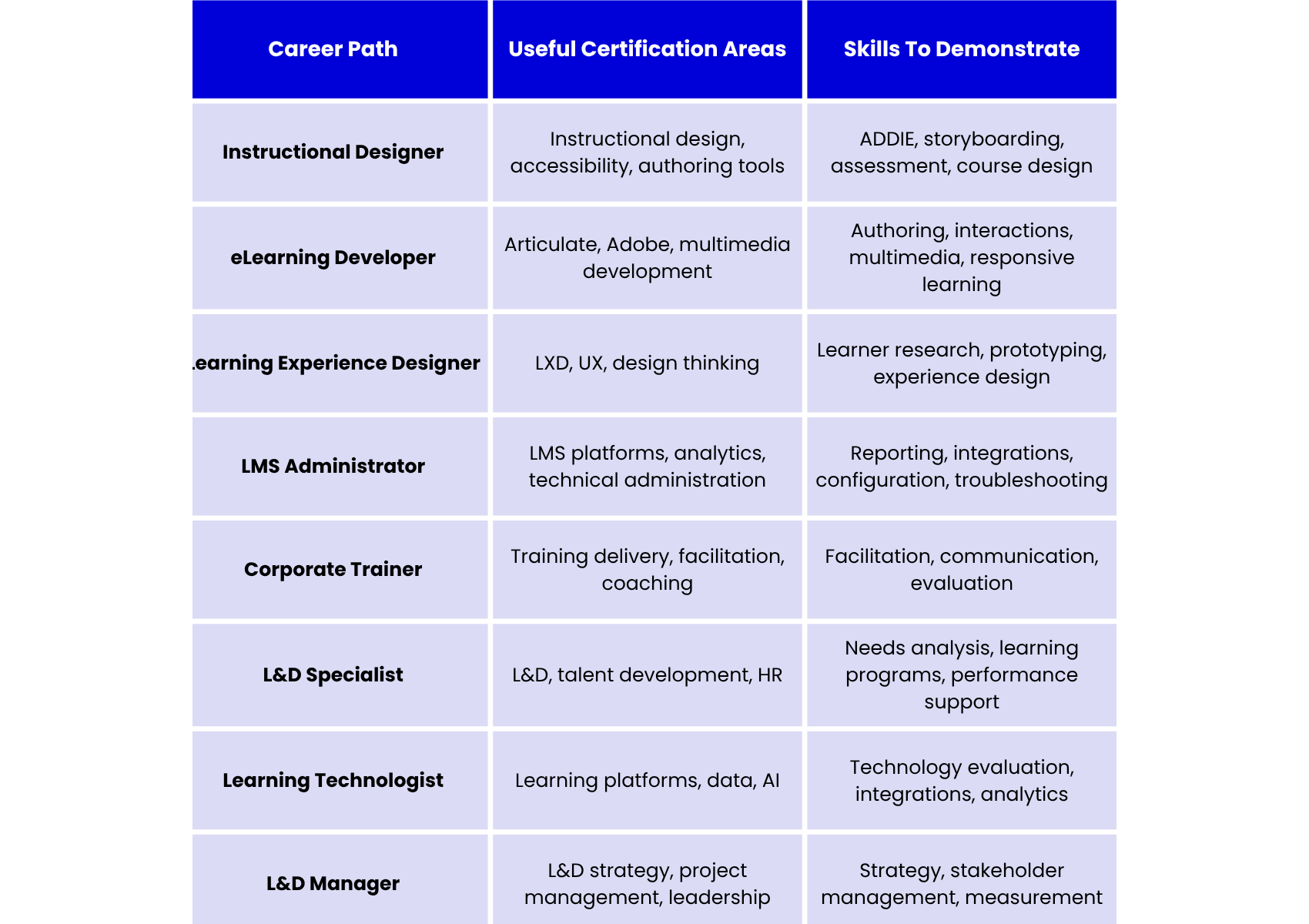
A certification alone does not demonstrate workplace capability. Candidates should connect credentials to projects, portfolios, measurable achievements, or practical examples wherever possible.
Types Of Certifications Employers May Value
L&D professionals often benefit from several types of certifications instead of relying on just one universal credential.
- Instructional Design certifications help build skills in learning objectives, assessment, curriculum development, learning theories, and instructional design models.
- eLearning software certifications show you know how to use tools for creating digital learning experiences. The specific technologies you need can vary by employer and job role.
- LMS certifications are helpful for people aiming for roles like LMS administrator, learning technology specialist, or digital learning operations.
- Project management certifications are useful for senior instructional design, consulting, implementation, and management roles that require coordinating complex learning projects.
- HR and talent development certifications are also valuable for broader L&D roles that involve organizational development, talent management, and workforce planning.
- Accessibility certifications and training help you build expertise in creating inclusive digital learning and accessible content.
- Data and analytics certifications are becoming more important for professionals who handle learning measurement, reporting, performance analysis, and demonstrating business impact.
Do You Need Certifications To Get An eLearning Job?
You don’t always need certifications. Many eLearning and L&D jobs look for a mix of experience, skills, portfolio work, education, and comfort with technology.
If you’re just starting out or changing careers, certifications can help you learn and show you’re serious about your new path. But just finishing courses isn’t enough if you don’t use what you’ve learned.
Show what you’ve learned from certifications by building sample courses, updating existing learning materials, making storyboards, analyzing learning data, setting up practice environments, or outlining a learning strategy. These examples help employers see your real skills.
Certifications And Salary Potential
A certification does not automatically increase your salary. Compensation is usually influenced by role, seniority, location, industry, technical expertise, management responsibilities, and experience.
Certification can nevertheless support salary growth when it helps you qualify for more specialized or senior work.
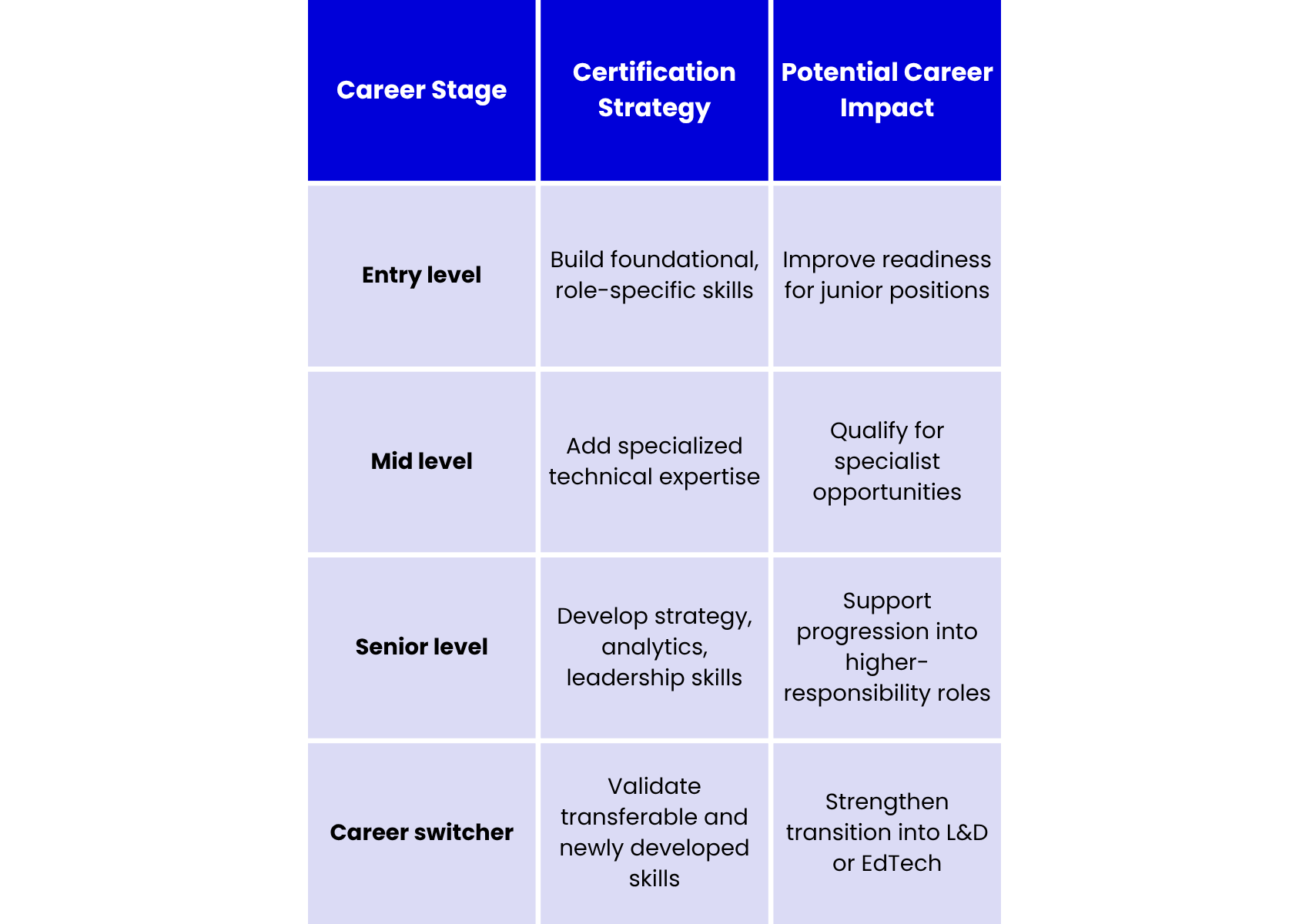
When you compare salaries, look at the pay for the job you want, not just the value of the certification. Find out what roles need your new skill and see if the credential helps you meet those job requirements.
How To Choose The Right Certification
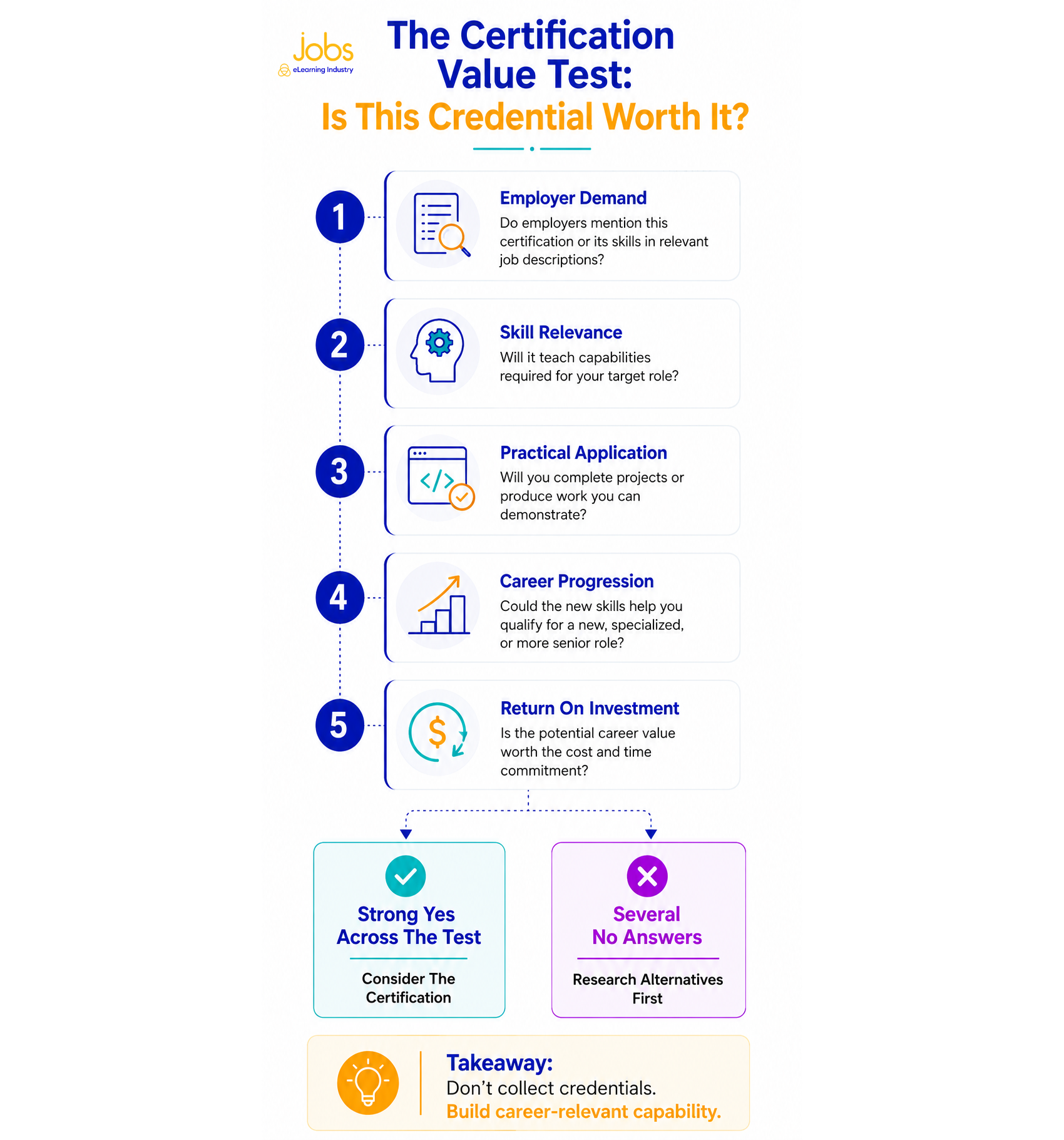
Before you pay for a certification, make sure it truly supports your career goals.
Consider these questions:
- Does it appear in relevant job descriptions?
- Does it teach skills employers currently request?
- Is the provider recognized in the field?
- Does it include practical projects?
- Can you demonstrate the resulting skills in a portfolio?
- Is the cost reasonable relative to its career value?
- Does it complement rather than duplicate your existing experience?
Look at job listings to guide your research. The best way to choose a certification is to start with your target job and figure out which skills you need to get there.
Turn Your Certification Into Your Next Career Move
After you earn a relevant credential, update your CV, LinkedIn profile, portfolio, and job applications. Instead of just listing the certification, show what skills, technologies, projects, and measurable abilities you gained.
Next, look for eLearning, Instructional Design, L&D, and EdTech jobs that fit your new skills. Upload your CV so employers can find you, and set up job alerts to hear about new openings that match your interests.
FAQs About Certifications
1. What certifications are best for eLearning jobs?
Useful certifications include instructional design, eLearning development, authoring tools, LMS administration, accessibility, learning analytics, and project management credentials. The best choice depends on the specific job you want.
2. Do you need a certification to become an Instructional Designer?
Usually, no universal certification is required. Employers commonly evaluate instructional design skills, portfolios, experience, technology proficiency, and education alongside professional certifications.
3. Are L&D certifications worth it?
They can be worthwhile when they develop skills requested by employers, strengthen professional credibility, or help candidates qualify for specialized positions. Their value depends on career goals and practical application.
4. Which certifications help career switchers enter L&D?
Career switchers can consider foundational instructional design, training, learning technology, or talent development certifications. Pairing certification with portfolio projects can provide stronger evidence of capability.
5. Should I put certifications on my CV?
Yes, when they are relevant to the position. Include the certification name, issuing organization, and completion date where appropriate. Prioritize credentials directly related to the job requirements.
6. Can certifications increase my eLearning or L&D salary?
Certification alone does not guarantee higher pay. However, credentials that help professionals develop scarce technical, strategic, analytical, or leadership capabilities can support progression toward more specialized and senior roles.
Jobs {{total_jobs_count}}
{{pagination_label}}
No jobs were found.
Loading...
{{notification.msg}}