
?
{{job.title}}
{{job.company_name}}
Private Employer
Salary Guides
Curious about what you could earn in eLearning, Learning and Development, Instructional Design, or EdTech in 2026? This salary guide offers practical salary estimates, career paths, and key skills to help job seekers compare options and apply with confidence.
If you are new to the field, switching careers, or aiming for a senior position, these benchmarks can help you get started. Salaries depend on where you work, your employer, the industry, your responsibilities, and your skills. The figures below are estimated annual US base salaries in US dollars and are not guaranteed.
2026 eLearning And L&D Salary Overview
The learning industry offers a range of careers, from creative and technical roles to strategic and people-focused positions.
- Instructional Designers plan learning experiences.
- eLearning developers build digital courses.
- LMS administrators manage learning technology.
- L&D professionals help employees build skills.
- Corporate trainers deliver training.
- EdTech professionals create or support educational technology.
The table below shows estimated US salary ranges for 2026, organized by role and experience level. You can use it to compare earning potential and find roles that fit your skills and career goals.
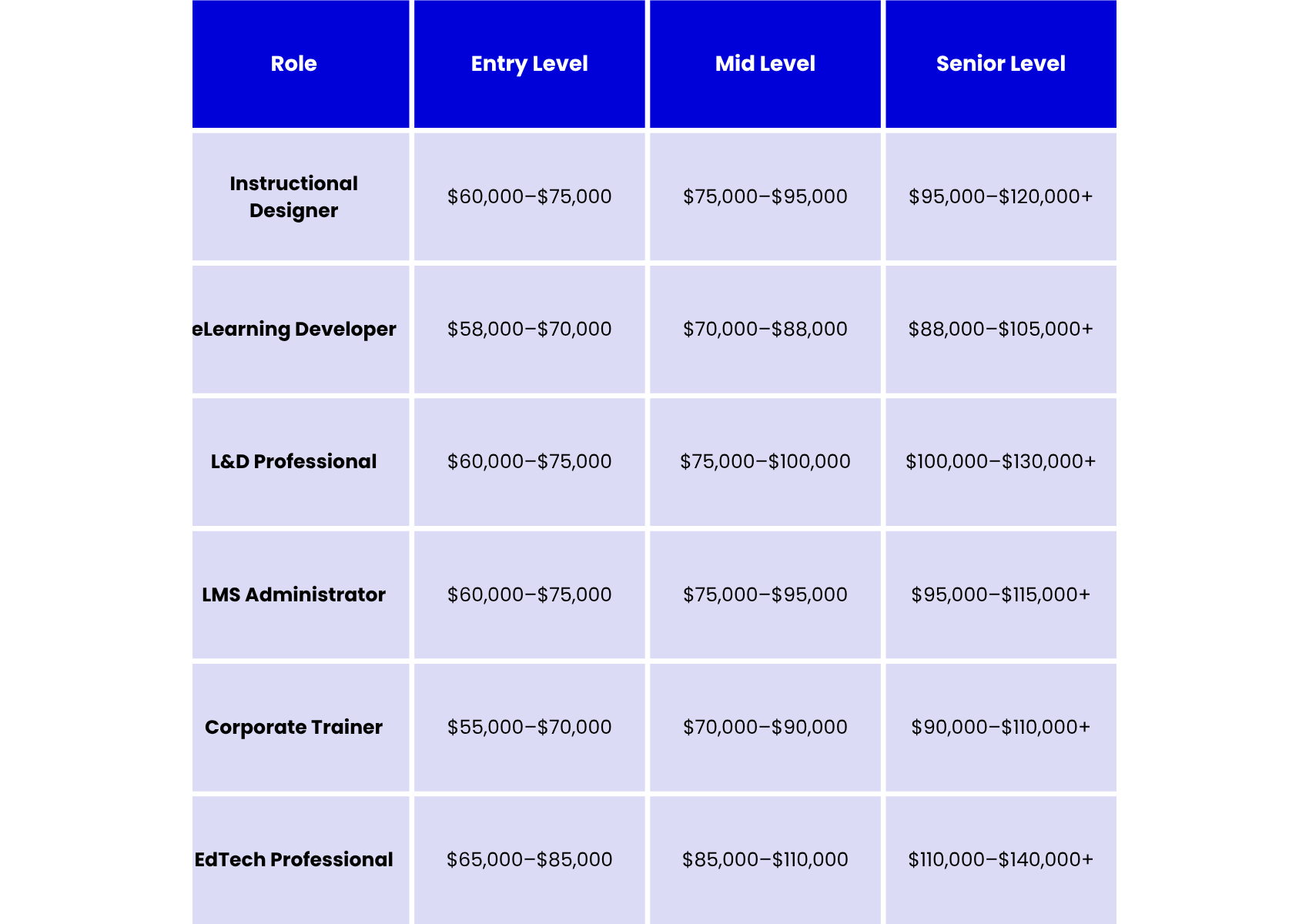
These numbers are rough estimates for the US market, not set salary ranges.
Recent 2026 salary data varies a lot, even for the same job titles. It’s important to compare factors like job duties, location, experience level, and employer when evaluating an offer.
eLearning And L&D Salaries By Industry
The industry you choose can greatly affect your salary. Instructional Designers, eLearning developers, L&D professionals, LMS administrators, and corporate trainers work in many fields, including technology, healthcare, finance, education, government, consulting, and retail. While the main skills are often the same, pay can vary depending on how complex the work is, the size of the budget, the rules that must be followed, and how much specialized knowledge is needed.
The table below shows which industries often hire eLearning and L&D professionals and explains why pay can be different. The salary numbers are estimates for the US in 2026. Actual offers will depend on the company, location, your experience, job duties, and specific role.
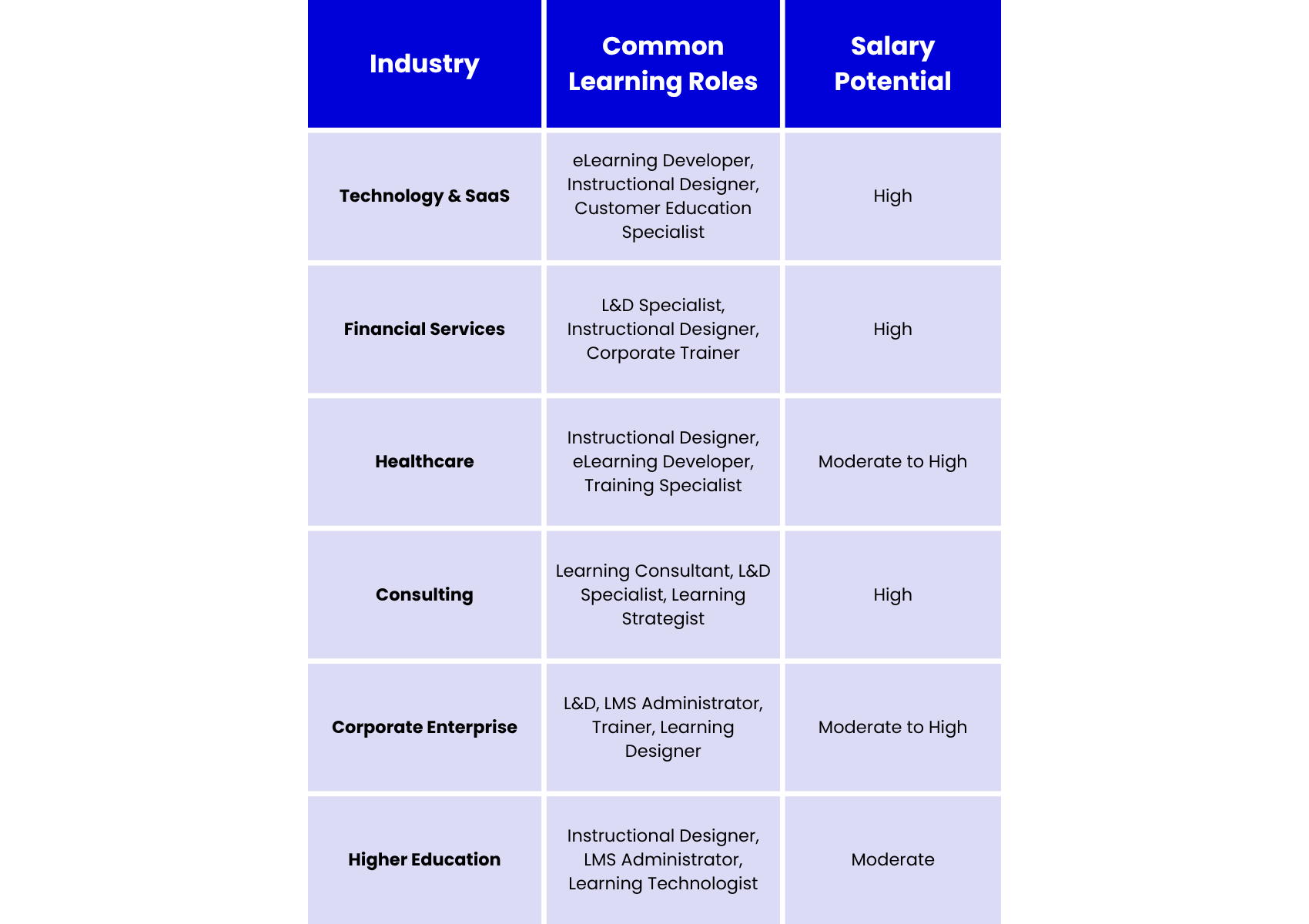
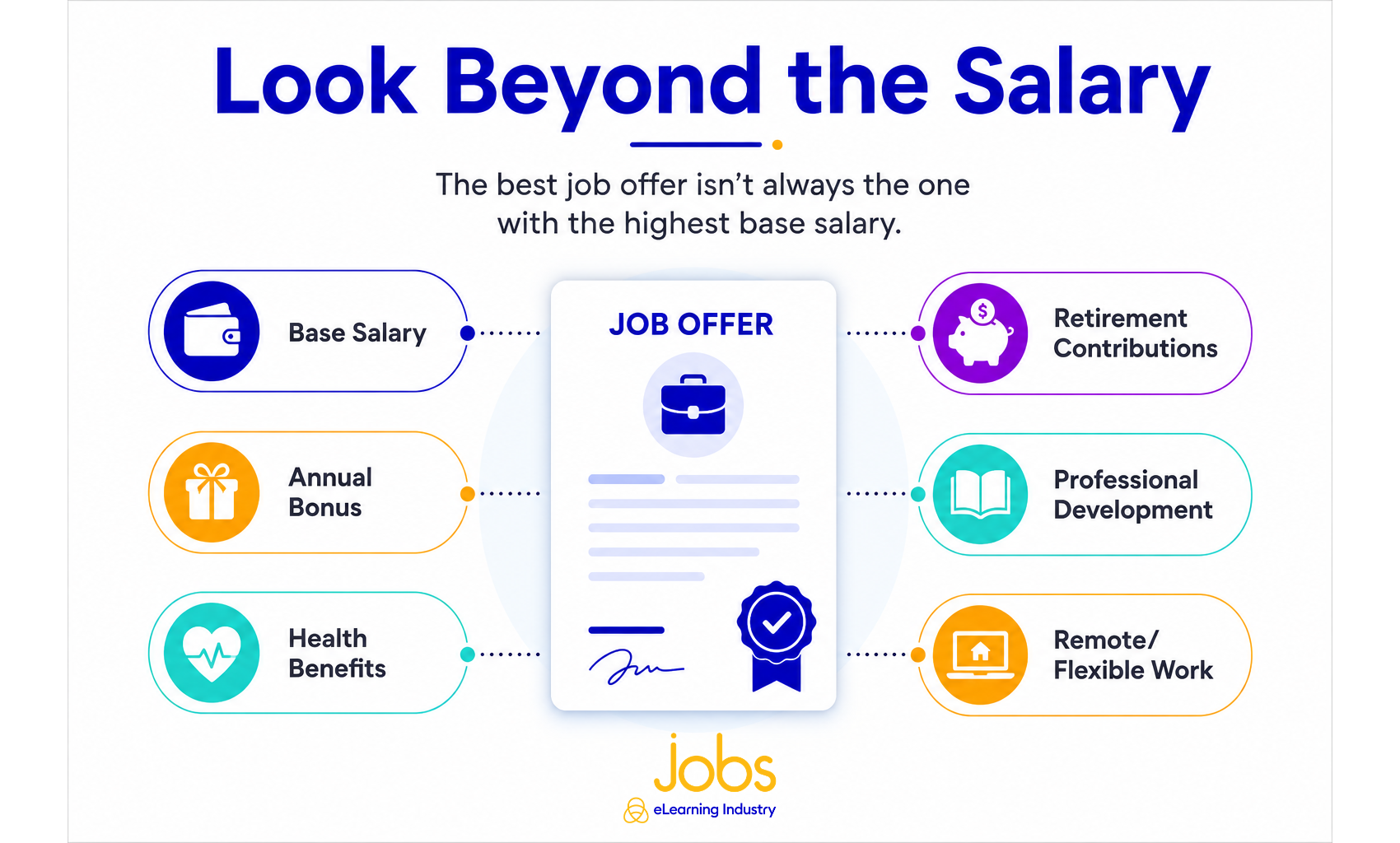
When comparing job offers, it’s important to consider more than just the salary. Things like benefits, bonuses, remote work options, professional development budgets, flexibility, and chances for promotion can all make a big difference in the overall value of a job.
Building expertise in a specific industry can help your career. For instance, if you’re an eLearning developer who has worked on compliance training for healthcare or customer education for SaaS companies, you can look for jobs that need that kind of specialized experience.
As you look for your next job, try comparing roles in different industries instead of only considering companies like your current one. Your skills in Instructional Design, eLearning development, LMS, or training could be useful in fields that offer better career growth and pay.
Instructional Designer Salary And Career Path
Instructional Designers assess learners' needs and design structured courses, programs, assessments, and other learning experiences. Their main tasks include storyboarding, designing curricula, working with subject-matter experts, applying adult learning principles, and assessing learner performance.
Some useful skills for this role are:
- Instructional Design models such as ADDIE
- Storyboarding and curriculum development
- Articulate Storyline and Rise
- Learning Experience Design
- Assessment design
- AI-assisted learning workflows
- Stakeholder and SME collaboration
In the US, entry-level Instructional Designers usually earn around $60,000, while experienced professionals can make $120,000 or more.
eLearning Developer Salary And Career Opportunities
eLearning developers take learning plans and turn them into interactive digital experiences. They create courses, simulations, videos, assessments, animations, and other responsive content using different authoring and multimedia tools.
In the US, entry-level eLearning developers usually earn about $58,000, while senior specialists can make over $105,000. Recent data for 2026 shows the average salary is around $80,000, but pay can vary a lot.
Get the right jobs delivered to you
Create a personalized job alert based on your role, skills, and career interests. Get relevant eLearning, Instructional Design, L&D, LMS, training, and EdTech opportunities sent to you, so you can apply when the right role appears.
Learning And Development Salary Guide
L&D professionals help organizations build employee skills, boost performance, support leadership growth, guide onboarding, and encourage career development. Common job titles include L&D specialist, learning consultant, training specialist, learning partner, and L&D manager.
In the US, early-career L&D professionals typically earn about $60,000, while senior specialists, managers, and strategic roles can make $130,000 or more. Higher salaries often go to those with skills in business consulting, program management, analytics, leadership development, or learning strategy.
LMS Administrator Salary
LMS administrators oversee the systems that support and monitor learning within an organization. Their tasks often include managing users, setting up courses, generating reports, handling integrations, solving technical issues, ensuring proper governance, and working with vendors.
In the United States, LMS administrator salaries usually range from $60,000 to over $115,000, depending on experience and technical skills. Knowing platforms like Cornerstone, Workday Learning, Moodle, Canvas, Docebo, or SAP SuccessFactors can help you find better job opportunities.
Corporate Trainer Salary
Corporate trainers help employees learn by leading workshops, virtual sessions, onboarding, coaching, and skills programs. Good communication and facilitation skills are important for this role.
In the US, corporate trainer salaries usually range from about $55,000 to $110,000. Senior trainers and specialists may earn more, depending on their industry, experience, and responsibilities.
EdTech Salary And Careers
EdTech careers bring together education, learning design, customer needs, data, and technology. Common roles include implementation consultant, learning technologist, customer education specialist, curriculum specialist, product education professional, and learning product manager.
Salaries in EdTech usually range from about $65,000 to $140,000 or more. The exact amount depends on the role, level of experience, technical skills, and employer.
What Affects Your Salary?
Several factors can affect your salary, such as:
- Years of relevant experience
- Location and cost of labor
- Industry and company size
- Technical and authoring-tool expertise
- Portfolio quality
- Leadership responsibility
- Learning analytics and data skills
- AI and automation capabilities
- Certifications and platform expertise
- Strategic and consulting experience
Which eLearning And L&D Skills Can Lead To Higher Salaries?
To increase your salary, focus on building skills that are both valuable and hard to replace. While knowing how to create an online course is helpful, combining learning design with technology, data, business knowledge, and the ability to show results can open doors to more advanced roles.
The table below lists skills that can help you earn more in Instructional Design, eLearning development, L&D, LMS, and EdTech jobs. It also highlights which roles value these skills the most.
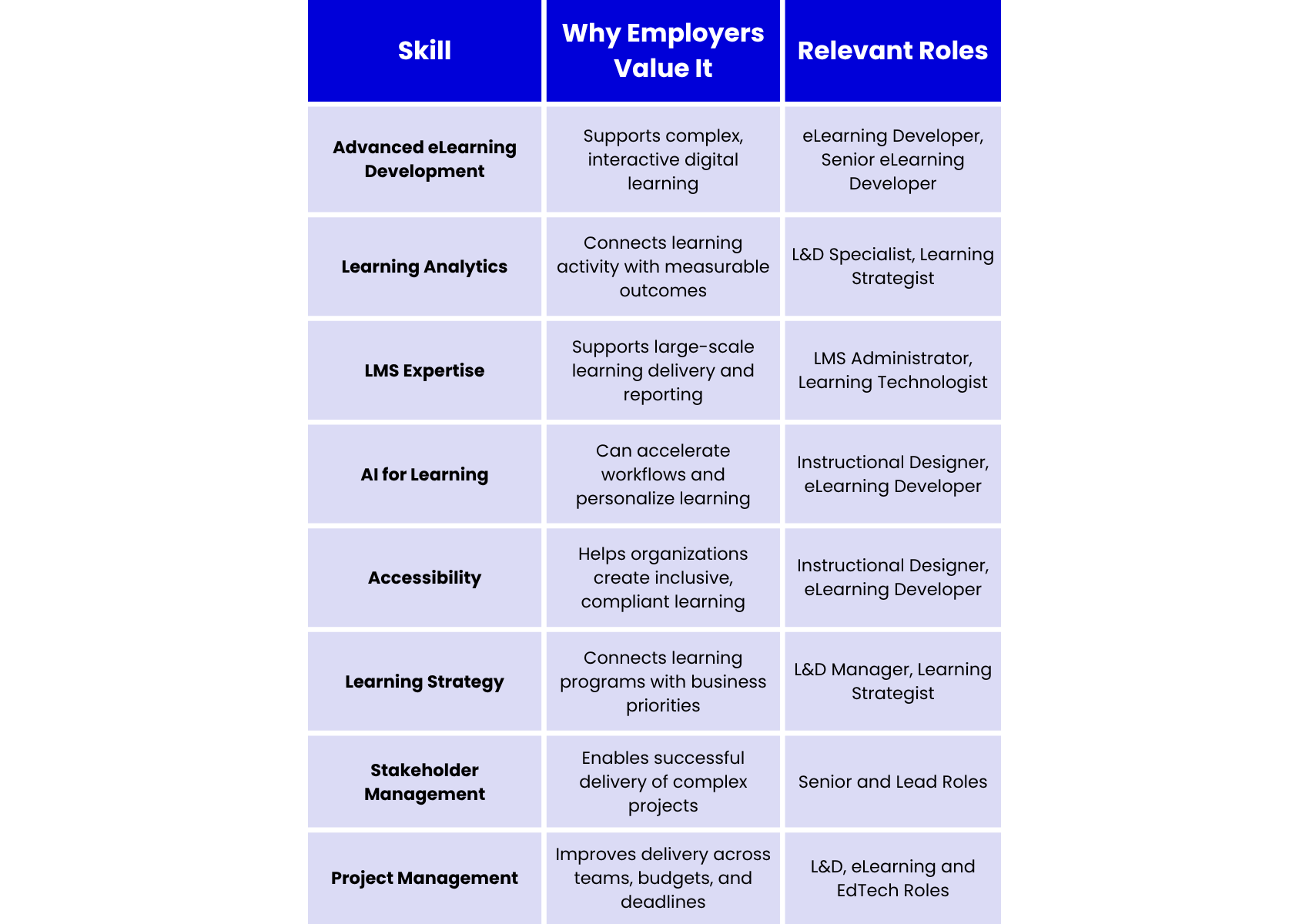
You don’t need to have every skill listed above. Look at job descriptions for the roles you want and see which skills employers mention most often. Focus on those skills, show them in your CV and portfolio, and apply for jobs where your experience is a good fit.
Let employers discover you
Upload your CV and put your experience in front of employers looking for eLearning, Instructional Design, L&D, LMS, training, and EdTech talent. Make it easier to be discovered for opportunities that match your skills and experience.
FAQs About Salary Guides
1. How much do Instructional Designers make in 2026?
In the US, Instructional Designer salaries are estimated at approximately $60,000 to $120,000+ annually, depending on experience, location, industry, and responsibilities.
2. What is the average eLearning developer salary?
A 2026 US eLearning developer salary is approximately $80,000 annually on average, with estimated salaries ranging from around $58,000 to $105,000+ as experience increases.
3. Which L&D jobs pay the most?
Learning strategy, L&D leadership, learning technology, consulting, and specialized EdTech roles can offer higher salaries, particularly when professionals combine learning expertise with technology, analytics, or management skills.
4. Can I get an Instructional Design job without experience?
Yes. Career switchers can demonstrate transferable skills through portfolios, sample learning projects, curriculum work, training experience, authoring-tool skills, and measurable outcomes from related roles.
5. What skills can increase an eLearning salary?
High-value skills can include Storyline, Rise, LMS administration, learning analytics, accessibility, multimedia development, xAPI, AI-enabled workflows, project management, consulting, and learning strategy.
6. Where can I find eLearning and L&D jobs?
Use Jobs by eLearning Industry to search for Instructional Designer, eLearning developer, LMS administrator, corporate trainer, L&D, and EdTech opportunities. Compare requirements and salary ranges, tailor your CV, and apply to roles that match your skills.
Jobs {{total_jobs_count}}
{{pagination_label}}
No jobs were found.
Loading...
{{notification.msg}}