?
{{job.title}}
{{job.company_name}}
Private Employer
EdTech Jobs
EdTech jobs are on the rise as more schools, universities, businesses, and tech companies invest in digital learning. Whether you have experience as a Learning Designer, are a teacher moving into tech, or are just starting, EdTech has a wide range of roles in Instructional Design, learning technology, product development, customer success, and training.
Many people are looking for remote EdTech jobs, too, which let them work from anywhere while helping organizations improve how people learn. EdTech brings together education and innovation, from startups developing AI learning tools to large companies building employee training programs.
If you’re ready for your next career step, explore our guide below and get all the useful insights you need to dive right into EdTech roles.
What Are EdTech Jobs?
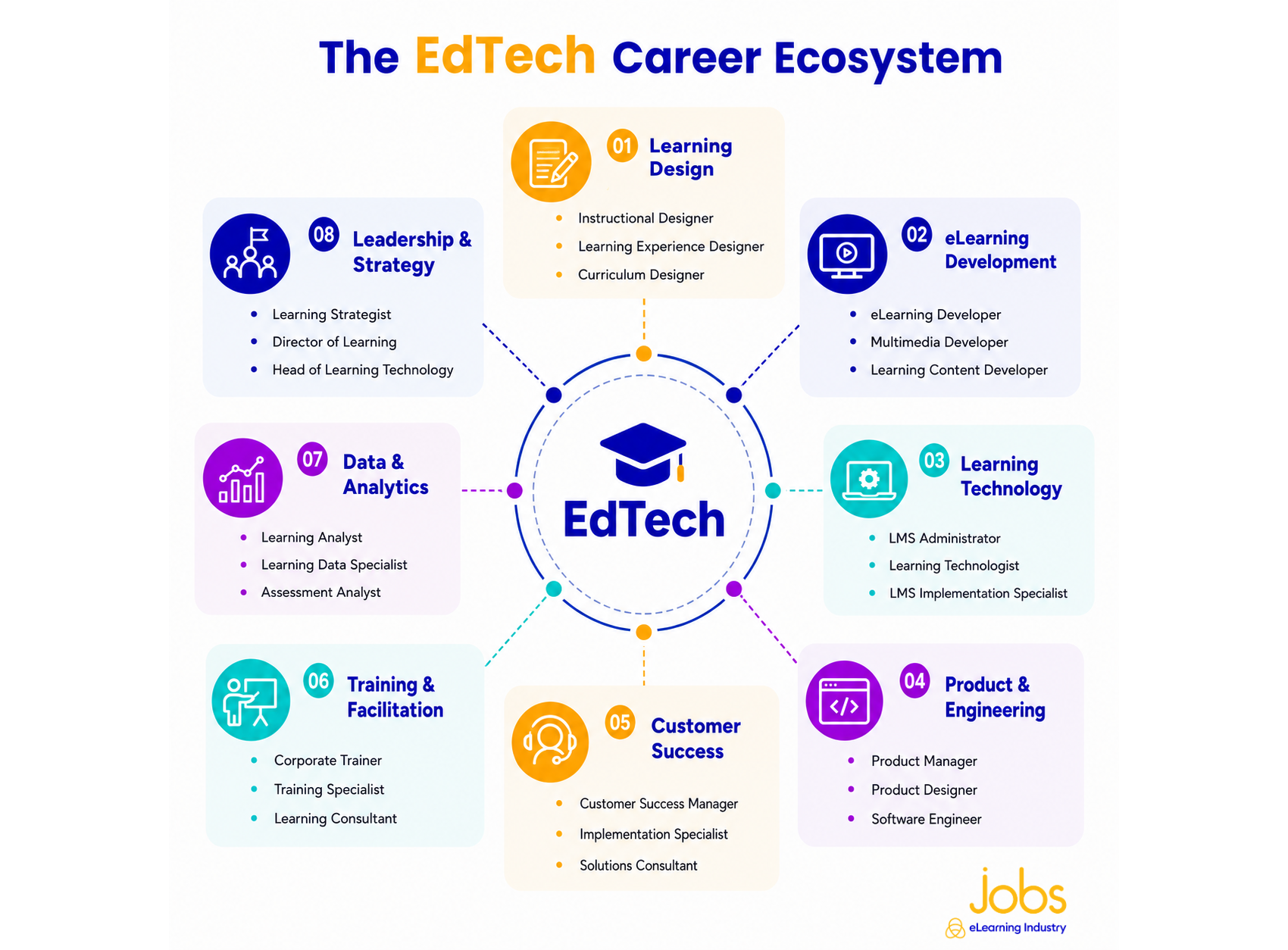
EdTech jobs, or Educational Technology jobs, focus on creating and supporting technology that helps people learn better. People in these roles can work for schools, software companies, businesses, government agencies, or nonprofits.
Common responsibilities include:
- Designing online learning experiences.
- Developing digital learning content.
- Managing Learning Management Systems (LMS).
- Supporting customers using learning platforms.
- Creating learning strategies.
- Building educational software.
- Analyzing learner data.
- Implementing AI and adaptive learning technologies.
Many EdTech jobs are remote, so professionals often work with teams in different locations using online learning platforms and digital tools.
Stay Updated with the Latest EdTech Jobs
New opportunities are added regularly. Create personalized job alerts to receive notifications about EdTech jobs, remote EdTech jobs, and other roles that match your experience, preferred location, and career interests. It's the easiest way to stay ahead of new openings and apply before positions fill.
Popular EdTech Job Roles
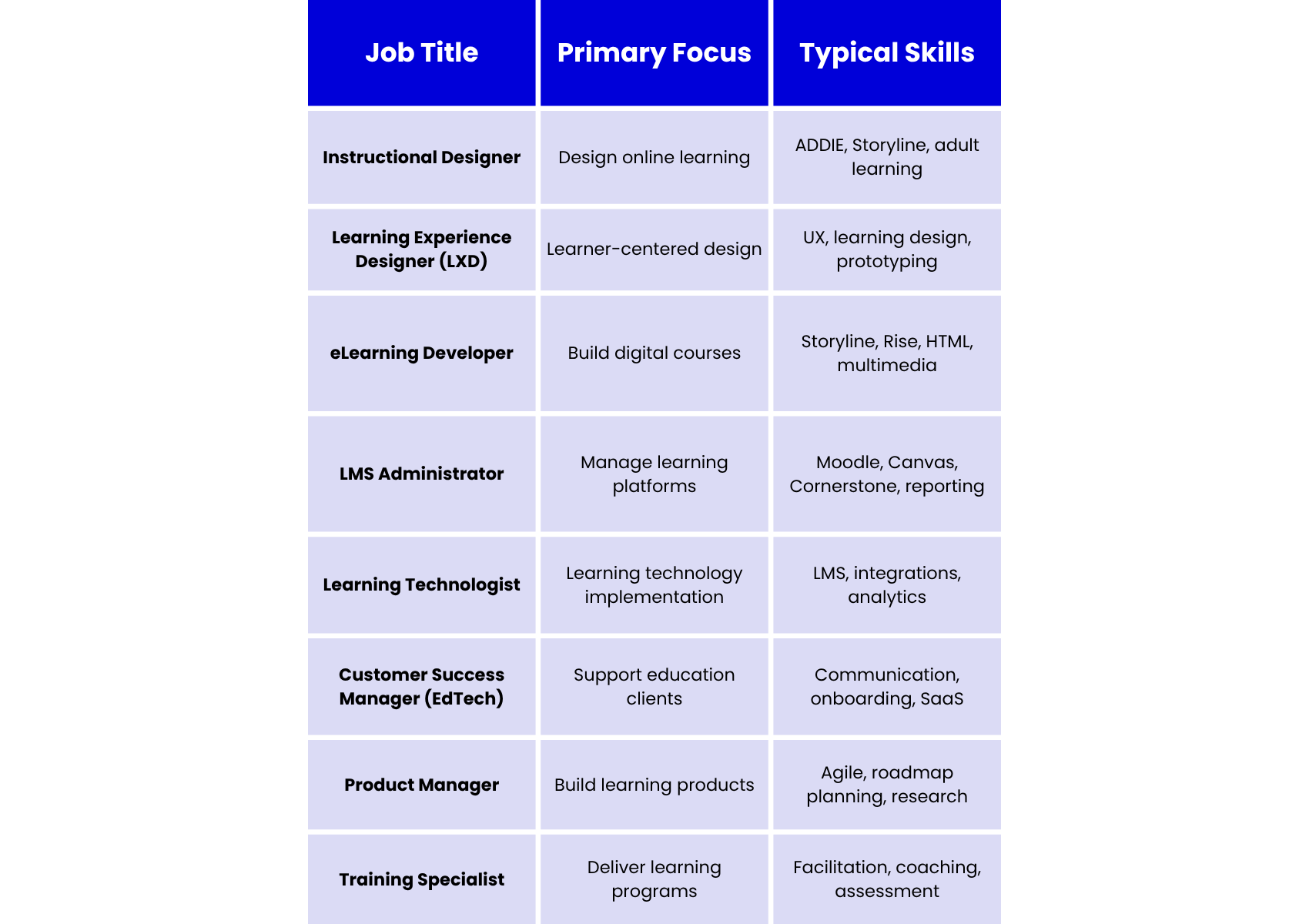
The table below highlights some of the most common EdTech careers, typical responsibilities, and the skills employers frequently request. Reviewing these roles can help you identify where your experience best fits and which career path aligns with your interests.
Salary Insights For EdTech Jobs
Salaries vary based on experience, industry, location, and whether you work for a startup, SaaS provider, university, or enterprise organization. Remote positions may also offer different compensation depending on the employer's hiring location.
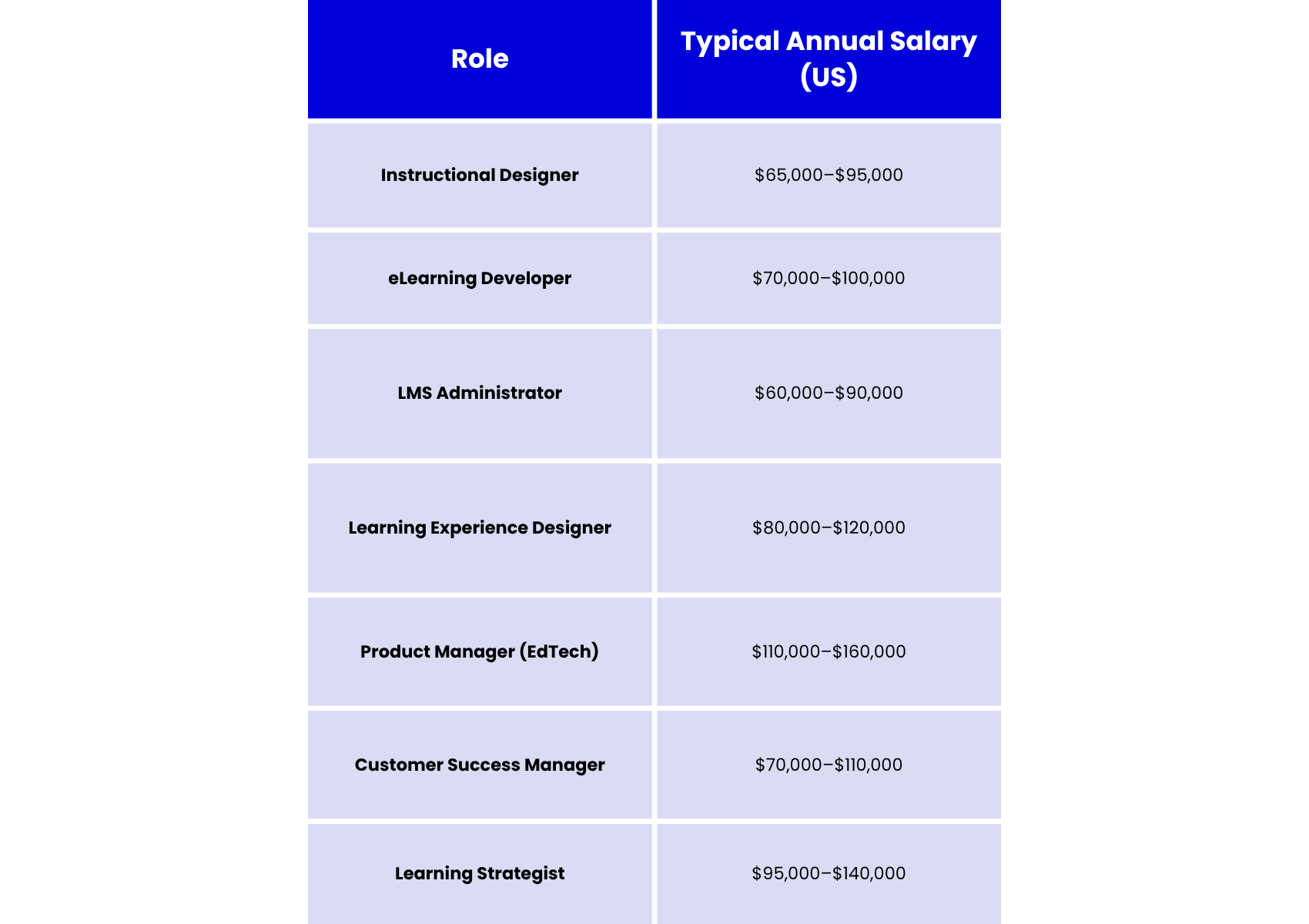
Salary ranges are estimates and vary by employer, experience, and location.
Why EdTech Careers Are Growing
Education is moving more and more online. Companies are looking for people who understand both teaching and technology to help students and employees do better.
Some of the main reasons for this growth are:
- Online learning expansion
- Corporate upskilling initiatives
- AI-powered learning platforms
- Skills-based workforce development
- Learning analytics
- Digital transformation projects
- Hybrid education models
Because of these trends, there is a growing need for people with skills in both technology and education.
Remote EdTech Jobs
The EdTech industry now offers flexible work options, so remote EdTech jobs have become some of the most popular roles in Learning and Development.
Some of the most common fully remote jobs are:
- Instructional Designer
- eLearning Developer
- Learning Experience Designer
- LMS Administrator
- Customer Success Manager
- Technical Writer
- Learning Consultant
- Product Designer
- Curriculum Developer
Many companies also offer hybrid work, so teams can work together in person at times while still maintaining flexible schedules.
Get Ready to Land Your Next Job
From common interview questions to workplace communication tips, our expert guides will help you prepare with confidence and stand out throughout the hiring process.
- Top Job Interview Questions And How To Answer Them (2026 Guide)
- Icebreaker Questions For Work: 50+ Ideas For Interviews, Meetings, And Team Building
EdTech Jobs For Former Teachers
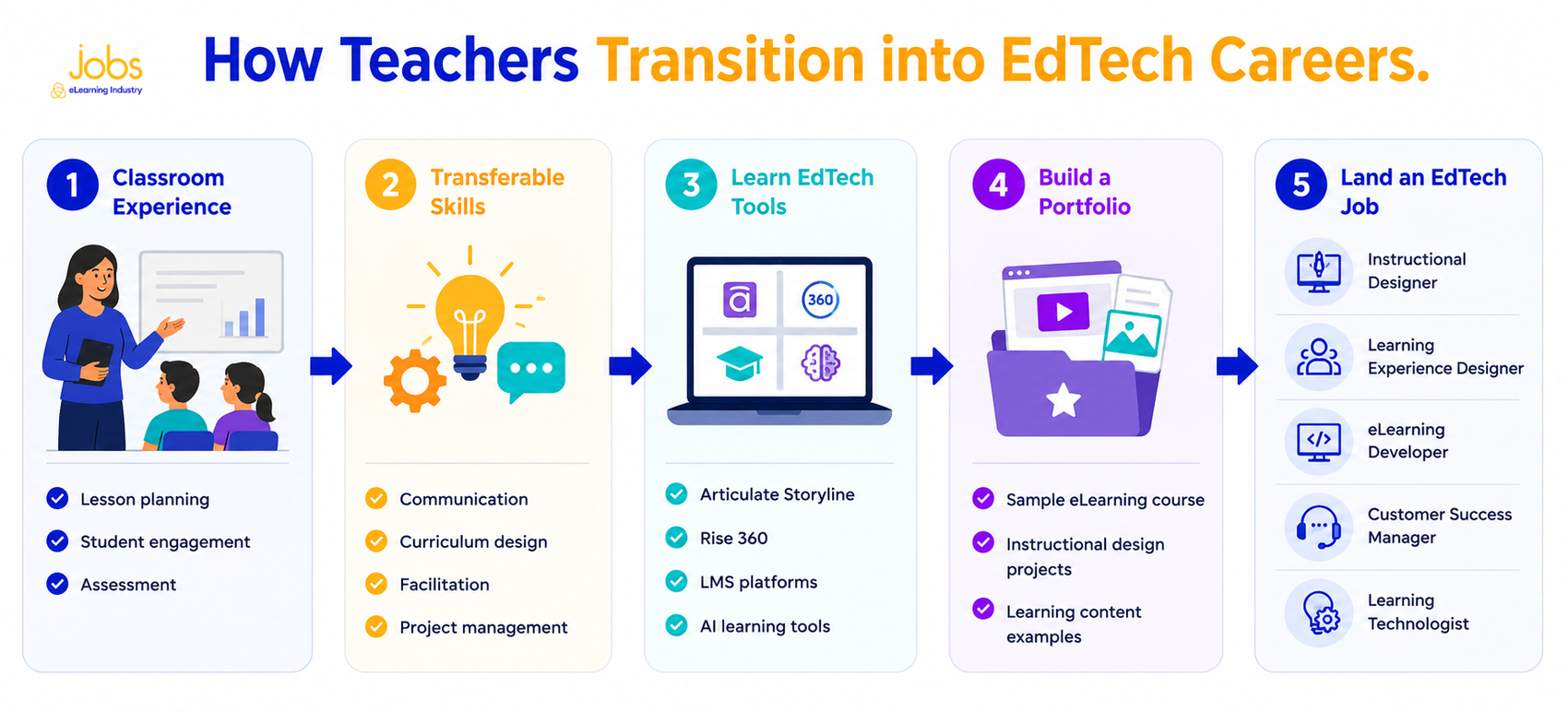
One of the fastest-growing search trends is EdTech jobs for former teachers. Teaching experience provides valuable skills that transfer naturally into educational technology.
Transferable skills include:
- Lesson planning
- Curriculum development
- Assessment design
- Communication
- Classroom facilitation
- Coaching
- Learning evaluation
- Stakeholder management
Popular transition roles include:
- Instructional Designer
- Customer Success Specialist
- Training Consultant
- Learning Designer
- Curriculum Developer
- Education Consultant
- Implementation Specialist
Many employers actively recruit former educators because they understand how people learn.
Skills Employers Look For In EdTech Jobs
Employers usually look for people who have experience in learning, technology, and business.
Technical skills:
- Articulate Storyline
- Rise 360
- Moodle
- Canvas
- SCORM
- xAPI
- Learning analytics
- AI learning tools
Professional skills:
- Project management
- Communication
- Problem solving
- Collaboration
- UX thinking
- Content development
- Stakeholder management
- Data analysis
If you create a portfolio that shows these skills, you will have a better chance of getting hired.
Where Can You Find EdTech Jobs?
EdTech professionals work in many different industries, not only in schools and universities. Knowing where these jobs are can help you expand your search and find roles that fit your skills and career goals.
The table below shows the main types of employers that hire for EdTech jobs, the roles they often look for, and what you can expect from each workplace.
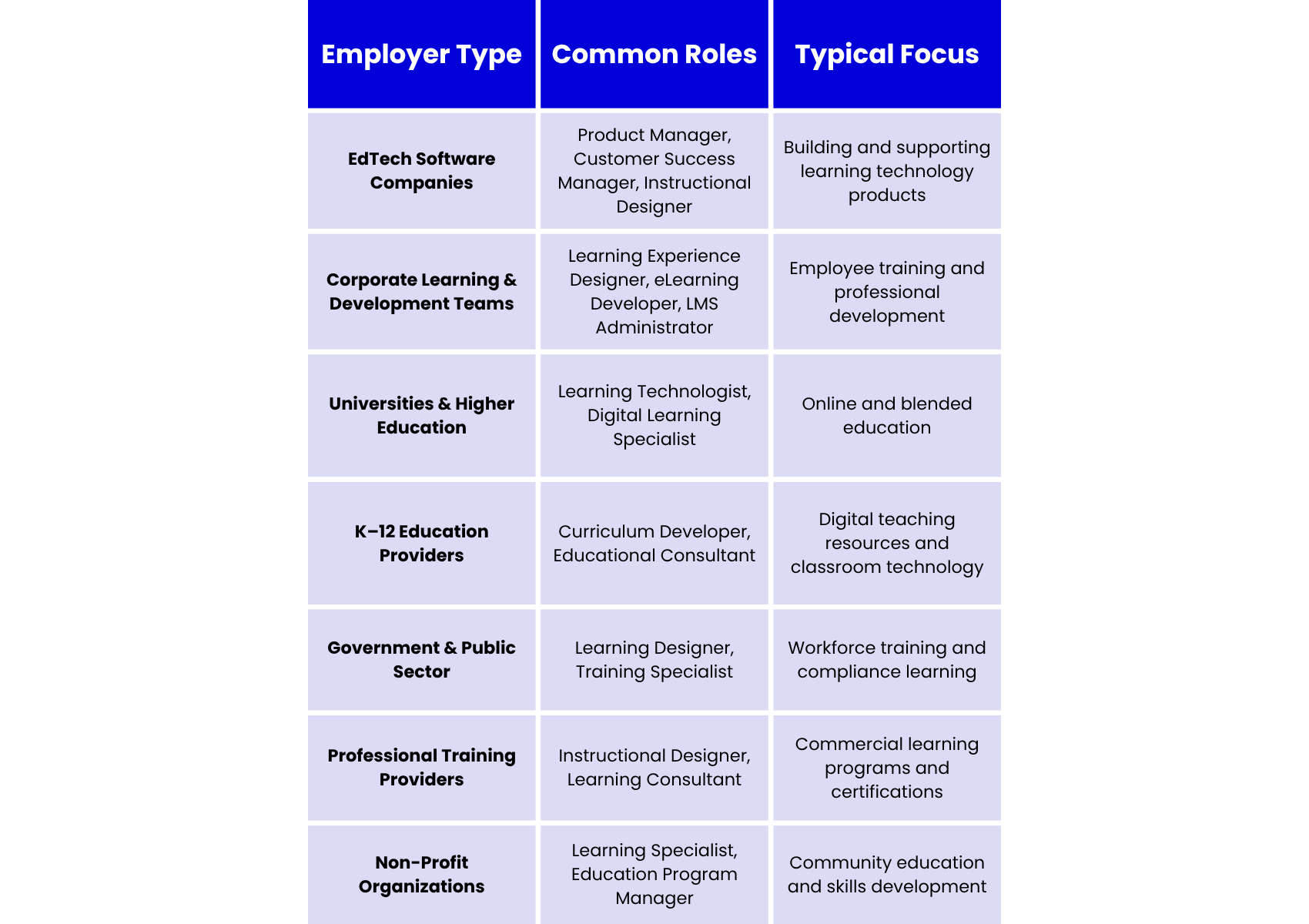
If you’re interested in on-site, hybrid, or remote EdTech jobs, you’ll find opportunities at every level of the learning ecosystem. Many organizations also hire former teachers, valuing their classroom experience, curriculum knowledge, and ability to engage learners. As digital learning grows, employers are looking for people who can blend educational skills with technology. This makes EdTech a flexible and forward-looking career choice.
Continue Your Career Journey
Looking for more guidance before applying? Explore our expert career resources to learn how to break into eLearning, transition from another field, discover entry-level opportunities, and understand what different roles pay.
- How to Get a Job in eLearning: A Step-by-Step Career Guide
- How To Transition Into An eLearning Career (From Any Background)
- Entry-Level eLearning Jobs: What To Apply For With No Experience
- eLearning Salaries In 2026: What Different Roles Really Pay
How To Start Your EdTech Career
Whether you're entering the industry or advancing your career, following a structured approach can improve your chances of landing the right role.
- Identify your preferred career path.
- Build relevant technical skills.
- Create a professional portfolio.
- Tailor your CV for EdTech employers.
- Apply consistently.
- Set job alerts.
- Continue learning through certifications and practical projects.
Get Matched with the Right EdTech Jobs
Upload your resume to streamline your job search and improve your chances of connecting with employers hiring for EdTech, remote EdTech, instructional design, and learning technology roles. A complete profile helps you apply faster and stay ready for your next career move.
FAQs About EdTech Jobs
1. What are the highest-paying EdTech jobs?
Product Managers, Learning Strategists, Senior Learning Experience Designers, AI Learning Specialists, and Director-level Learning Technology roles are typically among the highest-paying positions in the EdTech industry. Compensation depends on experience, company size, and location.
2. Is EdTech a stable career path?
Yes. EdTech continues to experience strong demand due to digital transformation, online education, corporate learning, workforce upskilling, and AI-driven learning technologies. Skilled professionals remain highly sought after across education and business sectors.
3. What does an EdTech professional do?
An EdTech professional develops, supports, or manages technology that improves learning experiences. Responsibilities may include designing online courses, managing learning platforms, creating digital content, implementing learning technology, analyzing learner data, or supporting educational software.
4. Can I get remote EdTech jobs without teaching experience?
Yes. Many employers hire professionals with backgrounds in technology, design, project management, customer success, content development, and software. Demonstrating relevant technical skills and a strong portfolio can improve your chances of securing remote opportunities.
5. Are EdTech jobs suitable for career changers?
Absolutely. Professionals from education, HR, marketing, software development, graphic design, and corporate training frequently transition into EdTech. Transferable skills such as communication, instructional design, and project management are highly valued.
6. What qualifications do I need for EdTech jobs?
Requirements vary by role. Many employers look for experience with instructional design, LMS platforms, eLearning authoring tools, project management, or educational technology. Relevant certifications, a strong portfolio, and practical experience often carry as much weight as formal qualifications.
Jobs {{total_jobs_count}}
{{pagination_label}}
No jobs were found.
Loading...
{{notification.msg}}