

Why eLearning Salaries Are Changing In 2026
eLearning salaries have shifted in recent years due to a variety of major industry changes. First and foremost, organizations rely even more on online training and are investing heavily in digital learning initiatives to empower their employees and bridge gaps, which means that they're looking for skilled eLearning pros to help them achieve L&D outcomes and increase ROI.
Artificial Intelligence and automation are also influencing salary trends. AI-powered tools can now assist with tasks such as content creation, course personalization, and learner analytics. While this automation speeds up the production process, it also increases the value of professionals who know how to design learning strategies, manage AI tools, and create engaging educational experiences that technology cannot deliver without the all-important tech-human partnership. Last but not least, remote hiring has expanded the talent pool. Employers can recruit eLearning professionals from anywhere in the world and tap into a global talent pool, thereby expanding the average salary range.
This guide delves into how much eLearning jobs actually pay, which roles earn the highest salaries, and whether this field is still financially viable in 2026.
Key Takeaways
- eLearning salaries vary significantly by role, experience, and location.
- Instructional designers and learning strategists remain among the most in-demand roles.
- Technical skills and analytics expertise often lead to higher pay.
- Remote work is increasing salary flexibility across regions.
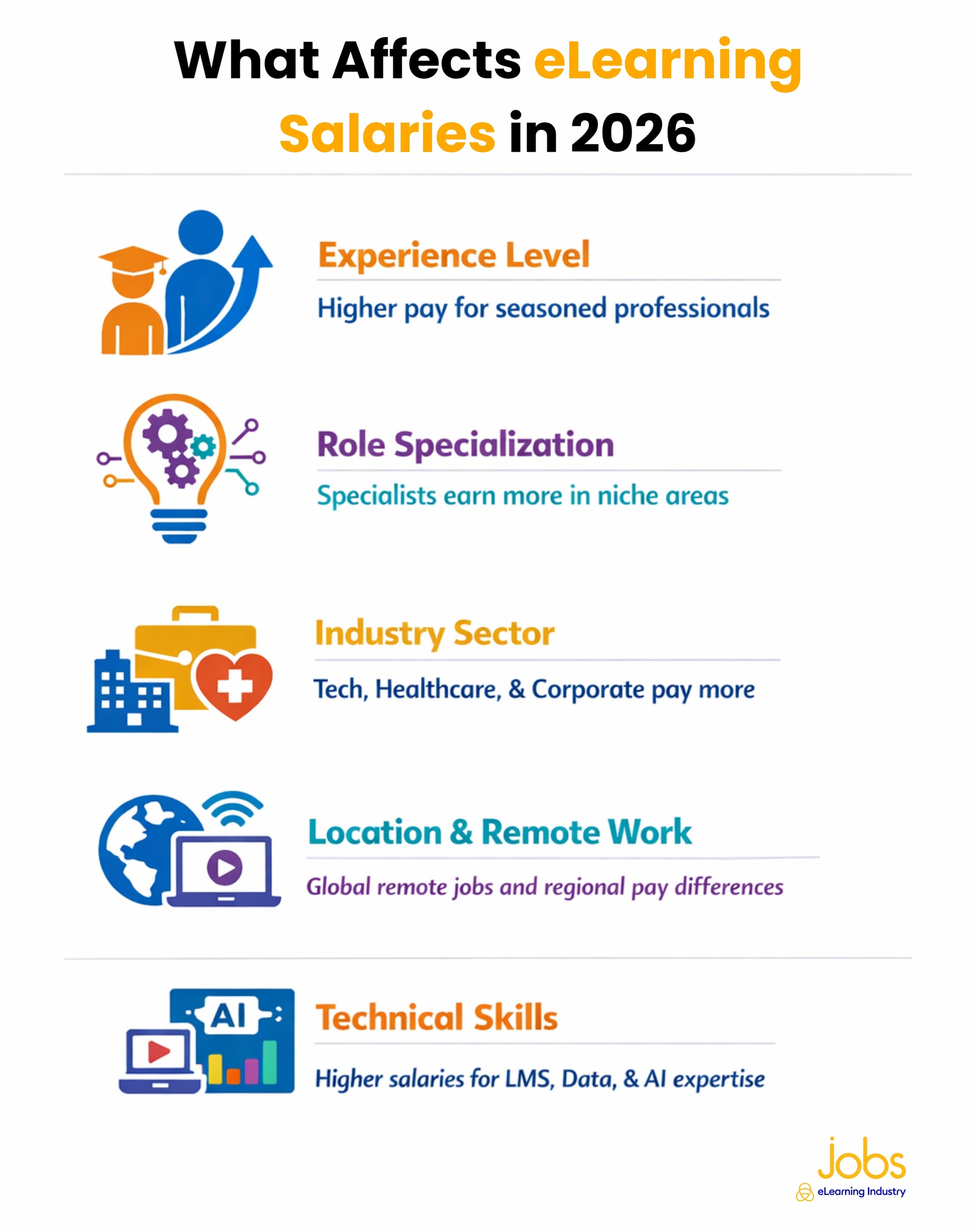
What Affects eLearning Salaries In 2026
Experience level is still one of the most significant salary factors. Entry-level professionals, such as junior Instructional Designers or learning coordinators, typically earn less because they are still developing core skills. On the other hand, professionals with several years of experience often command higher pay due to their ability to manage projects, design comprehensive learning programs, and lead training initiatives.
Role specialization also plays a big part in the eLearning salary 2026 differences. General Instructional Designers may earn moderate salaries, while specialists in areas such as Learning Experience Design, learning analytics, or learning technology integration often get higher pay. This is primarily because specialized roles require more niche expertise and a deeper understanding of emerging tech.
The industry can also affect earnings. For example, working in technology companies, healthcare organizations, or corporate training environments usually pays more than working in nonprofit or education sectors. Industries that rely heavily on employee training and compliance often allocate bigger budgets to L&D.
Another thing to consider is location and remote work opportunities. In the past, people working in major cities often earned more due to higher living costs. However, remote work now allows companies to recruit talent globally and offer a wider range of compensation packages. Finally, professionals with experience in LMSs, multimedia development, data analysis, and AI-powered learning tools are often more valuable to employers, who are willing to pay more for technical skills.
Average eLearning Salaries By Role
Now that we've brushed the surface of salary factors and what employers evaluate when creating compensation packages, let's break down the average pay ranges by role.
Instructional Designer Salary
Instructional designers must be able to create effective learning experiences by applying educational theory, digital tools, and instructional methodologies. This typically includes a variety of job responsibilities, ranging from designing courses and immersive activities that bridge skill gaps to evaluating training outcomes and learner performance. Instructional Designers often use tools such as authoring software, Learning Management Systems, and multimedia editing platforms in their day-to-day workflow.
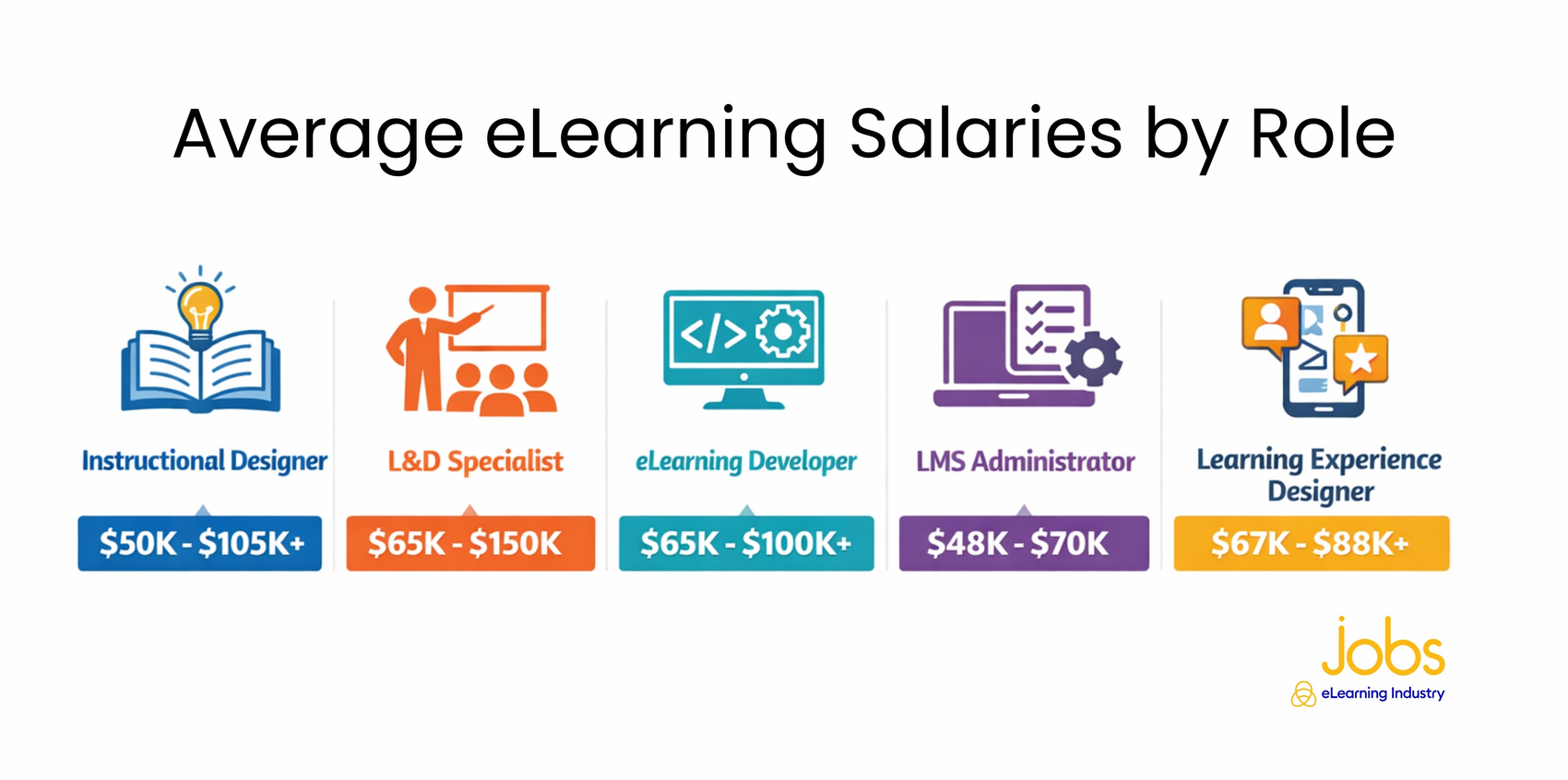
Entry-level IDs with 0-2 years of experience usually earn around $50,000 to $75,000 annually. Mid-level professionals with several years of experience might expect to earn $65,000 to $90,000, while senior Instructional Designers with leadership responsibilities often earn $80,000 to $105,000 or more, depending on their level of expertise. Some of the factors that influence the Instructional Designer salary 2026 are experience levels, portfolios that demonstrate real-world value, specialization, the size of the industry or organization, and technical know-how.
Learning & Development Specialist Salary
Learning and Development (L&D) specialists are responsible for improving workforce skills and supporting employee training initiatives. They work closely with HR teams, managers, and leadership to develop training programs aligned with business goals. Corporate L&D roles usually involve training needs assessments, designing and delivering professional development programs, managing onboarding and employee training initiatives, and evaluating training effectiveness through performance metrics.
Salary expectations greatly depend on the organization, but mid-level L&D specialists typically earn between $65,000 to $76,000 per year on average. L&D managers may earn $76,000 to $100,000, while directors or senior leaders can earn over $110,000 in large organizations. However, more experienced professionals or consultants can earn significantly more depending on their strategic responsibilities.
One of the reasons why many eLearning professionals venture down this career path is the growth opportunities. You can advance into roles such as Learning Strategy Director, Talent Development Director, or Chief Learning Officer, which have average Learning and Development salary ranges of $130,000 to $150,000.
eLearning Developer Salary
eLearning developers focus on the technical side of digital learning production. While Instructional Designers plan learning strategies, developers build the interactive courses, simulations, and multimedia experiences that learners actually use. Because eLearning developers combine programming, design, and instructional technology expertise, they often earn higher salaries than many other learning professionals thanks to the technical skill premium. Employers are usually willing to pay more for professionals who can both design and develop digital learning solutions.
Typical job responsibilities include building interactive courses using authoring tools, developing multimedia content, programming custom learning experiences, integrating courses with LMSs, and troubleshooting technical issues with learning platforms. eLearning Developers might also work with HTML5 development frameworks, animation software, and video editing tools, as part of the multimedia and development aspects of the role.
Professionals who bring Instructional Design knowledge and software development skills to the table are especially valuable because they can manage entire learning production workflows. eLearning developer salaries typically range from $65,000 to $90,000, though senior developers can exceed $100,000 annually depending on their technical expertise. These figures are higher than those for many other eLearning careers because the job calls for technical specialization in order to produce L&D courses that are functional and aligned with business objectives.
LMS Administrator Salary
LMS administrators manage the day-to-day operations of learning platforms. Managing user accounts and permissions, uploading and organizing course content, integrating new learning tools and plugins, and troubleshooting technical issues are all part of the job description. Another key responsibility is data analysis. LMS administrators may have to generate reports on everything from learner participation and course completion rates to assessment results and training compliance.
LMS administrator salaries usually range from $48,000 to $70,000 annually, particularly in academic institutions or smaller organizations. However, administrators with advanced technical skills, such as system integration or learning analytics expertise, can earn significantly higher salaries. The demand for this role is growing primarily because more organizations are integrating AI-driven learning tools and placing greater focus on data and analytics.
Learning Experience Designer (LXD) Salary
Learning Experience Designers (LXDs) are a more recent career path. This job focuses more on overall learner experience, combining principles from User Experience (UX) design, psychology, and education. Their responsibilities often include designing learner journeys and course interfaces, conducting user research and usability testing, creating interactive and immersive learning experiences, integrating gamification and storytelling techniques, and optimizing courses to improve engagement and accessibility.
LXDs often have a higher strategic impact because they work closely with developers, designers, and business leaders to align learning experiences with broader organizational goals. Some of the critical areas they concentrate on are learner engagement, course completion rates, and employee performance outcomes.
The average eLearning job salary for this role is around $67,000 to $88,000 annually. However, senior LXDs working in technology companies or large corporations may earn six-figure salaries, especially when they lead major learning initiatives or manage design teams.
Explore roles and see current salary ranges!
Highest-Paying eLearning Roles In 2026
One of the highest-paying and in-demand roles is the Learning Strategist. This job focuses on developing long-term learning strategies that align training programs with business objectives. This involves analyzing skill gaps, recommending the right learning technologies, and measuring the effectiveness of training initiatives. Because they influence company-wide learning performance, their expertise comes at a premium. On average, learning strategists earn around $92,700 per year, with more experienced professionals making over $110,000 annually, depending on experience and location.
Another well-paid position is Head of Learning. This leadership role oversees an organization's entire L&D function, including budgets, training teams, and strategic planning. They ensure learning programs support business goals and employee growth. Salaries for L&D leadership roles often range from $130,000 to $150,000 or more per year, particularly in large organizations or technology companies.
A relatively new role many eLearning pros are venturing into is the AI Learning Specialist role. These professionals use AI tools to build adaptive learning platforms, automate content creation, and analyze learner data. Their work helps organizations deliver personalized learning experiences at scale. Depending on expertise in AI and data analytics, specialists can earn approximately $90,000 to $120,000 or more annually.
Another highly paid role is Senior Instructional Designer. These professionals lead teams who create impactful learning programs, mentor junior designers, and ensure courses follow effective Instructional Design models. They also collaborate with SMEs and use multimedia tools to create engaging digital learning experiences. Senior instructional designers typically earn $80,000 to $105,000, with higher salaries for those managing large projects or teams.
How Experience Level Affects eLearning Salaries
Aside from eLearning salary trends, one determinant of pay is and always will be your level of experience. So, here's a quick look at what you can expect for each experience tier.
Entry-Level eLearning Salaries
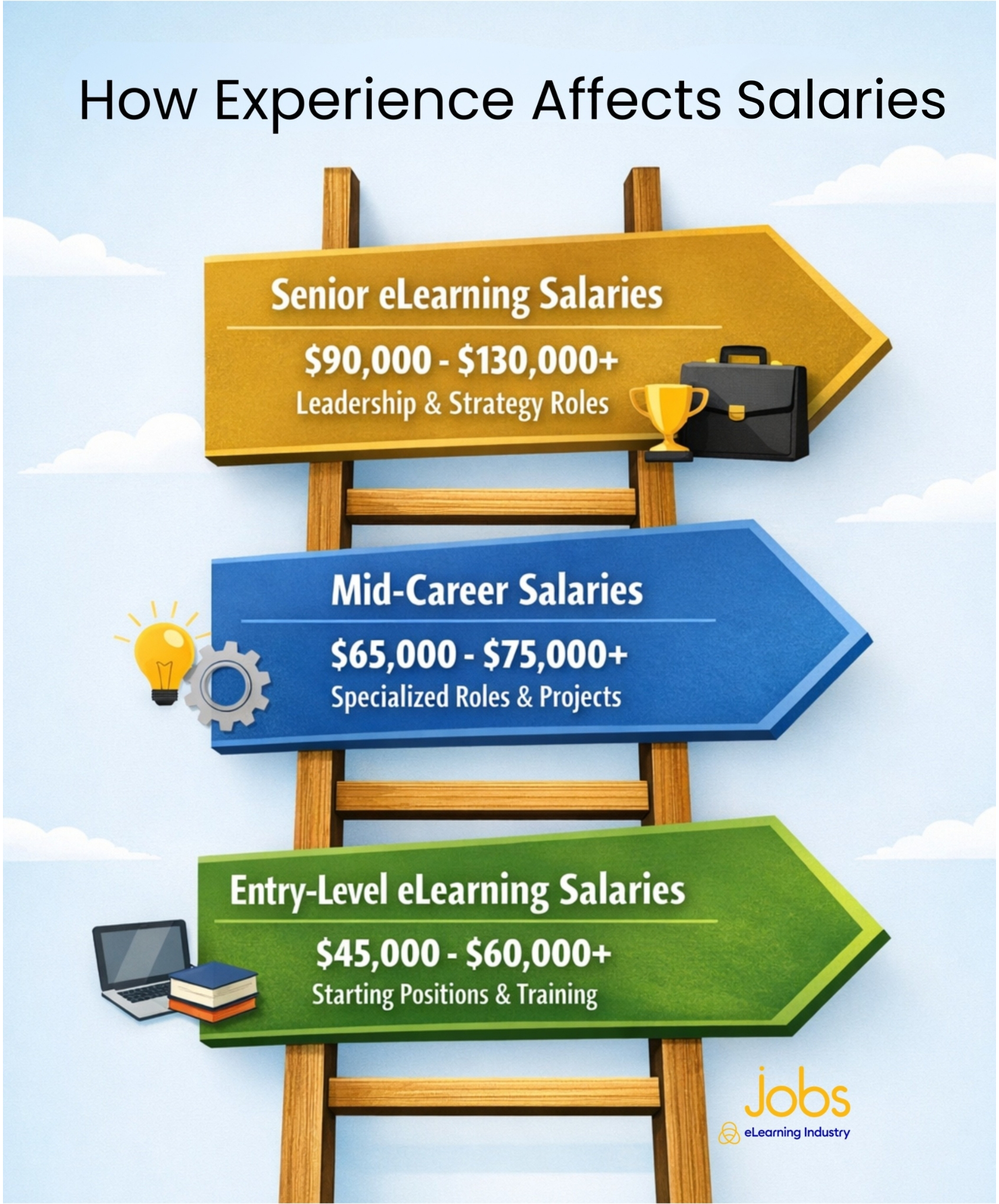
Entry-level eLearning salaries are usually more modest because professionals are still developing their technical and instructional skills. Roles such as junior Instructional Designer or eLearning developer generally involve supporting senior team members, creating basic learning materials, and gaining firsthand experience with authoring tools and LMSs. Salaries for beginners typically range from about $45,000 to $60,000 annually, depending on location and organization size. At this stage, professionals focus on building portfolios, understanding learning theory, and gaining experience in course development and digital content creation.
Mid-Career Salaries
As professionals gain three to five years of experience, they often move into mid-career roles. These positions include Instructional Designer, Learning Experience Designer, or eLearning project lead. At this stage, digital learning salaries usually rise to around $65,000–$75,000 or more, which reflects greater responsibility and specialized skills. Mid-career professionals usually manage larger projects and design full learning programs rather than individual modules.
Senior eLearning Salaries
Senior eLearning salaries are significantly higher because these roles involve strategic leadership. Senior Instructional Designers, learning consultants, or learning directors average $90,000 to $130,000 or more, depending on experience and industry. Professionals at this level often lead teams, oversee complex training initiatives, and shape organizational learning strategies.
Skills That Lead To Higher eLearning Salaries
You can significantly increase your earning potential by developing specialized, high-demand skills. One of the most sought-after is being able to use AI-enabled learning tools. This is due to the fact that many organizations are now using AI to create adaptive learning experiences, automate course development, and personalize training.
Another important skill is learning analytics. By analyzing learner data, completion rates, and performance metrics, eLearning professionals can gauge the effectiveness of training programs and make data-driven improvements. Companies value professionals who can translate learning data into actionable insights.
Advanced Instructional Design knowledge can also warrant a higher salary. You need to know how to apply learning science, design engaging learning experiences, and build structured training programs to achieve learning outcomes. Finally, multimedia development skills, such as video production, animation, and interactive content creation, give you the opportunity to design more engaging digital courses and stay competitive in the eLearning job market.
How to Increase Your eLearning Salary
Increasing your salary in the eLearning field often requires a blend of skill development, experience, and strategic career decisions. One of the most important steps is to build a strong portfolio. It should showcase well-designed courses, interactive modules, and real-world learning solutions that demonstrate your capabilities to employers. Another key factor is to develop technical skills. Being familiar with authoring tools, LMSs, multimedia production software, and emerging technologies can help you raise your salary expectations.
It is also beneficial to specialize in high-value areas such as learning analytics, AI-supported learning, accessibility design, or LXD principles. These specialized skills are growing in demand as organizations leverage more advanced digital learning solutions. Lastly, gain as much hands-on experience as possible so that you can move into strategic roles over time. Positions such as learning strategist, learning consultant, or training manager involve planning large-scale learning initiatives, which typically lead to higher salaries and greater career growth.
Where To Find eLearning Jobs With Competitive Salaries
Industry demand plays a major role in earning potential. Many high-paying eLearning jobs are found in sectors such as corporate training, technology companies, healthcare organizations, and enterprise software firms. These industries rely heavily on digital learning to train employees, customers, partners, and other stakeholders, which increases the need for skilled and experienced professionals. As organizations invest more in online training and workforce upskilling, the demand for eLearning professionals will continue to surge across the board.
Role specialization also affects where the best opportunities show up. Professionals who specialize in areas such as LXD, AI-powered learning systems, or learning analytics, as we mentioned earlier, often secure higher-paying roles. Employers are looking for professionals who combine Instructional Design expertise with technical skills and data-driven approaches to learning.
Finally, salary transparency trends are helping job seekers identify competitive opportunities. Platforms like Jobs by eLearning Industry and professional networks now frequently include eLearning job salary ranges in listings, allowing candidates to compare compensation right away. This transparency helps eLearning professionals negotiate better pay and choose positions that match their expertise and career goals.
If you're looking for the right role that suits your talents and meets your salary expectations, sign up for job alerts!
References:
- https://www.salary.com/research/salary/position/elearning-instructional-designer-salary
- https://hrsearch.ie/salarysurvey/HR-Search-Salary-Survey-2026.pdf
- https://indeed.com/
- https://www.bls.gov/ooh/education-training-and-library/
- https://aiapply.co/salaries/instructional-designer
- https://www.coursera.org/articles/learning-and-development-specialist-salary
- https://www.salary.com/research/salary/listing/learning-experience-designer-salary