
Why Instructional Designer Jobs Are In High Demand
Instructional Designer jobs are booming right now as more and more organizations transition from face-to-face training to digital learning. Online corporate training can span the entire employee lifecycle, from virtual onboarding to upskilling programs that help teams stay competitive.
Fortunately for those who want to break into the industry, Instructional Designers play a critical role in all of the above by turning complex information into engaging, memorable learning experiences. By applying learning theory, technology, and data-driven design, they help organizations achieve their objectives and maximize ROI.
This article has all the info you need to decide if an Instructional Design career is right for you, which ID skills you'll need to master, and what qualifications employers look for in entry-level Instructional Design jobs. If you want to be ahead of the game, upload your CV and start exploring instructional designer roles!
At A Glance
- Instructional Designer jobs focus on creating effective, outcome-driven learning experiences.
- The role combines learning theory, technology, and content strategy.
- Strong Instructional Design skills and portfolios are key to career growth.
- Instructional Designer careers offer multiple paths across corporate, EdTech, and L&D roles.
What Are Instructional Designer Jobs?
Instructional Designer jobs center on creating structured, impactful learning experiences that help people acquire knowledge and skills, and improve performance behaviors. A major part of the job description is to analyze learning needs, design curriculum, develop digital training materials, and evaluate the effectiveness of learning programs.
Unlike trainers or educators, who typically deliver instruction directly, Instructional Designers typically have a more behind-the-scenes role, shaping how learning experiences unfold. Their role focuses on learning theory, instructional strategy, and technology rather than teaching alone. This usually involves working with Subject Matter Experts, developers, and other key players in the eLearning industry. As for job sectors, you'll typically find Instructional Designers in corporate training departments, higher education institutions, government agencies, healthcare organizations, and eLearning or educational technology companies across many industries.
Common Instructional Designer Roles And Job Titles
Now that we've gone over the basics of what ID pros do and where they work, let's dive deeper into the Instructional Designer career path trajectory.
Entry-Level Instructional Designer Roles
Instructional Designer roles and job titles vary widely depending on experience level, specialization, and organizational needs. At the entry level, roles such as Junior Instructional Designer or Learning Design Assistant center on supporting course development and content creation. These professionals may help create learning materials, format eLearning modules, carry out research, and assist senior designers with more involved project tasks. Entry-level learning design jobs give you the opportunity to build skills and gain hands-on experience with tools and design best practices.
Mid-Level Instructional Designer Roles
Mid-level Instructional Designer roles often carry greater responsibility and autonomy. Titles such as Instructional Designer or Digital Learning Designer typically involve leading projects through every stage of the process, from analysis to post-training evaluation. Instructional Designer roles at this level usually collaborate with SMEs, choose instructional strategies, develop online and blended learning solutions, and assess learning outcomes. Digital learning designers often specialize in multimedia, learning platforms, and interactive technologies to fully engage learners and achieve the outcomes.
Senior & Specialized Instructional Designer Roles
Senior and specialized Instructional Designer jobs are rooted in strategy, leadership, and advanced design expertise. Positions such as Senior Instructional Designer, Learning Experience Designer (LXD), or Instructional Design Consultant involve overseeing larger-scale initiatives, mentoring teams, and shaping the holistic learning strategy. LXDs emphasize user-centered design and learner experience, while consultants provide expert guidance to drive real L&D impact. All of these senior Instructional Designer roles require deep knowledge of learning theory, technology, and performance improvement to get the job done.
Key Skills Needed For Instructional Designer Jobs
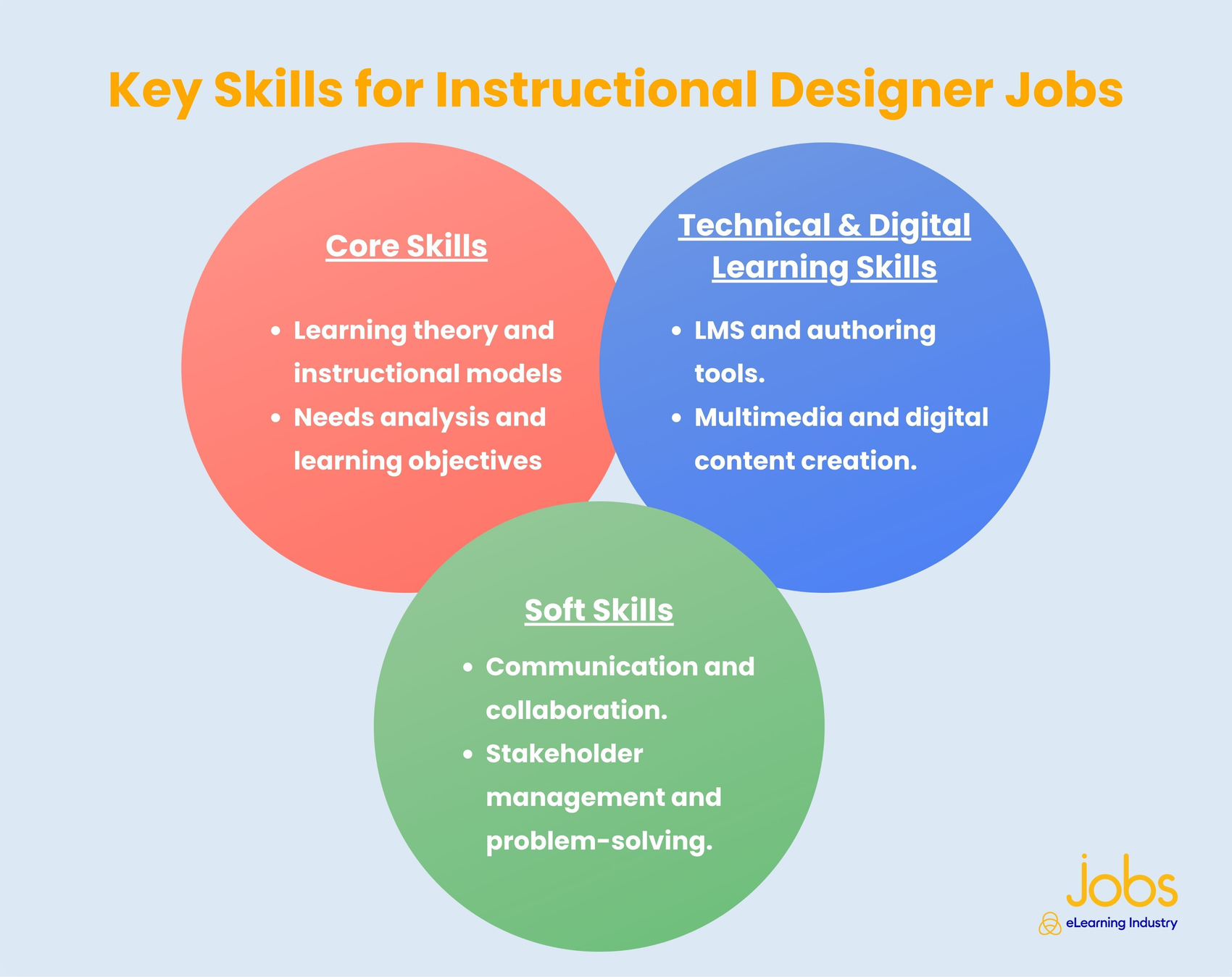
Climbing the ID career ladders requires a balanced combination of instructional expertise, technical proficiency, and strong interpersonal skills. Here are some of the top skills for Instructional Designers in these three critical areas.
Core Instructional Design Skills
A solid understanding of learning theory and instructional models is essential for Instructional Designer jobs at any level. Understanding the fundamentals of theories like behaviorism, constructivism, connectivism, and adult learning principles helps designers select the right strategies for different audiences. You should also be familiar with instructional models such as ADDIE or SAM to structure learning experiences systematically and improve knowledge retention. Likewise, you need to understand how to conduct needs analysis and define clear learning objectives. This often involves analyzing performance gaps, audience characteristics, and organizational goals to ensure that training solutions align with organizational objectives.
Technical & Digital Learning Skills
Today, Instructional Design relies heavily on tech implementation. Using Learning Management Systems (LMSs) and authoring tools enables designers to build, deliver, and manage online curriculum. In addition, multimedia and digital content creation skills are more important than ever, as Instructional Designers often develop videos, interactive modules, infographics, and assessments that enhance learner engagement. Lastly, you need to know the basic principles of visual design, accessibility, and user experience to create content that is inclusive and meaningful for your target audience.
Soft Skills For Instructional Designers
Going beyond technical abilities, soft skills such as strong communication, empathy, active listening, and collaboration enable Instructional Designers to work with SMEs, developers, and learners to achieve outcomes. Designers must be able to translate complex information into clear, learner-centered content. Stakeholder management and problem-solving skills are also part of the package. Instructional Designers must often strike a balance between competing expectations, timelines, and resource constraints, which calls for adaptability and critical thinking skills.
Instructional Designer Career Path Explained
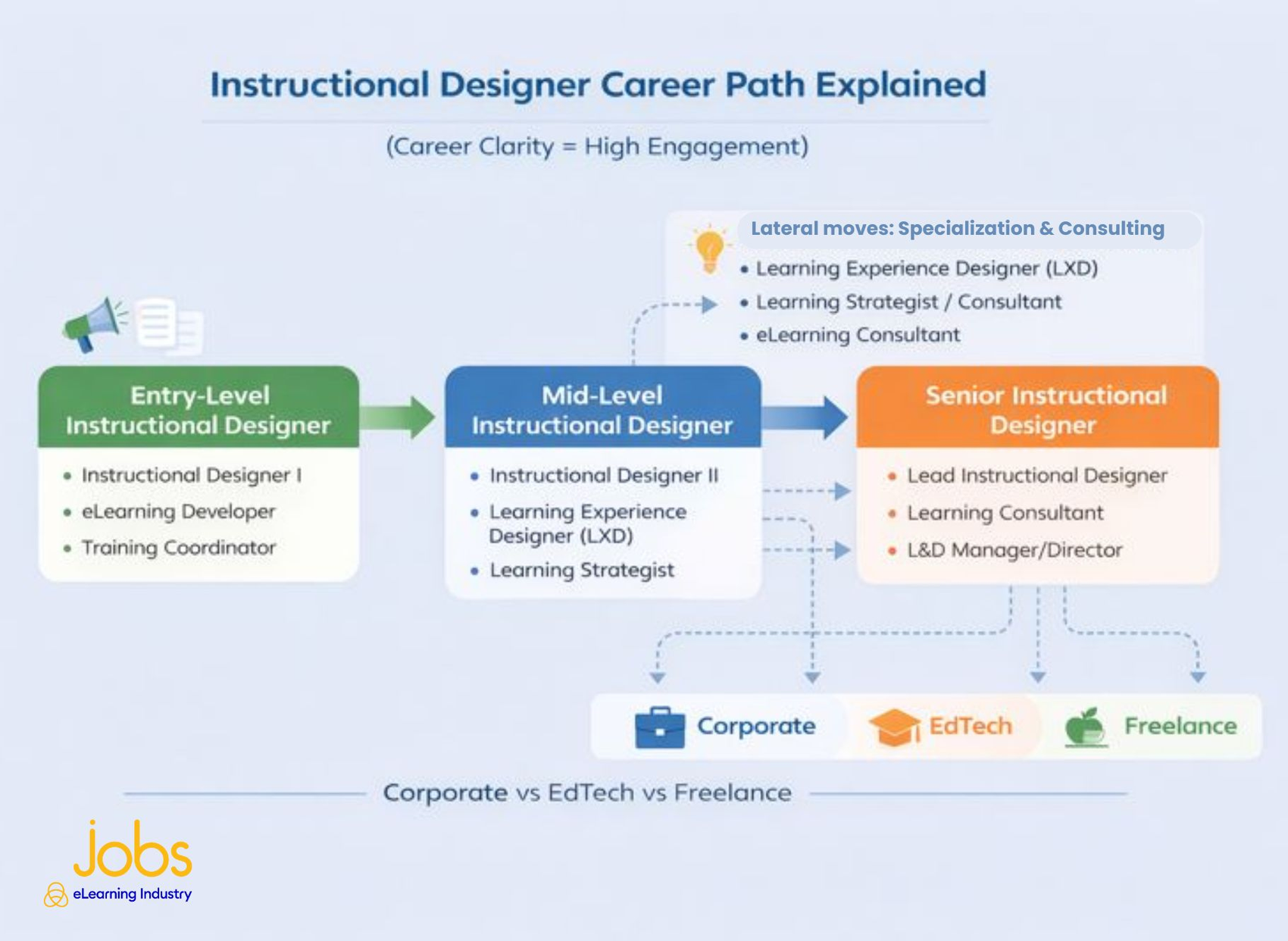
Many ID professionals begin in junior or entry-level roles, where they support course development, update learning materials, and assist with project coordination under the guidance of senior designers. As their skills and experience grow, Instructional Designers typically move into mid-level roles, accepting ownership of full projects, conducting needs analyses, and collaborating more closely with stakeholders. Moving into more senior Instructional Designer roles requires greater focus on complex initiatives, learning strategy, and quality assurance. In these Instructional Designer careers, you usually mentor team members or lead cross-functional projects.
However, it's not just about advancing in the traditional sense, as many Instructional Designers make lateral moves to expand their scope. For example, you might choose to take on Learning Experience Designer roles, which emphasize user-centered design, interaction, and engagement, combining Instructional Design with UX principles. There are also learning strategist jobs that operate at a higher level, aligning learning solutions with organizational goals and real-world performance metrics. If you're interested in working with multiple clients to diagnose learning needs and design tailored solutions across industries, then consulting might be a great option.
It's important to point out that career paths vary significantly depending on the work environment. For instance, in corporate settings, Instructional Designers focus more on employee performance, compliance, and upskilling that's tied to business outcomes. While EdTech roles center on building scalable digital learning products. In this case, you often have to collaborate with product, engineering, and marketing teams. Then there are freelance Instructional Designers who enjoy flexibility and project variety but must manage client relationships, business development, and income stability from project to project.
How Employers Hire For Instructional Designer Jobs
So, what are employers looking for when they evaluate Instructional Design job candidates? How can you make your qualifications and practical know-how even more appealing to hiring managers?
Experience Vs. Formal Education
Employers typically evaluate candidates on practical capability rather than academic credentials or certifications alone. In other words, whether you can apply all the knowledge and talents you've gathered to meet their expectations. While degrees in Instructional Design, education, or learning sciences can be helpful, organizations place greater value on demonstrated ID skills, problem-solving ability, and experience working in actual learning environments. Some of the key things they consider are whether you can analyze performance gaps, design learner-centered solutions, collaborate with stakeholders, and adapt to organizational constraints. In addition, technical proficiency, communication skills, and the ability to explain design decisions that you've made in the past clearly often carry more weight than formal degrees.
Example-Packed Portfolios
Portfolios are one of the most significant factors in the hiring process. A strong Instructional Design portfolio includes real (or realistic) project examples that highlight both the finished product and the thinking behind it. Employers want to see how candidates approach needs analysis, define learning objectives, choose instructional strategies, and gauge learning effectiveness. You should also showcase eLearning modules, storyboards, videos, job aids, and written explanations that connect your design choices to learner or business needs. Providing real-world examples helps hiring managers assess whether you're ready to take on the job responsibilities.
Deep-Dive Interviews
Interview processes for Instructional Designer roles usually include tasks or assignments. For example, candidates may be asked to review and critique existing training, create a short learning solution based on a scenario, or outline their approach to address a skills gap. Some interviews include take-home assignments, while others involve live whiteboard or discussion-based exercises. These tasks also give employers the opportunity to assess a variety of skills, ranging from communication to creative thinking.
How To Start Or Transition Into An Instructional Designer Career
Getting your first job or transitioning into an Instructional Designer career successfully requires a skills-first mindset. As mentioned earlier, employers prioritize demonstrated ability over job titles. Therefore, aspiring Instructional Designers should focus on developing core competencies, such as applying learning theories, conducting needs analyses, defining learning objectives, and designing digital courses. Another must is gaining hands-on experience with common authoring tools and Learning Management Systems, as well as basic multimedia design. Last but not least, you need to understand how to design learning solutions that address real performance or knowledge gaps, rather than focusing solely on theory.
Unlike many other career paths, building experience without a formal Instructional Design background is usually the norm. Most professionals start by creating practice projects, such as updating existing training materials, developing sample eLearning modules, or building microlearning experiences around topics they're passionate about. Volunteering for internal training initiatives at work, supporting nonprofit organizations, or freelancing on small projects can also give you valuable hands-on experience without a formal degree. Just be sure to document the design process to turn these projects into strong portfolio examples that demonstrate the development journey and top skills employers look for, not just the outcome. For example, explain the problem, audience, constraints, and objectives.
When making the switch from other fields, there are several common paths into Instructional Design. Teachers and educators often bring strong facilitation, assessment, and curriculum skills. While corporate trainers and HR professionals offer their experience with adult learning and performance improvement. Subject Matter Experts, technical writers, and customer support professionals frequently transition by delving into Instructional Design frameworks and digital tools to bridge knowledge gaps.
Where To Find Instructional Designer Jobs
General sites like LinkedIn, Indeed, and Glassdoor are often go-tos. However, specialized platforms, like Jobs by eLearning Industry, focus on Learning and Development, EdTech, or eLearning roles to give you more targeted opportunities. Using multiple job titles in searches, such as Learning Experience Designer or Training Specialist, helps uncover a wider range of listings. You can also filter by role to speed up your search.
Another consideration when searching for Instructional Designer jobs is that remote openings have expanded significantly, especially in corporate learning and EdTech. While on-site roles still exist, particularly in higher education or large organizations, remote positions offer greater flexibility and autonomy.
To stay competitive, it's critical to keep an updated portfolio, continuously build technical and design skills, and stay current with learning technologies and industry trends. Networking and professional communities also play an important role in job discovery. Fortunately, eLI has a thriving community where you can find the latest resources and stay in the L&D loop.
Is An Instructional Designer Career Right For You?
An Instructional Designer career is a great fit for people who enjoy turning even the most complex topics into clear, engaging learning experiences that make a difference. People who thrive in digital Instructional Designer jobs are typically analytical thinkers with a creative mindset. If you're someone who gravitates toward problem-solving, structuring content, and understanding how people learn, then it's right up your alley. Being curious, detail-oriented, and comfortable working with technology are major bonuses. Finally, strong communicators who ask the right questions and are open to constructive feedback often have the most success in this field.
That said, as with any rewarding career, there are downsides to think about. Instructional Designers frequently juggle multiple projects, tight deadlines, and changing priorities. Likewise, stakeholders may have unclear goals, limited availability, or differing expectations. All of this requires designers to manage scope and stress levels while tactfully negotiating solutions. Another common challenge is balancing ideal Instructional Design practices with real-world constraints. Limited budgets, timelines, or technical limitations are forces to be reckoned with. As such, designers must also stay current with evolving tools, platforms, and learning trends. In other words, it's all about continuous learning.
The long-term career outlook for Instructional Designers is brighter than ever, thanks to the growing demand for workforce upskilling and remote training solutions. With professional experience comes increased flexibility, remote work opportunities, and specializations to mix things up, offering a sustainable and adaptable career path in 2026 and beyond.
Finally, when you're ready to land your first role in ID, you can set alerts for Instructional Designer jobs that match your talents and level of expertise!