?
{{job.title}}
{{job.company_name}}
Private Employer
eLearning Developer Jobs
eLearning Developer jobs are growing quickly in L&D, corporate training, and EdTech. More organizations now use digital learning to onboard staff, provide compliance training, and help employees keep learning. Because of this, skilled eLearning Developers are needed in many industries.
If you are thinking about a career in eLearning or searching for your next job, this guide will help. It covers what eLearning Developers do, the skills you need, salary ranges, and tips for finding the best remote and on-site jobs.
What Is An eLearning Developer?
An eLearning Developer designs interactive online courses by combining instructional content, multimedia, and technology. Their goal is to turn learning objectives into engaging digital lessons that help people learn better and remember more.
Common responsibilities for this role are:
- Creating online courses and training modules
- Designing interactive learning activities and assessments for learners
- Working with authoring tools like Articulate Storyline and Adobe Captivate
- Integrating content into Learning Management Systems (LMSs)
- Working closely with Instructional Designers, SMEs, and L&D teams
- Testing courses and making improvements to enhance the learning experience
People looking for eLearning developer jobs often have experience in education, Instructional Design, multimedia, graphic design, or training.
A typical day of an eLearning developer might include:
- Building interactive scenarios, quizzes, and simulations in Articulate Storyline or Rise 360
- Editing videos, graphics, audio files, and other multimedia assets
- Uploading courses to a Learning Management System (LMS)
- Testing SCORM or xAPI packages to ensure compatibility and learner tracking
- Reviewing feedback from Subject Matter Experts (SMEs) and making course revisions
- Collaborating with Instructional Designers to bring storyboards and learning objectives to life
- Troubleshooting technical issues and improving the learner experience
For example, an eLearning Developer working in healthcare might create compliance training for clinical staff, while someone in the technology sector could build onboarding programs for new employees. In higher education, eLearning Developers often support faculty by transforming classroom materials into engaging online courses.
The role is ideal for professionals who enjoy blending technology, creativity, and education. No two projects are exactly alike, and developers frequently work on a variety of learning experiences ranging from short microlearning modules to large-scale certification programs.
Start exploring eLearning Developer jobs
Don't miss new eLearning Developer opportunities. Set up job alerts to receive the latest remote and on-site openings directly in your inbox.
What Employers Look For In eLearning Developer Jobs
While every organization has different requirements, most eLearning Developer jobs focus on a combination of technical expertise, instructional design knowledge, and project collaboration skills. Employers want professionals who can transform learning content into engaging, effective, and easy-to-use digital experiences.
Common requirements found in eLearning Developer job descriptions include:
- Experience with Articulate Storyline, Rise 360, or Adobe Captivate
- Knowledge of SCORM, xAPI, and Learning Management Systems (LMSs)
- Ability to create interactive learning activities, simulations, and assessments
- Multimedia development skills, including video, audio, and graphic editing
- Understanding of accessibility and responsive design principles
- Strong communication and project management skills
Many employers also look for candidates who can work closely with Subject Matter Experts (SMEs), Instructional Designers, and Learning & Development teams to deliver training projects on time and within scope.
Common eLearning Developer Job Titles
Depending on the organization, similar roles may appear under different titles, including:
- eLearning Developer
- eLearning Content Developer
- Digital Learning Developer
- Learning Experience Developer
- Multimedia Learning Developer
- Learning Technology Specialist
- Instructional Media Developer
Job seekers should search for multiple title variations to discover more opportunities, especially when exploring remote eLearning Developer jobs or specialized positions within healthcare, technology, finance, and higher education.
eLearning Developer vs. Instructional Designer: What's The Difference?
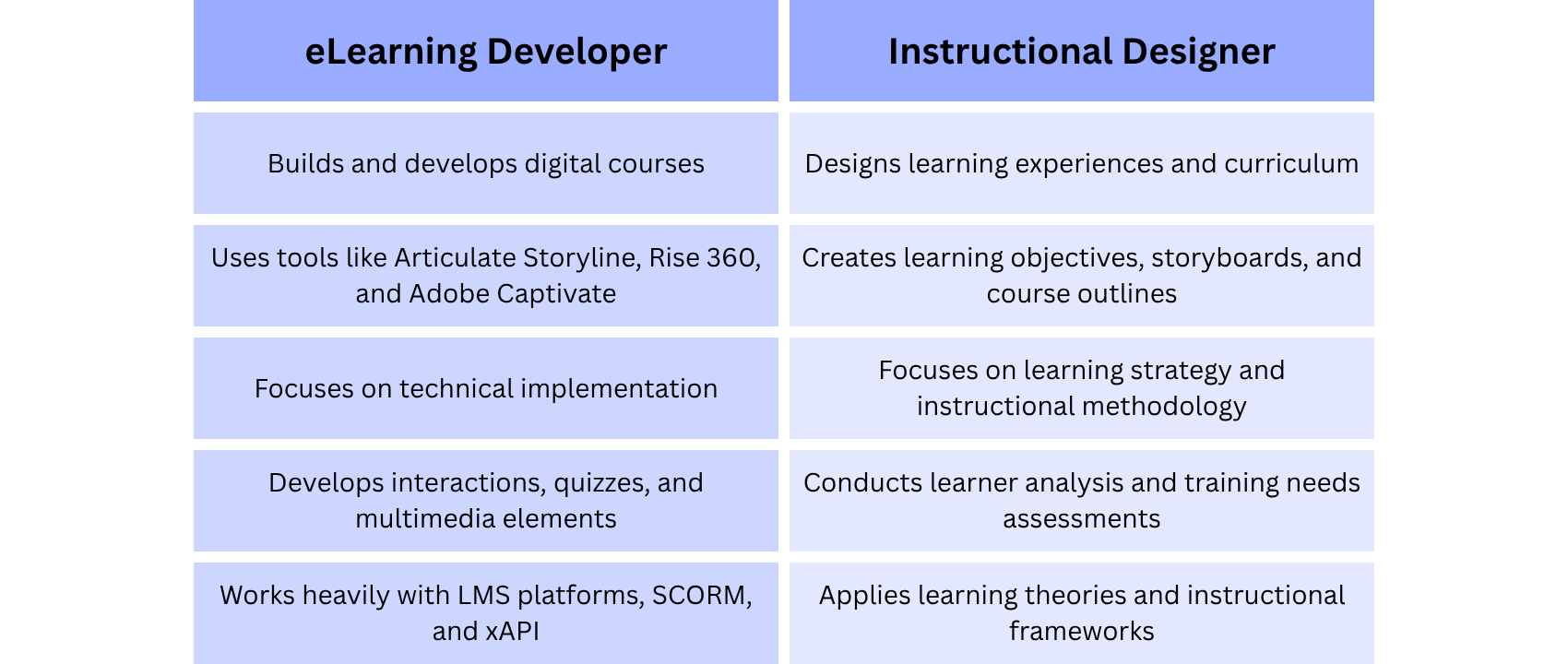
Many people use the terms eLearning Developer and Instructional Designer interchangeably, but they are distinct roles with different responsibilities. In some organizations, one person may perform both functions. In larger teams, however, the roles are usually separate.
An Instructional Designer focuses on the learning strategy behind a course. They identify learning objectives, analyze learner needs, create storyboards, and determine the most effective instructional approaches.
An eLearning Developer focuses on building the final learning experience. They use authoring tools and multimedia assets to transform instructional designs into interactive online courses that learners can access through a Learning Management System (LMS).
eLearning Developer Career Overview
Industries Hiring eLearning Developers
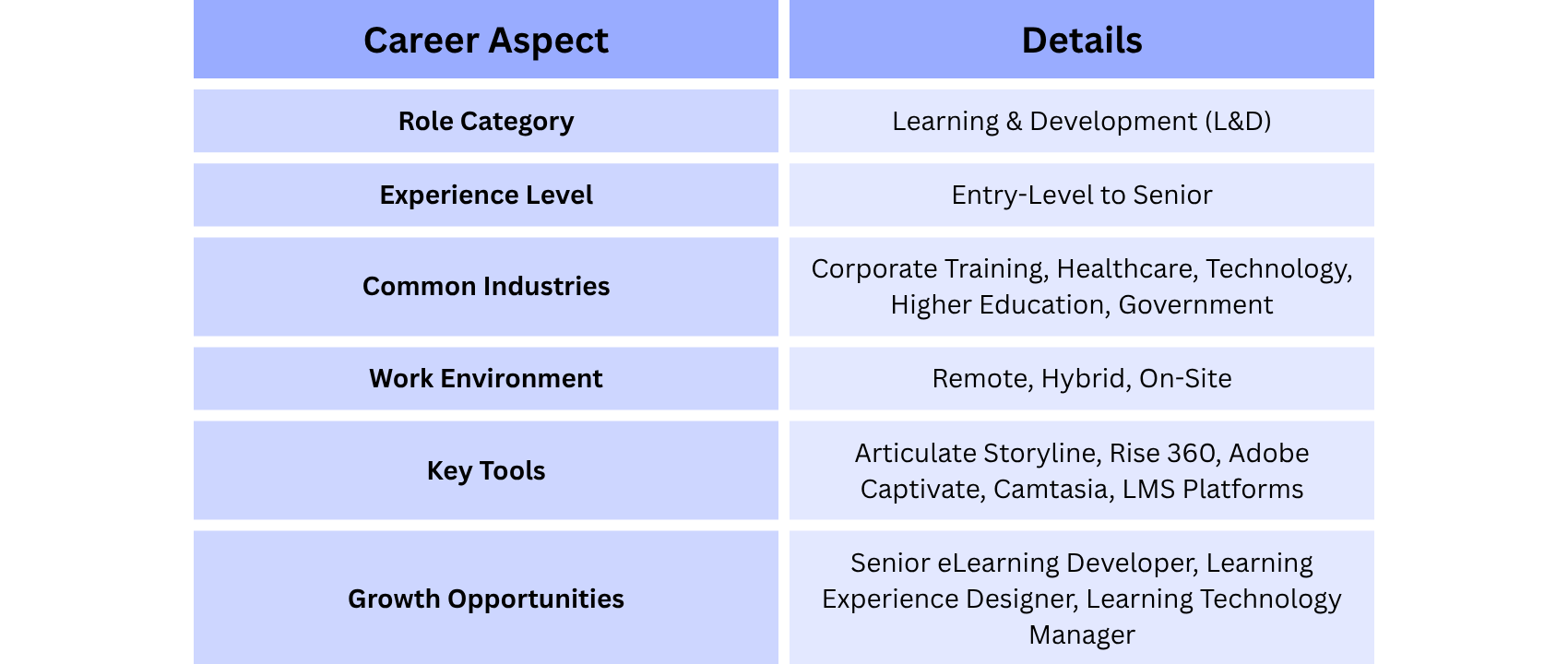
eLearning Developers are needed across a wide range of industries as organizations invest in digital training, employee development, and online education. While the core responsibilities remain similar, the content and learning goals can vary significantly by sector.
Corporate Learning And Development
Many eLearning Developers work within corporate L&D teams, creating onboarding programs, leadership training, compliance courses, and professional development content for employees. Large organizations often hire developers to support ongoing workforce training initiatives.
Healthcare
Healthcare organizations rely on eLearning Developers to build training programs for clinical staff, patient safety procedures, regulatory compliance, and continuing medical education. Accuracy, accessibility, and compliance are especially important in this sector.
Financial Services
Banks, insurance providers, and financial institutions use eLearning to deliver regulatory training, cybersecurity awareness programs, and professional certification preparation. Developers in this field often work closely with compliance and risk management teams.
Technology Companies
Technology organizations frequently hire eLearning Developers to create product training, customer education programs, technical onboarding materials, and software adoption courses. These roles often involve collaboration with product, support, and customer success teams.
Higher Education
Colleges, universities, and online learning providers employ eLearning Developers to support faculty, develop online courses, and improve digital learning experiences for students. Many roles focus on instructional technology and course design.
Government And Public Sector
Government agencies use eLearning to train employees, support compliance requirements, and deliver large-scale workforce development programs. These positions often involve creating accessible learning content that meets established standards and regulations.
Because digital learning is now a strategic priority in many sectors, eLearning Developer jobs can be found in both traditional education environments and industries that have never considered themselves part of the learning space.
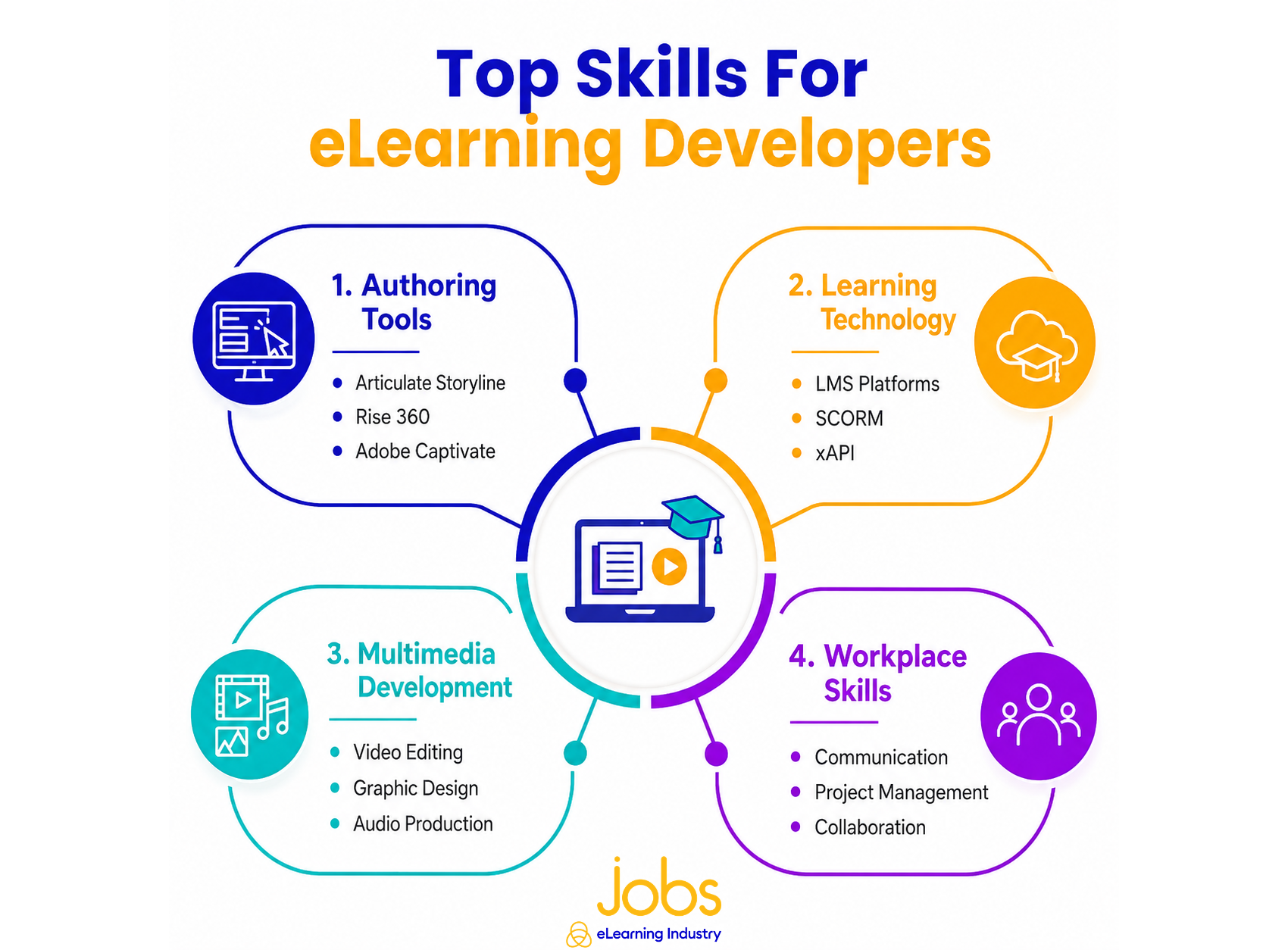
Essential Skills For eLearning Developer Jobs
Employers often look for a blend of technical, design, and communication skills.
Technical Skills
- Articulate Storyline
- Rise 360
- Adobe Captivate
- LMS administration
- SCORM and xAPI
- Multimedia editing
- Basic HTML/CSS knowledge
Workplace Skills
- Project management
- Stakeholder communication
- Problem-solving
- Attention to detail
- Collaboration
Candidates who combine Instructional Design expertise with development skills often have a competitive advantage when applying for remote elearning developer jobs.
The key to landing your dream role is preparation. Check out our suggestions to ace your interviews, from learning what to look for when applying to crafting the perfect CV and answering interview questions like a pro:
- 10 Job-Hunting Tips And Strategies From Jobs by eLearning Industry
- Cover Letter Sample: Templates & Examples For Every Job
- How Long Should A Resume Be? One Page, Two Pages, Or More?
- Top Job Interview Questions And How To Answer Them (2026 Guide)
- How To Write An eLearning CV That Gets Interviews
eLearning Developer Jobs Salary Insights
Salaries vary based on location, industry, technical expertise, and years of experience.
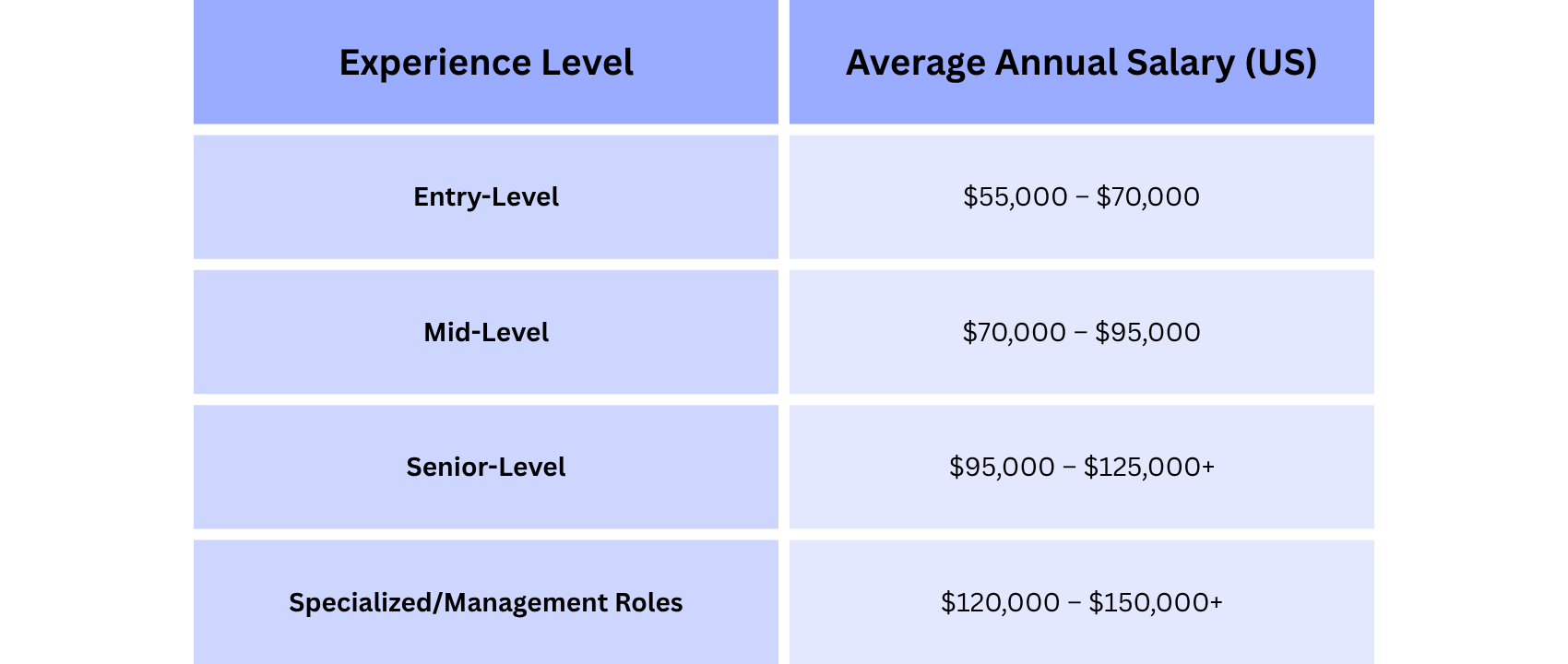
Professionals with advanced skills in learning technologies, xAPI implementation, and learning experience design often command higher salaries.
What Influences eLearning Developer Salaries?
Several factors can affect how much eLearning Developers earn. Experience remains one of the biggest salary drivers, but employers also place a premium on specialized technical skills. Professionals who can build complex interactive courses, manage LMS integrations, work with SCORM or xAPI standards, and create multimedia learning experiences often command higher salaries than those with basic course development experience.
Industry can also play a significant role. eLearning Developers working in technology, healthcare, financial services, and large corporate Learning and Development (L&D) departments typically earn more than those in smaller organizations. These industries often require advanced compliance training, employee onboarding programs, and large-scale digital learning initiatives, increasing demand for experienced talent.
As organizations continue investing in online training and workforce development, employers are increasingly seeking candidates with expertise in tools such as Articulate Storyline, Rise 360, Adobe Captivate, and LMS platforms. Developing these in-demand skills can improve both job opportunities and long-term earning potential, particularly for professionals pursuing senior eLearning Developer, Learning Experience Designer (LXD), or Learning Technology leadership roles.
Remote eLearning Developer Jobs
Remote work continues to reshape the learning industry. Many organizations now hire talent regardless of location, creating strong demand for:
- Remote eLearning developer jobs
- Freelance eLearning development opportunities
- Contract-based learning technology roles
Remote positions typically require strong self-management skills, experience collaborating across distributed teams, and proficiency with digital collaboration tools.
How To Become An eLearning Developer
If you're interested in entering the field, follow these steps:
- Learn Instructional Design fundamentals.
- Master industry-standard authoring tools.
- Build a portfolio showcasing sample projects.
- Gain experience with LMS platforms and eLearning tools.
- Earn relevant certifications where appropriate.
- Apply for entry-level eLearning Developer positions.
- Continuously update your technical and design skills.
A strong portfolio often matters more than formal credentials when applying for eLearning Developer roles.
Upload your CV today!
Ready to apply for eLearning Developer jobs? Create and upload your CV to showcase your Instructional Design, authoring tool, and LMS experience to employers.
Why Pursue A Career In eLearning Development?
The profession offers:
- Strong job demand
- Remote work flexibility
- Competitive salaries
- Creative and technical work
- Opportunities across multiple industries
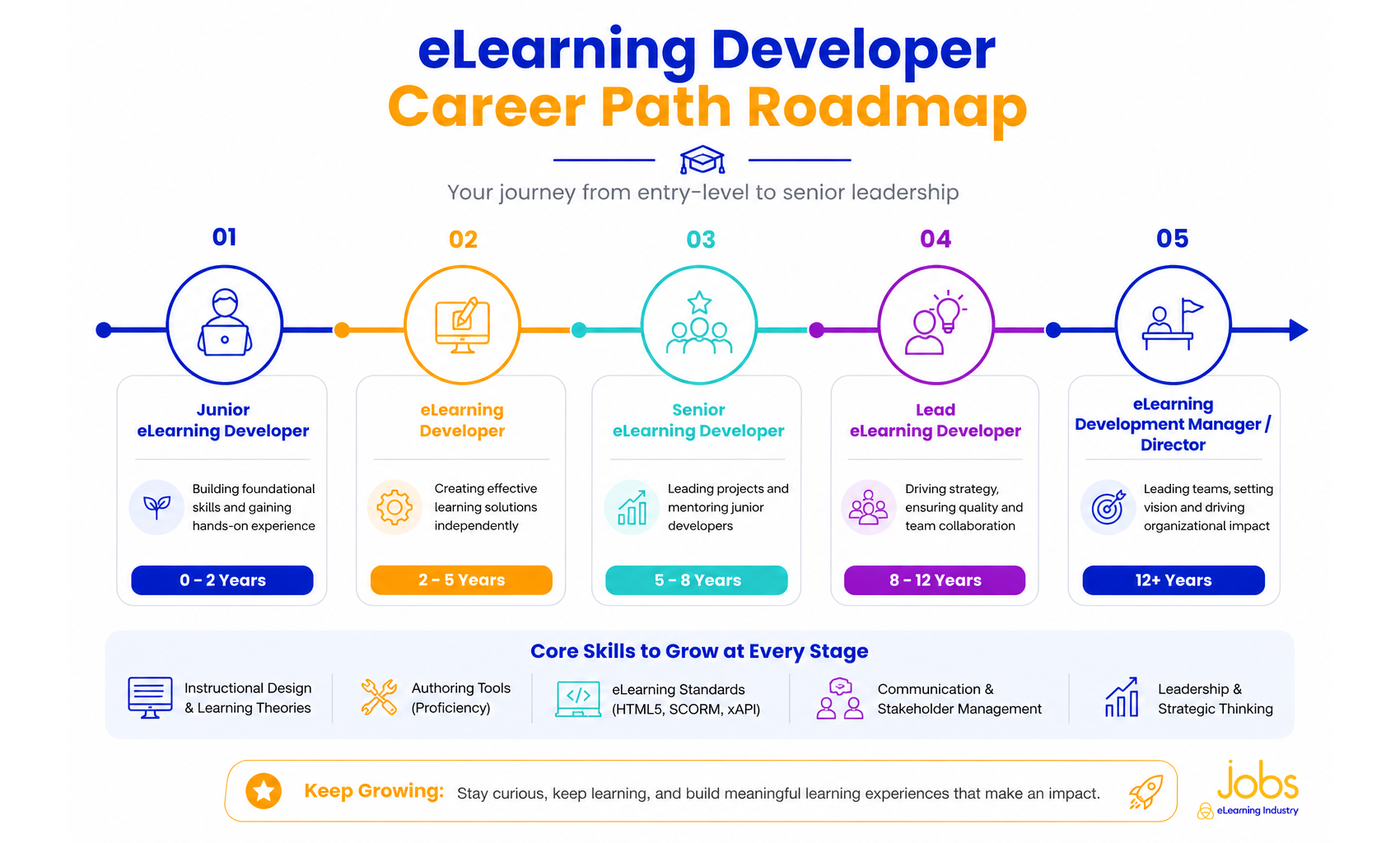
- Clear advancement pathways into leadership and strategy roles
Specifically, the demand for eLearning Developers is closely tied to the rapid expansion of corporate digital learning. As organizations continue to shift training online, the need for professionals who can build structured, interactive, and scalable learning experiences is growing across industries.
One of the strongest drivers is the continued growth of the corporate training market, particularly in sectors like healthcare, finance, and technology. Companies are investing heavily in onboarding systems, compliance training, and upskilling programs, all of which rely on well-designed digital learning content.
At the same time, there has been a significant increase in investment in digital learning platforms and L&D technologies. Organizations are adopting Learning Management Systems (LMSs), performance support tools, and AI-enhanced learning platforms, creating consistent demand for developers who understand both instructional design and technical implementation.
Another major factor is the rise of remote and hybrid learning models. Distributed teams require consistent training experiences across locations, which has made eLearning development a core function in modern L&D teams rather than a support role.
There is also a clear and ongoing demand for technical eLearning expertise, especially in tools such as Articulate Storyline, Rise 360, and Adobe Captivate. Employers are increasingly looking for developers who can also work with SCORM standards, xAPI tracking, and LMS integrations to ensure learning content is compatible, trackable, and scalable.
Do You Need A Portfolio For eLearning Developer Jobs?
Yes! Having a portfolio is one of the strongest ways to stand out when applying for eLearning Developer jobs. Employers want to see proof that you can actually build interactive, functional learning experiences, not just list tools on a CV. A portfolio demonstrates your technical ability, design thinking, and understanding of learner engagement.
A strong eLearning portfolio should include:
- Interactive course samples built in tools like Articulate Storyline or Rise 360
- Short demos of quizzes, scenarios, or branching simulations
- SCORM or LMS-ready project examples (if available)
- Before-and-after samples showing how you improved learning content
- Brief explanations of your design decisions and tools used
Even simple projects can be effective if they show clarity, structure, and usability.
Common portfolio project ideas include:
- A compliance training module with interactive assessments
- A product training simulation for onboarding
- A scenario-based learning activity for soft skills training
- A microlearning course optimized for mobile devices
If you're targeting remote eLearning Developer jobs or entry-level roles, a portfolio can often matter more than formal experience, as it helps employers quickly assess whether you can deliver real-world eLearning content development work.
Explore eLearning Developer Jobs
Ready to start or grow your eLearning content development career? If you are transitioning into the field, explore our related career resources:
- Top eLearning & L&D Jobs Hiring Right Now
- eLearning Salaries In 2026: What Different Roles Really Pay
- How To Transition Into An eLearning Career (From Any Background)
- Most In-Demand Jobs In eLearning & EdTech For 2026
FAQs About eLearning Developer Jobs
1. What does an eLearning Developer do?
An eLearning Developer designs and builds digital learning experiences using authoring tools, multimedia assets, and learning technologies.
2. What qualifications do I need for eLearning Developer jobs?
Employers typically seek experience in instructional design, eLearning authoring tools, LMS platforms, and project collaboration.
3. Are remote eLearning Developer jobs available?
Yes. Many organizations actively hire remote eLearning Developers for full-time, contract, and freelance positions.
4. Which tools should I learn to become an eLearning Developer?
Popular tools include Articulate Storyline, Rise 360, Adobe Captivate, Camtasia, and various LMS platforms.
5. What is the average salary for an eLearning Developer?
Most professionals earn between $55,000 and $125,000+ annually, depending on experience and specialization.
6. Is eLearning Development a good career?
Yes. It offers strong growth potential, competitive compensation, remote work opportunities, and increasing demand across industries.
Jobs {{total_jobs_count}}
{{pagination_label}}
No jobs were found.
Loading...
{{notification.msg}}