
Why People Are Questioning eLearning As A Career
Is eLearning a good career choice for you? Market shifts, budget cuts, and fluctuating demand have made many eLearning pros question whether this career path is still right for them. The truth is that organizations are reassessing training investments and the impact of L&D on their bottom lines. This creates career anxiety and makes long-term planning harder for professionals in the space who are looking for job security. Then there's the rise of AI and automation, which are reshaping how learning content is created and delivered. Tasks that once required specialized expertise, like course authoring and content updates, can now be partially automated. This has raised concerns about role redundancy across all eLearning careers. While AI presents new opportunities, it also forces professionals to rethink their value and skill sets.
Why 2026 matters so much is that decisions made now will shape career trajectories for the next decade. Those who adapt to new tech and learning methodologies strategically will be the first in line for sustainable, future-proof roles in eLearning. In this guide, we'll take a closer look at which jobs will still exist in years to come, whether eLearning is a viable career in the long term, and what the eLearning jobs salary outlook is for 2026.
At A Glance
- eLearning remains a strong career choice going into 2026
- Demand is driven by digital transformation and upskilling needs
- Salaries vary by role, region, and specialization
- Skills, not degrees, increasingly determine career success
What Is eLearning As A Career?
An eLearning career centers on designing, developing, and managing digital learning experiences that help people build skills and bridge knowledge gaps. It includes a broad career path focused on how learning happens online by leveraging technology, design models, and psychological principles. Professionals in this field combine instructional strategy, content creation, and learning technology to address performance issues and educational challenges.
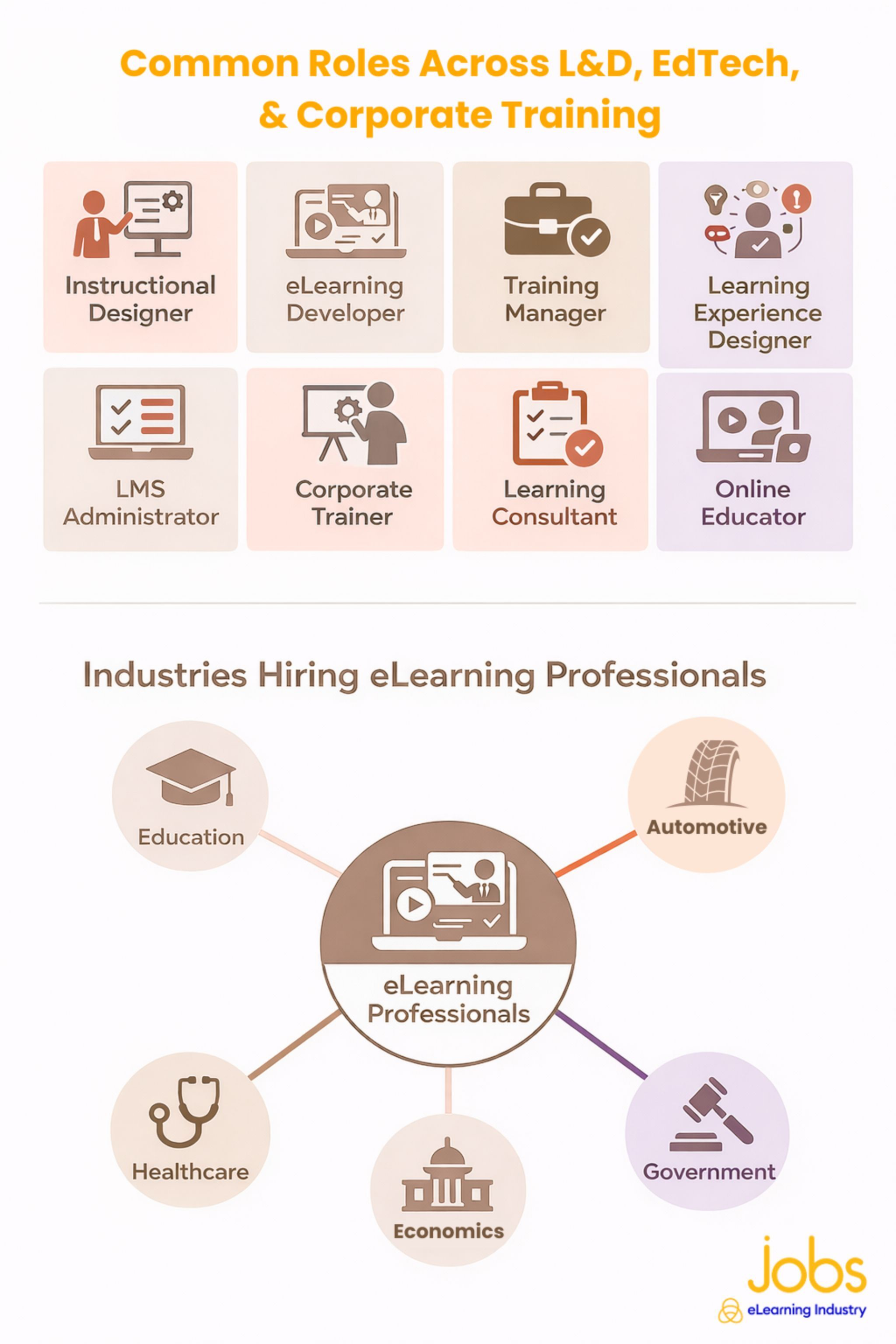
Learning and development (L&D), EdTech, and corporate training are some of the most common sectors where you'll find eLearning pros. These roles include Instructional Designers, eLearning developers, Learning Experience designers, LMS administrators, curriculum specialists, and learning consultants. Some roles lean more toward pedagogy and strategy, while others focus on multimedia production, data analysis, or platform management.
Industries hiring eLearning professionals are diverse and growing steadily as more organizations understand the importance of impactful L&D. Businesses use eLearning for onboarding and upskilling, higher education and online universities rely on it for course delivery, healthcare and compliance-driven sectors need ongoing training, and EdTech companies build learning products for global audiences.
Are you currently job hunting? Create an account and start exploring eLearning roles in our niche platform.
eLearning Career Outlook For 2026
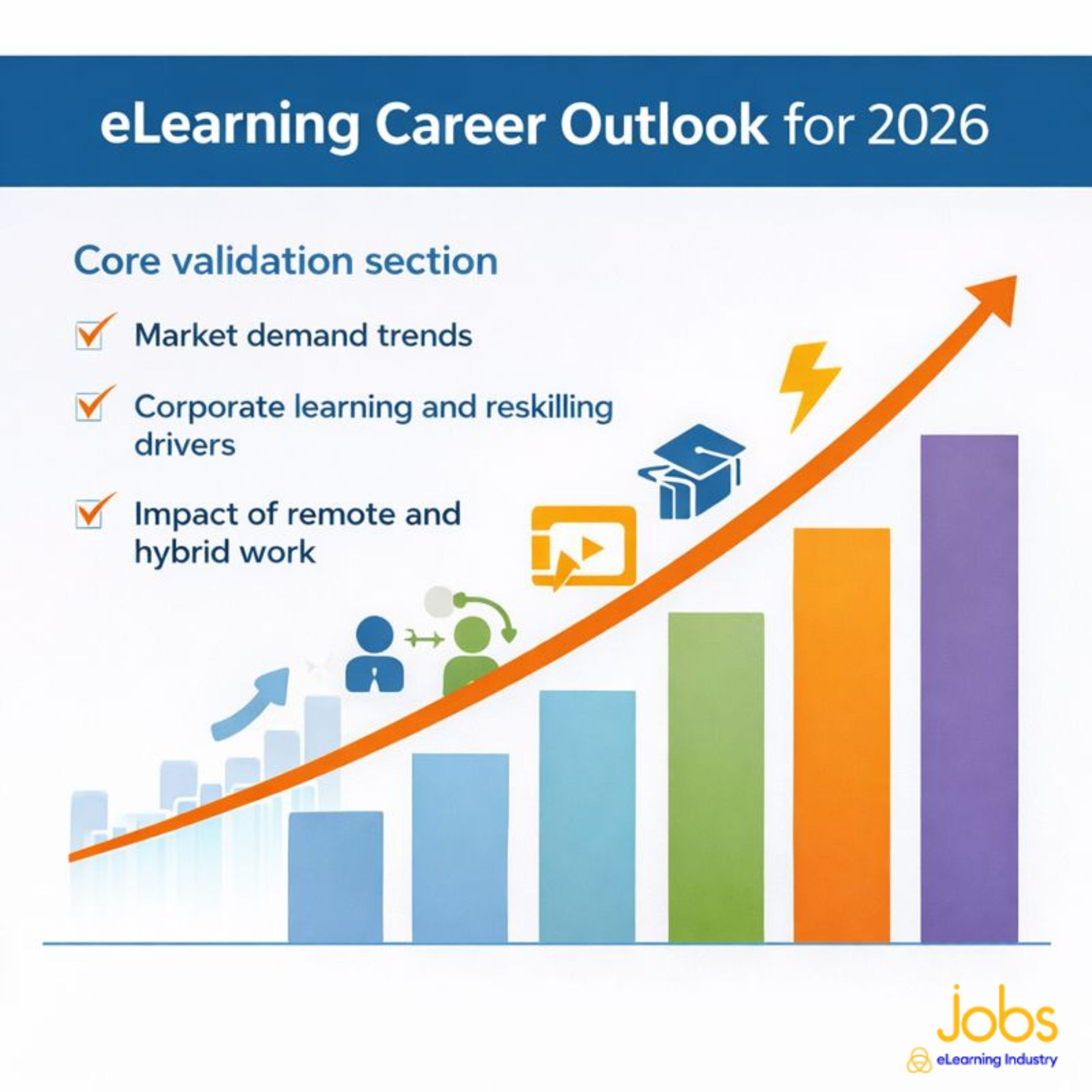
The eLearning career outlook for this year is staying strong, thanks to sustained market demand. Organizations across sectors are investing in digital learning solutions as both learners and employers value flexible, scalable education that's easily accessible. Online course development, Instructional Design, and Learning Experience design roles continue to grow as companies and educational institutions expand their digital offerings. Demand is particularly strong for professionals skilled in adaptive learning technologies, AI-powered personalization, and data analytics to measure learning effectiveness and improve outcomes.
A key driver is corporate learning and reskilling. Rapid tech change, including automation and AI integration, has shortened skill cycles, putting continuous upskilling front and center. Employers are prioritizing internal training to fill emerging skill gaps, boost retention, and stay ahead of the competition. This trend elevates roles like corporate trainers, curriculum strategists, and eLearning project managers even more. Essentially, they're in even higher demand because they need to develop targeted programs to address evolving competencies.
The impact of remote and hybrid work also speeds up eLearning adoption. As distributed teams become the norm, companies leverage digital learning platforms to provide consistent onboarding, compliance training, and professional development experiences regardless of location. Likewise, hybrid work calls for asynchronous, accessible learning experiences, which expand opportunities for specialists in virtual facilitation and multimedia content creation. The bottom line is that the digital learning career outlook is on a growth trajectory, which is fueled by technology, evolving workforce needs, and more niche corporate learning priorities.
The Impact Of AI On eLearning Jobs
As is the case with many industries today, as technology evolves, this career path is being reshaped, but not eliminated. AI is changing how learning content is produced, analyzed, and personalized, automating repetitive tasks like content formatting, basic assessments, and data reporting. Fortunately, this shift gives eLearning professionals the opportunity to spend more time on higher-level work such as strategy, problem-solving, and learner experience design. In short, tasks that require human expertise and ingenuity.
As a result, new skills and hybrid roles are emerging. Today's professionals often blend Instructional Design with data literacy, UX design, learning analytics, AI-assisted authoring, and platform management. Roles like Learning Experience designer, digital learning strategist, and AI-enabled Instructional Designer prove the growing need for cross-functional expertise.
Despite all these changes, human learning design is still the most critical component. Learning is not just about content delivery. eLearning pros must factor in motivation, context, culture, and behavior change. Only humans can truly understand learner needs, design meaningful experiences, ensure ethical use of technology, and align learning with real-world goals. In eLearning, technology enhances impact, but human judgment and creativity remain essential.
Salary Trends In eLearning Jobs
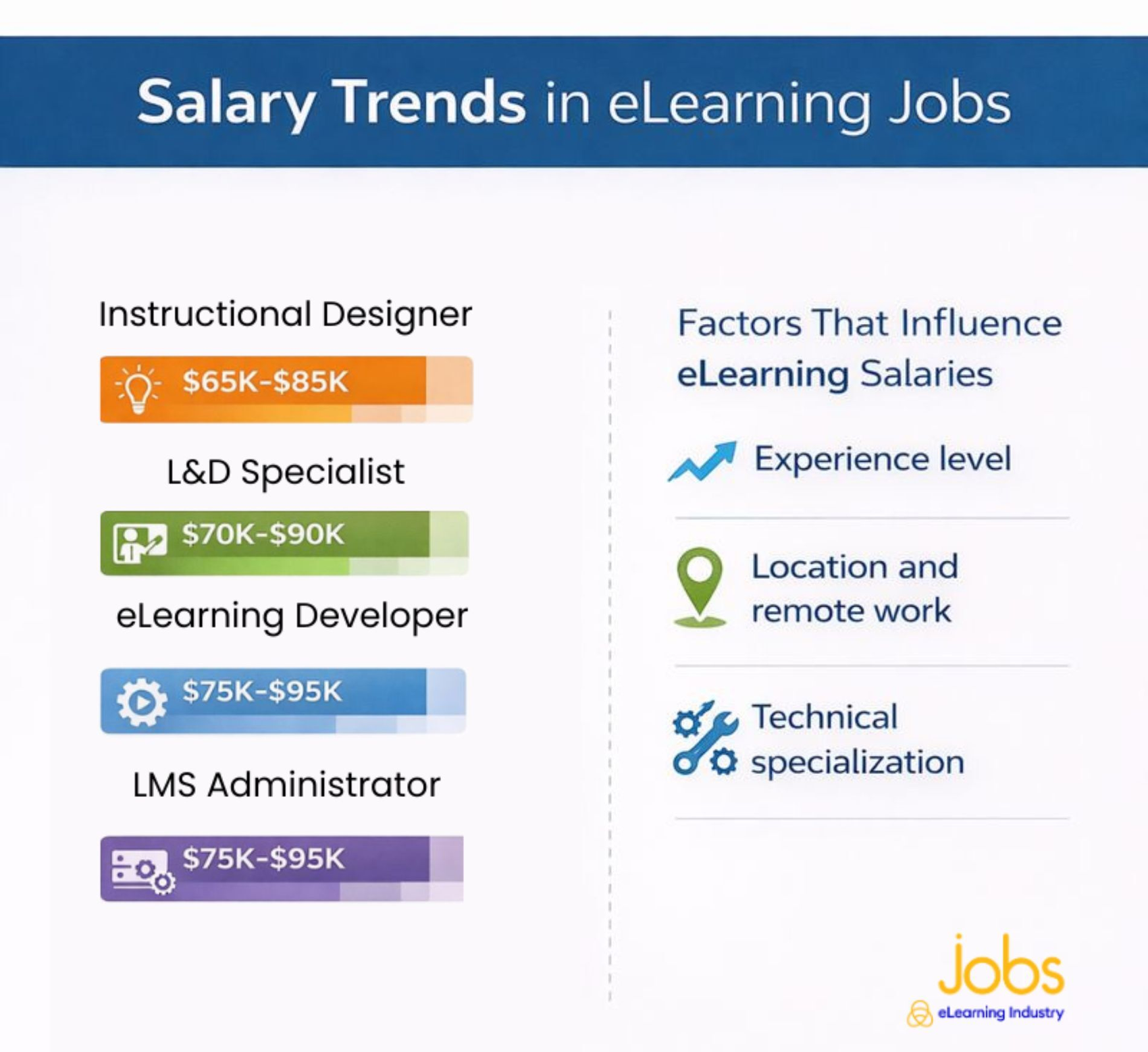
Is eLearning a good career from a financial perspective? Demand for professionals such as Instructional Designers, Learning and Development specialists, and eLearning developers continues to drive competitive eLearning salary trends. Keep in mind that compensation varies by region and experience. However, all signs point to solid earning potential for those who are ready and willing to adapt, upskill, reskill, and build hands-on experience.
Average Salary Ranges By Role
Instructional Designers
Instructional Designers are tasked with creating engaging learning experiences by structuring content, applying learning theory, and designing assessments. In many markets, entry-level Instructional Designers earn in the lower to mid range of the industry. Typical starting salaries often fall between $50,000 and $75,000 annually. With a few years of experience and a strong portfolio, mid-level designers commonly see salaries between $75,000 and $95,000. Senior Instructional Designers or those with niche expertise can earn more than $100,000, especially if they venture into corporate or tech sectors.
Learning and Development (L&D) Specialists
L&D specialists oversee broader training strategies, performance improvement, and organizational learning initiatives. Entry-level L&D roles often start around $55,000 to $70,000. With several years of experience under their belts and demonstrated impact, mid-career specialists commonly earn $70,000 to $90,000. Senior L&D professionals, especially those managing teams or leading enterprise learning transformation, can bring in roughly $95,000 to $120,000 as they take on more strategic responsibilities.
eLearning Developers
eLearning developers build interactive courses using authoring tools and multimedia, combining technical skills with Instructional Design know-how. Entry-level developers typically make around $55,000 to $75,000. As technical proficiency grows, particularly in tools like Articulate Storyline, Adobe Captivate, or custom scripting, salaries often reach $80,000 to $100,000 in mid-level roles. Highly specialized developers, such as those integrating advanced VR/AR simulations or custom programming, can earn more than $110,000 in competitive eLearning job markets.
Factors That Influence eLearning Salaries
Experience Level
Experience remains one of the strongest factors when calculating your eLearning jobs salary. Entry-level roles focus on foundational tasks, while seasoned professionals bring strategic insight, leadership, and advanced technical skills, which often lead to higher pay.
Location And Remote Work
Geographic location influences compensation due to the cost of living and local demand. For example, urban and tech-centered markets typically offer higher salaries. However, the rise of remote work has opened up even more opportunities, which allows professionals in lower-cost regions to access competitive pay from employers in high-pay markets.
Technical Specialization
Specialized technical skills, such as advanced multimedia development, programming for learning platforms, data analytics, or immersive technologies (like VR and AR), increase your earning potential. Employers often offer higher pay for professionals who can blend instructional expertise with technical experience.
Pros and Cons Of An eLearning Career
Now that we've gone over the eLearning roles salary expectations, let's delve into the benefits and potential drawbacks of choosing a career in eLearning.
Advantages Of Working In eLearning
One major advantage of working in eLearning is flexibility, as many roles can be performed remotely. This allows professionals to work from home, collaborate with global teams, and often maintain a better work–life balance. Flexible schedules are common, particularly for freelancers or contract-based professionals, making eLearning appealing to those who are looking for more autonomy.
Another significant benefit is cross-industry opportunity. eLearning skills are transferable and in demand across sectors, including education, healthcare, corporate training, technology, finance, and government. This versatility enables professionals to pivot between industries without completely changing careers and overhauling their skill sets. It also helps eLearning specialists stay competitive in shifting job markets, as L&D is a critical part of employee development in every organization.
Challenges To Be Aware Of
One of the most prominent challenges is the rapid pace of tool and technology changes. Authoring tools, Learning Management Systems, and multimedia platforms evolve quickly, and professionals must be able to adapt to new software. What is standard today may be outdated in a few years.
Another potential roadblock in the learning and development job outlook is that eLearning requires continuous upskilling. Beyond technical tools, professionals must stay current with learning theories, accessibility standards, data analytics, and emerging trends such as AI-driven learning or microlearning. This ongoing learning can be time-consuming and, at times, overwhelming, especially for those who are already balancing heavy workloads.
Who Is eLearning A Good Career Fit For?
eLearning is especially appealing to career switchers. Professionals transitioning from fields such as marketing, communications, design, or project management often find that their existing skills transfer over. Writing, visual design, organization, and problem-solving are all highly valued in eLearning roles. Career switchers who are open to learning new tools and concepts can often make the move without starting from scratch.
Educators and trainers are also great fits for eLearning careers. Teachers, corporate trainers, and facilitators already understand how people learn and how to structure information. eLearning allows them to apply this expertise in new formats, such as online courses or virtual training programs. For many educators, eLearning also offers greater flexibility, opportunities beyond traditional classrooms, and the ability to reach broader audiences.
Professionals who are tech or content-oriented can build successful eLearning careers as well. Instructional Designers, developers, writers, multimedia specialists, and UX designers play key roles in creating engaging digital learning experiences. Those who like working with learning platforms, authoring tools, data, or storytelling often find eLearning offers the ideal mix of creativity and tech application.
How To Future-Proof An eLearning Career
The future of eLearning jobs is all about intentional skill development, adaptability, and a long-term action plan. As technology and learner expectations continue to evolve, actively investing in growth helps you stay relevant and in demand.
So, which skills should be at the top of your to-build list? Technical skills, such as using authoring tools, Learning Management Systems, multimedia editing, and basic data analysis, are essential. That said, you should also cultivate soft skills, like communication, collaboration, and project management, to streamline projects involving SMEs and stakeholders.
Keeping up with the latest trends is critical if you want to stay competitive in the eLearning field. Regularly explore new tools, emerging learning technologies, and evolving standards, such as accessibility and data privacy. Bear in mind that building a strong portfolio that demonstrates real-world projects often carries more weight than certifications alone. In addition, networking through professional communities, conferences, and online platforms can help you uncover new opportunities and find out where the field is heading.
The long-term eLearning career outlook has flexibility for growth and specialization. Depending on your areas of expertise, you might advance into an Instructional Designer, Learning Experience designer, learning architect, or technology leadership role. However, there are also eLearning career prospects in consulting, freelancing, or management roles overseeing learning and development strategies.
Where To Find eLearning Jobs In 2026
One of the best ways to see what's out there in the eLearning job market is role-based job searching. Instead of browsing generic "eLearning" listings, you can search by specific titles such as Instructional Designer, eLearning developer, LMS administrator, or digital learning strategist.
The great thing about being part of the eLearning field in 2026 is that there are so many global and remote opportunities. Organizations now build distributed learning teams, which opens roles to applicants across countries and time zones. The key is being clear about time-zone availability and building your cross-cultural communication skills to give yourself an edge when applying for positions.
Last but not least, remember to set job alerts for eLearning jobs to learn about openings as soon as possible. You can also subscribe to industry newsletters, join L&D forums, and attend virtual conferences to network and maybe even discover new career paths that suit your skillset. By mixing strategic searches with active community involvement, you can stay competitive and get your CV in front of hiring managers who are looking for top talent.