
Job-Hunting Tips: What Actually Works In Job Hunting In 2026
Job-hunting tips are everywhere, but many professionals still struggle to get interviews or meaningful responses from employers. This is because in 2026, the job market is more competitive, faster-moving, and more technology-driven than ever before. Therefore, submitting dozens of generic applications is no longer enough, especially in industries like eLearning, L&D, and EdTech, where employers often look for specialized skills, portfolios, and practical experience.
Today's hiring process rewards candidates who use focused job search strategies rather than relying solely on effort or volume. Recruiters increasingly use Applicant Tracking Systems (ATS), skills-based evaluations, and portfolio reviews to quickly narrow down candidate pools. That means job seekers need a clear approach that combines targeted applications, strong positioning, networking, and personal branding.
Professionals who get hired faster often follow consistent job-hunting strategies that help them stand out in a crowded market. Small improvements, such as tailoring a resume, improving a portfolio, or applying more strategically, can significantly increase interview opportunities and help candidates move through the hiring process more efficiently.
If you are ready to apply the following job-hunting tips in a practical way, start by exploring relevant job opportunities that match your skills, experience level, and career goals. Focusing on the right roles can help you build a more targeted and effective job search strategy.
Key Takeaways
- A focused job search strategy is more effective than applying everywhere.
- Tailoring applications significantly improves success rates.
- Skills, tools, and experience matter more than job titles.
- Using specialized job platforms helps surface more relevant opportunities.
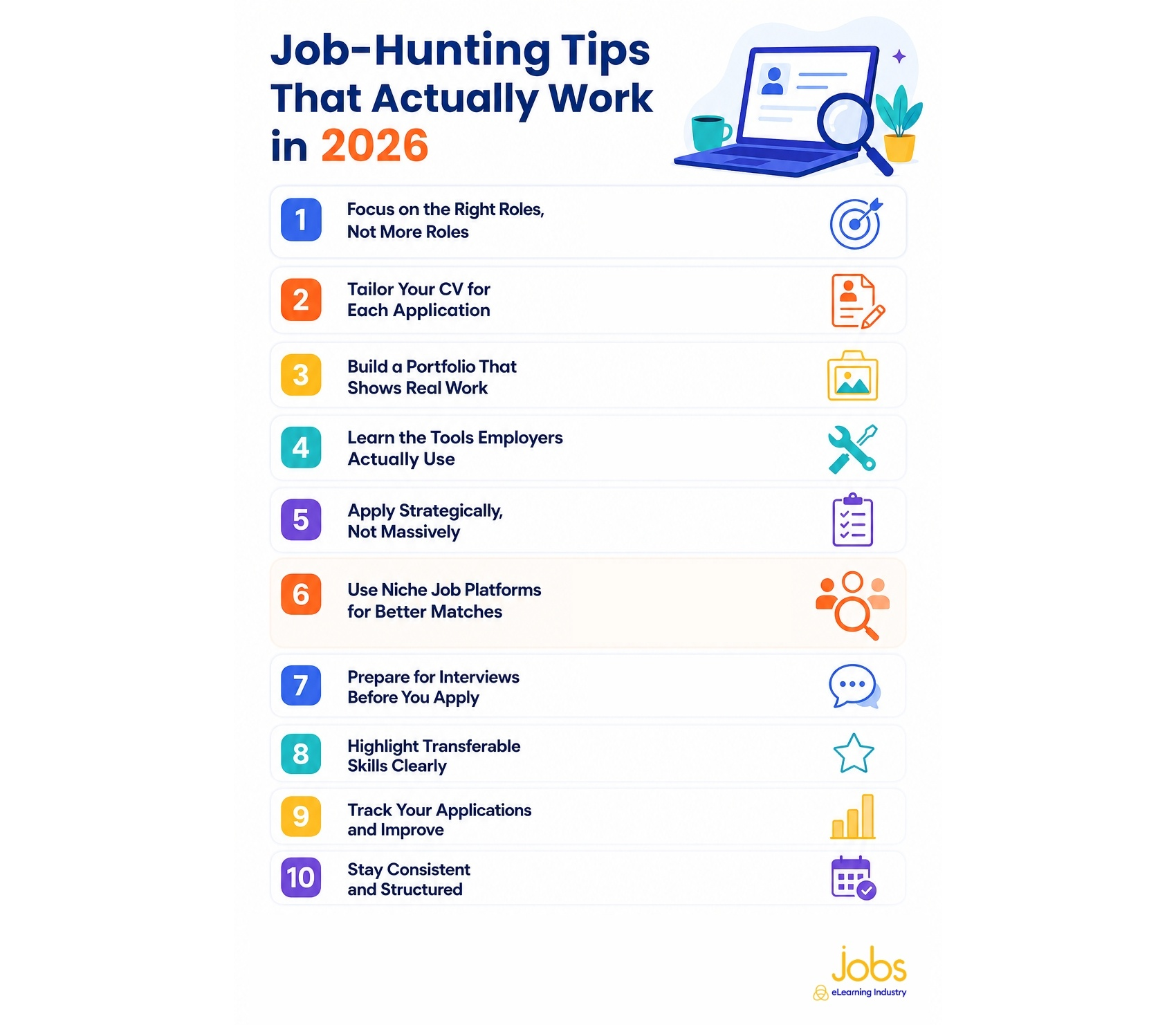
10 Job-Hunting Tips That Actually Work In 2026
Job-hunting tips are more effective when they help candidates make better decisions, not just apply to more positions. In today's market, employers value relevance, preparation, and proof of skills more than application volume. The following job search strategies can help professionals improve their visibility, increase interview opportunities, and find stronger role matches faster.
1. Focus On the Right Roles, Not More Roles
One of the most effective job-hunting strategies is applying for roles that closely match your experience and strengths. Many candidates apply to dozens of unrelated jobs, which often leads to low response rates. Instead, focus on positions where your background, technical skills, and industry knowledge align with the job description.
2. Tailor Your CV For Each Application
Generic resumes are easier for recruiters and Applicant Tracking Systems (ATS) to filter out. Review the job description carefully and adjust your CV to reflect the exact skills, tools, and responsibilities mentioned in the posting. This improves relevance and increases the chances of getting shortlisted.
3. Build A Portfolio That Shows Real Work
A portfolio helps employers evaluate practical skills before the interview stage. This is especially important for Instructional Designers, Learning Experience designers, LMS specialists, and other eLearning professionals. Include work samples, project summaries, design decisions, and measurable outcomes whenever possible. Even small freelance, volunteer, or practice projects can demonstrate capability and initiative.
4. Learn The Tools Employers Actually Use
Many hiring managers prioritize candidates who already understand the platforms and software their teams use daily. Common tools in eLearning and L&D include LMS platforms, authoring tools, collaboration software, and analytics systems. Developing hands-on familiarity with these tools can strengthen applications and help candidates get hired faster.
5. Apply Strategically, Not Massively
Submitting a large number of applications does not always improve results. Strong job search strategies that work usually involve selective applications, targeted networking, and follow-up planning. Prioritize roles that genuinely fit your experience level and career direction. A focused approach also gives candidates more time to customize applications, prepare for interviews, and improve application quality overall.
6. Use Niche Job Platforms For Better Matches
Niche job platforms often provide more relevant opportunities than broad job boards. Specialized platforms attract employers looking for specific industry experience, technical knowledge, or portfolio-based skills. For eLearning and L&D professionals, this can significantly reduce irrelevant listings and improve application quality. Platforms like Jobs by eLearning Industry help candidates discover roles connected directly to learning, training, instructional design, and workforce development. In many cases, relevance produces better results than volume.
7. Prepare For Interviews Before You Apply
Interview preparation should begin early in the job search process, not after receiving an invitation. Research common questions, review your portfolio, prepare examples of your work, and practice explaining your process clearly. This approach improves confidence and helps candidates respond more effectively during interviews.
8. Highlight Transferable Skills Clearly
Transferable skills are especially important for career changers and professionals moving into eLearning or L&D roles. Skills such as communication, project management, facilitation, writing, research, and stakeholder collaboration often apply across industries. Clearly connecting previous experience to the target role helps employers understand your value more quickly.
9. Track Your Applications And Improve
Tracking applications helps job seekers identify patterns and improve their approach over time. Monitor which resumes generate interviews, which roles receive responses, and where applications stall in the process. This makes it easier to refine job application tips and identify job-hunting strategies that yield stronger results.
10. Stay Consistent And Structured
Consistency matters more than short bursts of activity. Setting weekly goals, maintaining an organized process, and continuing to build skills can improve long-term results. Many professionals seeking job-hunting tips in 2026 are looking for faster results, but a structured effort usually produces more sustainable progress in competitive industries.
Why Many Job Searches Fail (And How To Fix Them)
Many professionals follow common job-hunting tips but still struggle to secure interviews or employer responses. In many cases, the issue is not a lack of effort. It is a lack of direction, positioning, and strategy. Modern hiring processes reward candidates who approach their search with clear goals and targeted actions rather than applying to as many roles as possible.
Lack Of Focus
Candidates often apply to too many roles without identifying the position that best matches their experience and strengths. For example, someone applying for Instructional Design, project management, and marketing roles at the same time may appear unfocused to recruiters. Effective job search strategies start with narrowing down target roles, industries, and skills. A focused search helps applicants create stronger resumes, more relevant portfolios, and better interview answers.
Poor Targeting
Many applicants use the same resume and cover letter for every opportunity, even though employers look for role-specific qualifications. This approach makes it harder to stand out in ATSs and recruiter reviews. One of the most effective job-hunting strategies is tailoring applications to match the language, responsibilities, and required skills outlined in the job description. Small adjustments can improve visibility and increase interview opportunities.
Weak Positioning
Employers want to understand what makes a candidate valuable within seconds of reviewing an application. Resumes that focus solely on responsibilities rather than measurable outcomes often fail to make a strong impression. Professionals who learn how to find a job faster usually present clear evidence of results, projects, certifications, or specialized expertise that directly relate to the role.
No Feedback Loop
Many job seekers continue using the same methods even when they are not getting results. Tracking application responses, interview outcomes, and recruiter feedback can help identify patterns and improve decision-making. For example, if applications rarely lead to interviews, the resume may need stronger keywords or clearer achievements. If interviews do not progress, communication or preparation may need improvement.
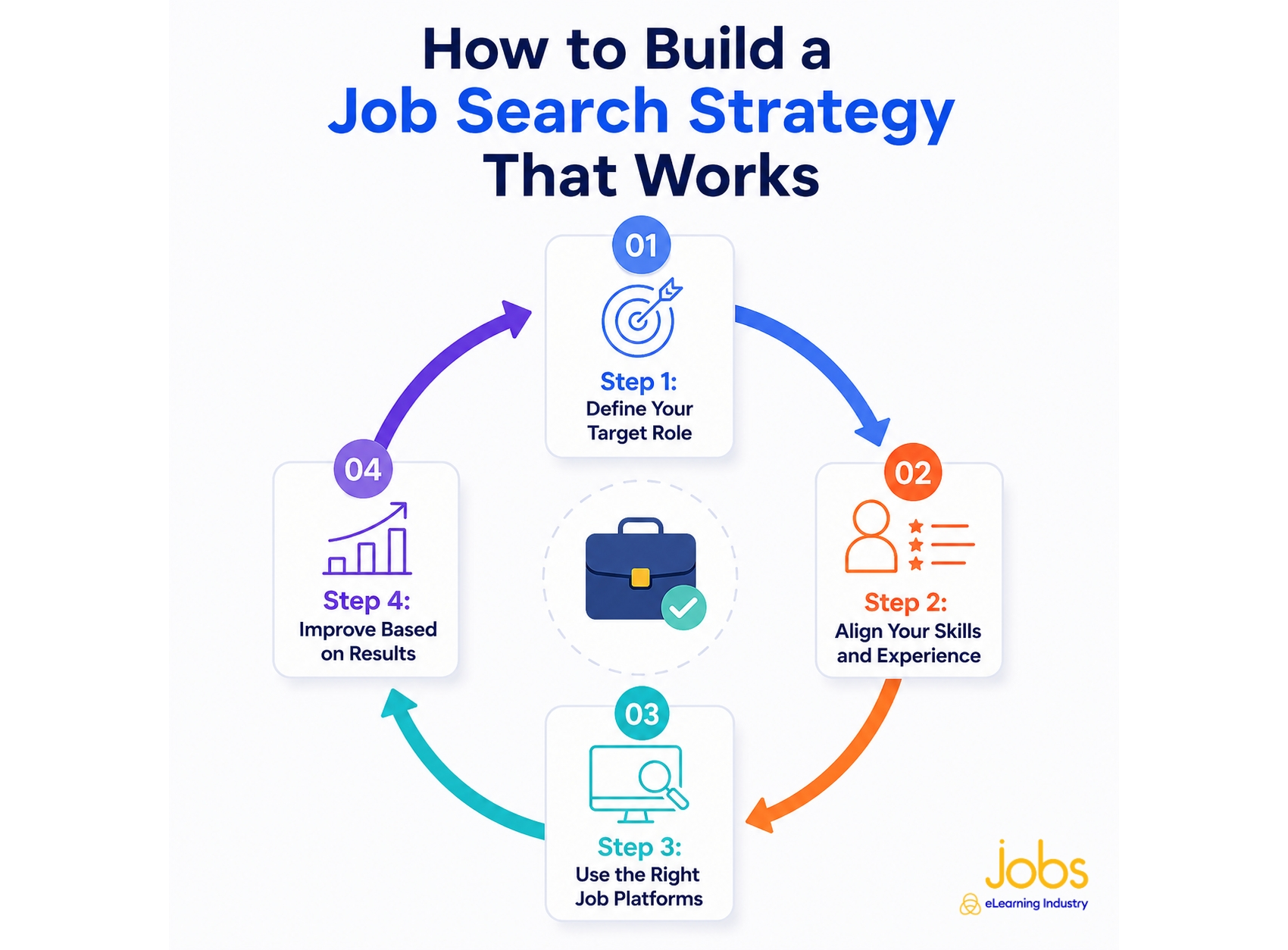
How To Build A Job Search Strategy That Works
Many professionals spend hours applying for jobs without seeing consistent results. In many cases, the problem is not effort, but direction. Effective job search strategies focus on applying with purpose, targeting the right opportunities, and improving over time. Instead of sending the same application everywhere, candidates should build a process that helps them move closer to their career goals.
Step 1: Define Your Target Role
One of the most important job-hunting tips is to stop applying for every available position. A focused search is usually more effective than a broad one. Start by identifying the type of role you want, such as Instructional Designer, LMS administrator, learning strategist, or eLearning developer.
Next, review multiple job descriptions for that role and look for common requirements. Pay attention to tools, certifications, technical skills, and responsibilities that appear repeatedly. This helps you understand what employers expect and where you may need improvement. Clear goals also make it easier to create tailored resumes, portfolios, and LinkedIn profiles that match employer expectations.
Step 2: Align Your Skills And Experience
After identifying your target role, evaluate how your current experience aligns with market demands. This is where practical job-hunting strategies become important. Employers want evidence that candidates can apply their skills in real work environments.
Update your resume with measurable achievements and relevant projects. If you are changing careers or entering the industry for the first time, include transferable skills, freelance work, volunteer projects, or certifications. In eLearning and L&D roles, portfolios are especially valuable because they demonstrate practical abilities. Candidates who understand how to find a job faster often focus on closing skill gaps before applying widely. Even small improvements can increase interview opportunities.
Step 3: Use The Right Job Platforms
Not every platform attracts the same employers or job types. General job boards can be useful, but niche platforms often provide more targeted opportunities and better alignment with your skills.
Look for platforms that specialize in your industry or role. In competitive sectors, focused platforms can help professionals discover positions that better match their experience level and career interests. You should also set job alerts, follow companies, and track new openings consistently instead of searching randomly each week.
Step 4: Improve Based On Results
Strong job search strategies that work include regular evaluation. If you are applying consistently but not getting interviews, review your resume, portfolio, or application approach.
Track how many applications lead to interviews and identify patterns. Small adjustments, such as tailoring applications more carefully or improving your portfolio, can help you get hired faster over time.
How Jobs by eLearning Industry Helps You Find Better Opportunities
One of the biggest challenges in today's job market is finding relevant opportunities without spending hours sorting through unrelated listings. Many general job boards include thousands of positions across industries, making the process slower and less effective for professionals in specialized fields. For candidates looking for roles in eLearning, L&D, and EdTech, focused platforms can support more efficient job search strategies and improve the quality of applications.
Focused Roles
Jobs by eLearning Industry is designed specifically for professionals working in digital learning, Instructional Design, training, and workplace learning. Instead of searching through broad listings, candidates can explore opportunities that better align with their experience, technical skills, and career goals. This can help job seekers apply more strategically and reduce time spent on roles that are not relevant to their background.
Easier Filtering
The platform also makes it easier to filter opportunities based on role type, expertise level, and areas of specialization. Whether someone is looking for Instructional Design positions, LMS administration roles, learning strategist opportunities, or remote L&D jobs, targeted filtering tools can support faster and more focused decision-making. These job-hunting strategies are increasingly important in a competitive hiring environment where relevance matters more than application volume.
Better Visibility
For professionals looking to find a job faster, specialized platforms can also offer better visibility into industry expectations, trending skills, and role requirements. This allows candidates to tailor resumes, portfolios, and applications more effectively. Combined with consistent networking and strong job application tips, a focused job search approach can increase interview opportunities and help candidates identify roles that better align with their long-term career goals.
Start Applying With A Clear Strategy
One of the most effective job-hunting tips in today's market is to approach the process with a clear, repeatable plan rather than applying randomly to every open role.
Narrow Down Options
Strong job search strategies start with identifying the types of positions that match your experience, strengths, and long-term goals. For example, professionals in eLearning and L&D may focus on roles such as Instructional Designer, Learning Experience Designer, LMS administrator, or training specialist. Narrowing your focus makes it easier to tailor applications and present relevant skills to employers.
Quality Over Quantity
Sending targeted applications often produces better results than submitting large numbers of generic resumes. Before applying, review the job description carefully, identify the core requirements, and adjust your resume or portfolio to reflect the employer's priorities. This is one of the job-hunting strategies that helps candidates stand out during initial screening.
Consistency
Successful candidates often maintain a structured routine that includes checking new listings daily, tracking applications, following up professionally, and improving application materials over time. Small adjustments can gradually increase interview opportunities and response rates. Also, consider subscribing to job updates and setting personalized job alerts to discover new opportunities faster and apply before roles become highly competitive.
Networking And Visibility
Engaging with professional communities, updating your LinkedIn profile, and sharing your portfolio work can strengthen your presence and support long-term career growth. The most effective job search strategies that work are usually practical, organized, and sustainable over time rather than based on quick fixes.