?
{{job.title}}
{{job.company_name}}
Private Employer
Corporate Training Jobs
Corporate training jobs are a great fit for people who like helping others learn, build new skills, and do better at work. Companies are placing greater focus on employee development, so areas such as Learning & Development (L&D), onboarding, leadership training, compliance, and digital learning are now key business priorities. Whether you're an experienced instructional designer, an L&D specialist, or exploring corporate training jobs for former teachers, this career path offers strong growth opportunities in almost every industry.
Corporate trainers, unlike those in traditional education, help employees perform better, support business goals, and build company skills. You can also find remote corporate training jobs or roles with hybrid options, so you can enjoy more flexibility and work with teams around the world.
What Are Corporate Training Jobs?
Corporate training professionals create and run learning programs to help employees build their knowledge and skills. Their responsibilities can include creating eLearning courses, leading workshops, managing Learning Management Systems (LMSs), coaching leaders, evaluating the effectiveness of training, or supporting organizational change.
Some jobs focus more on designing training, while others are about leading classes, using digital tools, working with learning technology, or helping employees grow.
Typical responsibilities are:
- Designing employee training programs.
- Creating eLearning and blended learning experiences.
- Delivering instructor-led and virtual training.
- Managing onboarding initiatives.
- Evaluating learning effectiveness.
- Supporting leadership development.
- Administering Learning Management Systems (LMSs).
- Collaborating with HR and business leaders.
- Measuring business impact through learning analytics.
Corporate Training Career Paths
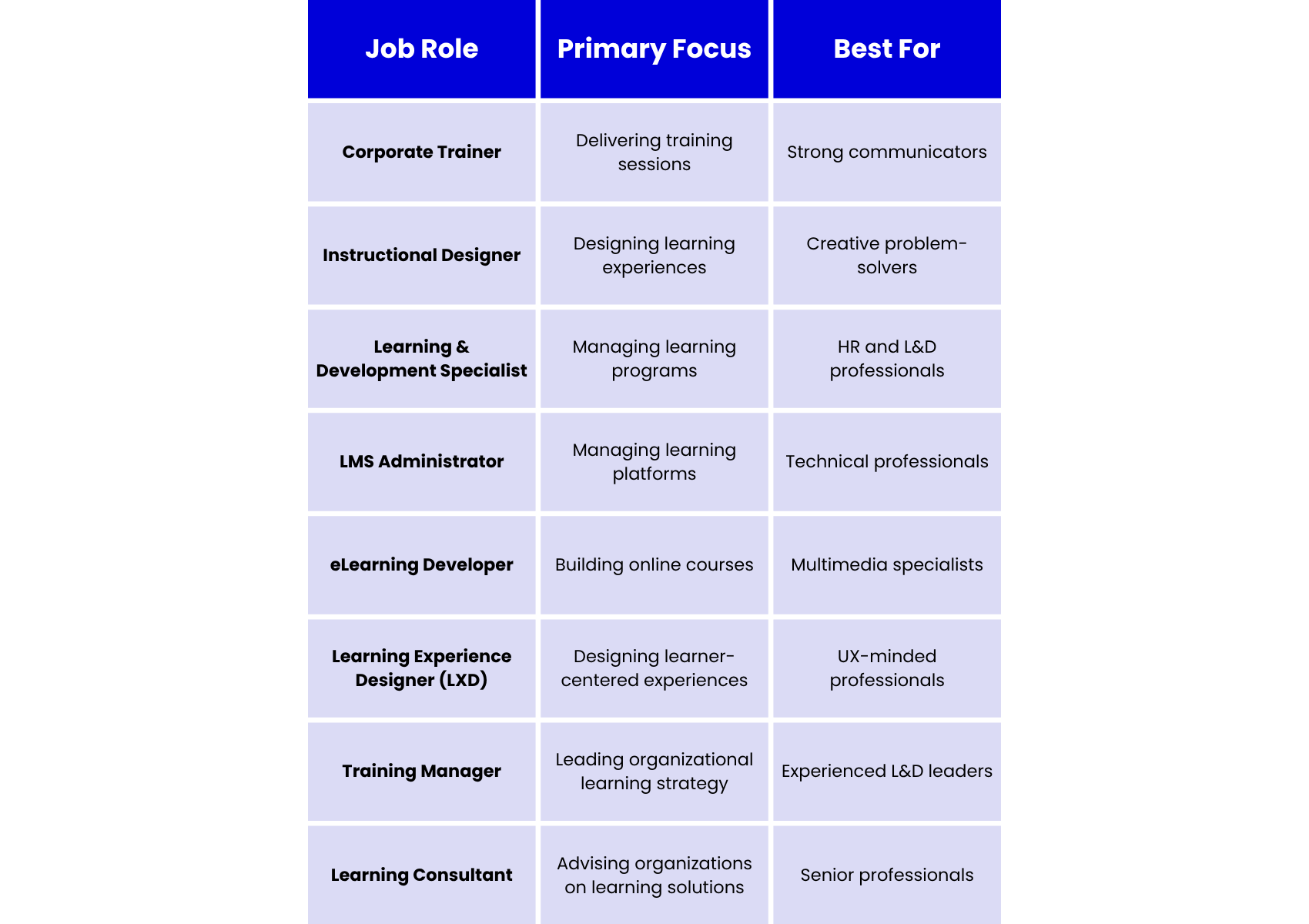
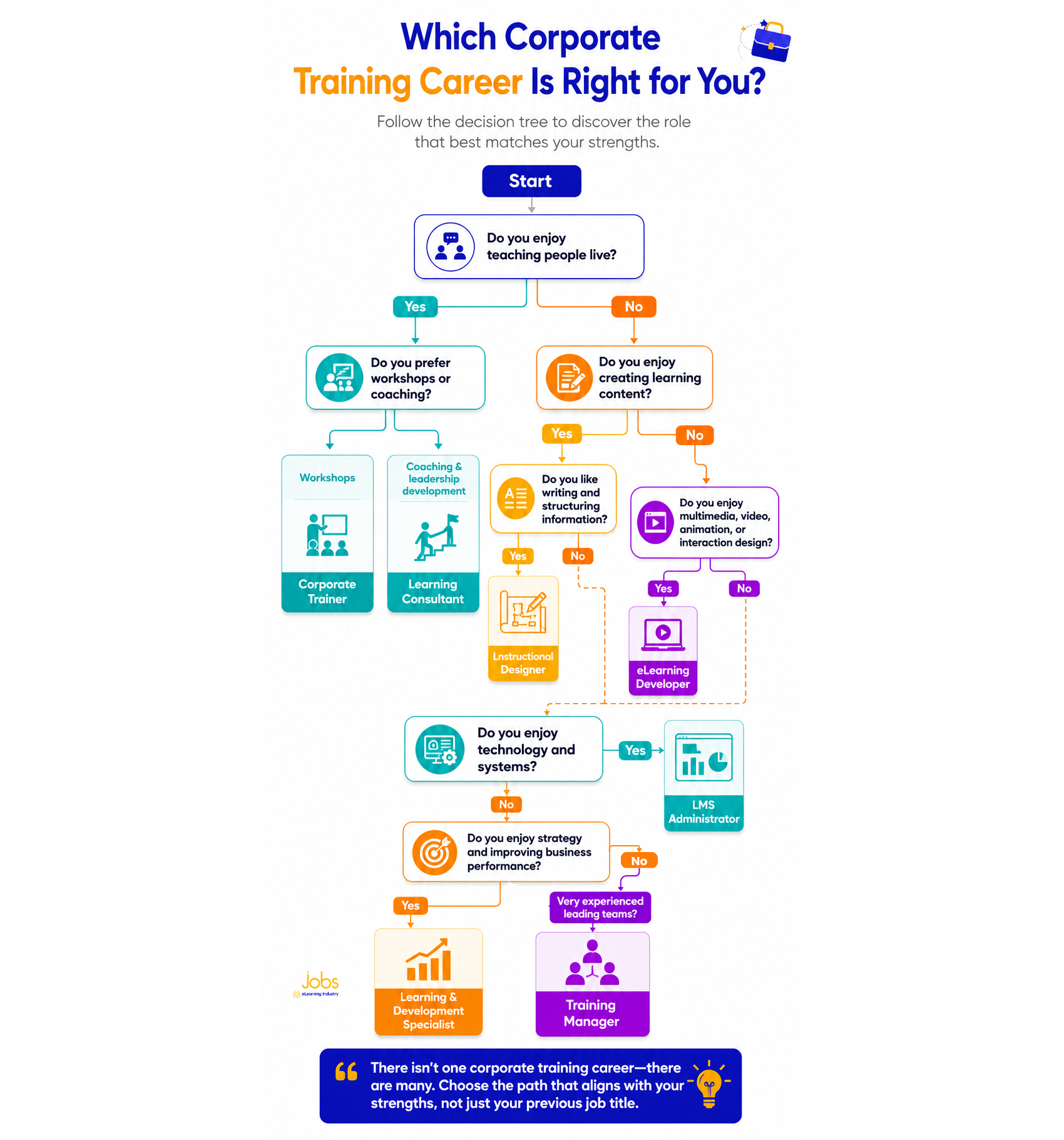
There are many career paths in corporate training, and your options depend on your experience, interests, and technical skills. Some people focus on creating training materials, while others move into strategy or leadership roles.
The table below shows some of the most common roles in corporate training, what each job involves, and who might be a good fit. This can help you find a career path that matches your experience and long-term goals.
Never Miss A New Corporate Training Opportunity
The best corporate training jobs are often filled quickly. Set up personalized job alerts to receive the latest openings that match your skills, experience level, and preferred location, including remote corporate training jobs.
Salary Insights For Corporate Training Jobs
Salaries for corporate training jobs depend on factors like experience, location, specialization, certifications, and industry. People with skills in instructional design, learning technologies, AI-enabled learning, or leadership development often earn more.
The salary ranges below give a general idea of what professionals can expect in common corporate training roles in the United States. Pay may also include bonuses, stock options, and other benefits.
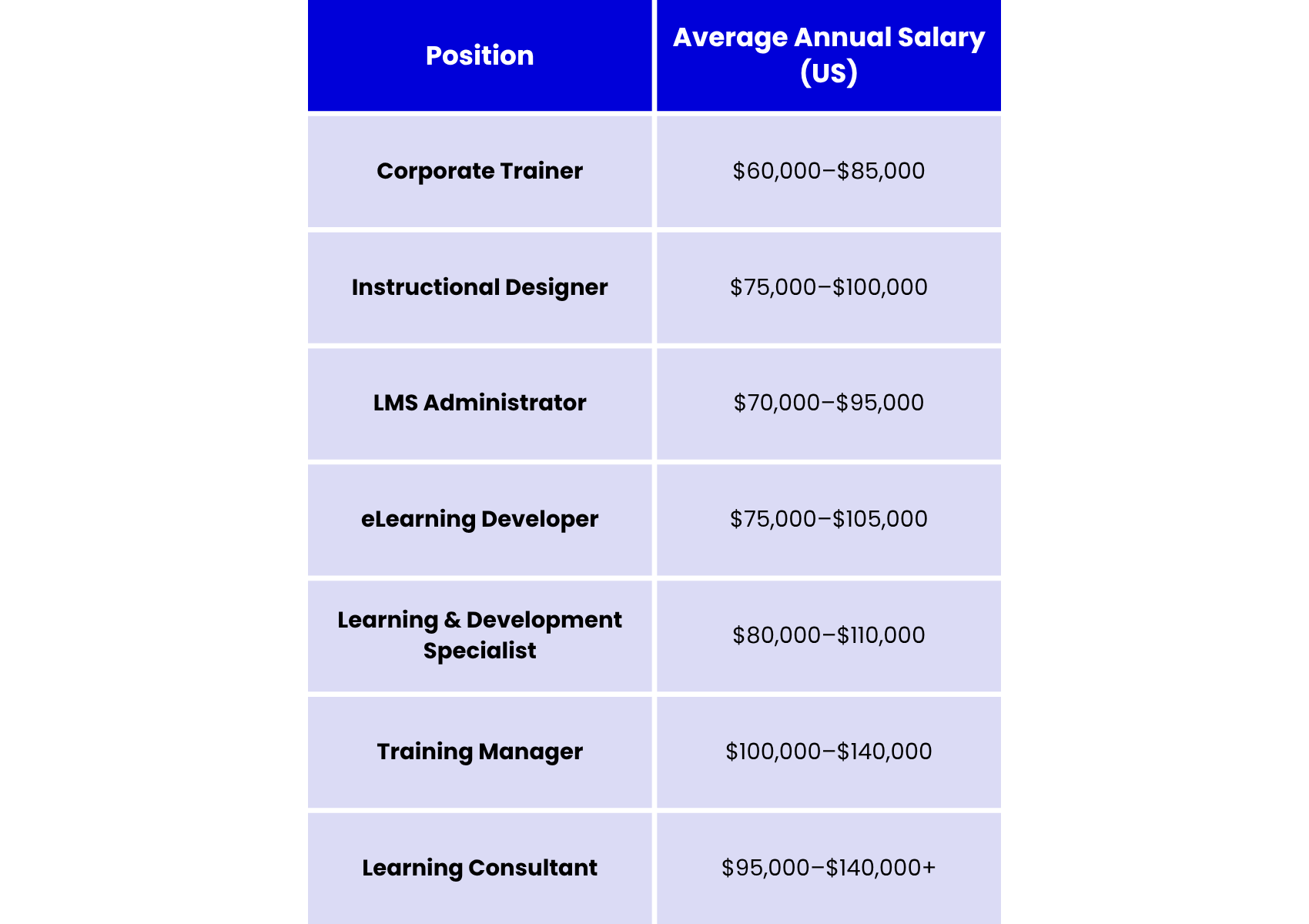
Salary Tip: If you have experience with AI-powered learning platforms, learning analytics, project management, or Instructional Design software, you can often earn a higher salary.
Skills Employers Look For In Corporate Training Jobs
More and more organizations want professionals who have teaching skills, understand business, and are comfortable with technology.
These skills often show up in corporate training job postings and can help you stand out when applying for jobs.
Technical Skills
- Instructional Design
- Adult learning principles
- eLearning development
- LMS administration
- Articulate Storyline
- Adobe Captivate
- Learning analytics
- AI-assisted content development
- Video creation
- Accessibility standards
Workplace Skills
- Communication
- Facilitation
- Presentation skills
- Project management
- Stakeholder management
- Coaching
- Problem-solving
- Collaboration
- Leadership
- Change management
Continue Exploring Your eLearning Career
Corporate training is just one of many exciting paths within Learning and Development. Whether you're starting your first role, changing careers, or comparing different opportunities, these resources can help you make informed career decisions.
- Entry-Level eLearning Jobs: What To Apply For With No Experience
- eLearning Salaries In 2026: What Different Roles Really Pay
- How To Transition Into An eLearning Career (From Any Background)
Remote Corporate Training Jobs
Remote work is now a regular part of Learning and Development teams. Many organizations hire people to design digital learning, run virtual workshops, manage LMS platforms, and support teams working from different locations.
Some common remote roles are:
- Remote Instructional Designer
- Remote Corporate Trainer
- Remote LMS Administrator
- Remote Learning Consultant
- Remote eLearning Developer
- Remote Learning Experience Designer
If you want a remote job in corporate training, building skills in virtual facilitation, asynchronous learning, and using collaborative authoring tools can help you stand out.
Corporate Training Jobs For Former Teachers
Teaching experience is a great fit for corporate learning. Former teachers already have many important skills that employers look for, such as lesson planning, leading groups, designing assessments, communicating clearly, and keeping learners engaged.
Many teachers move into roles like these:
- Corporate Trainer
- Instructional Designer
- Customer Education Specialist
- Learning Experience Designer
- Onboarding Specialist
- Sales Trainer
- Enablement Specialist
To make your transition smoother, try building an instructional design portfolio, learning to use authoring tools like Storyline, and getting some experience with Learning Management Systems.
Upload Your CV And Get Discovered By Employers
Looking for your next opportunity in Learning & Development? Upload your CV to make it easier for employers and recruiters to find you for corporate training jobs, instructional design roles, L&D positions, and other EdTech careers.
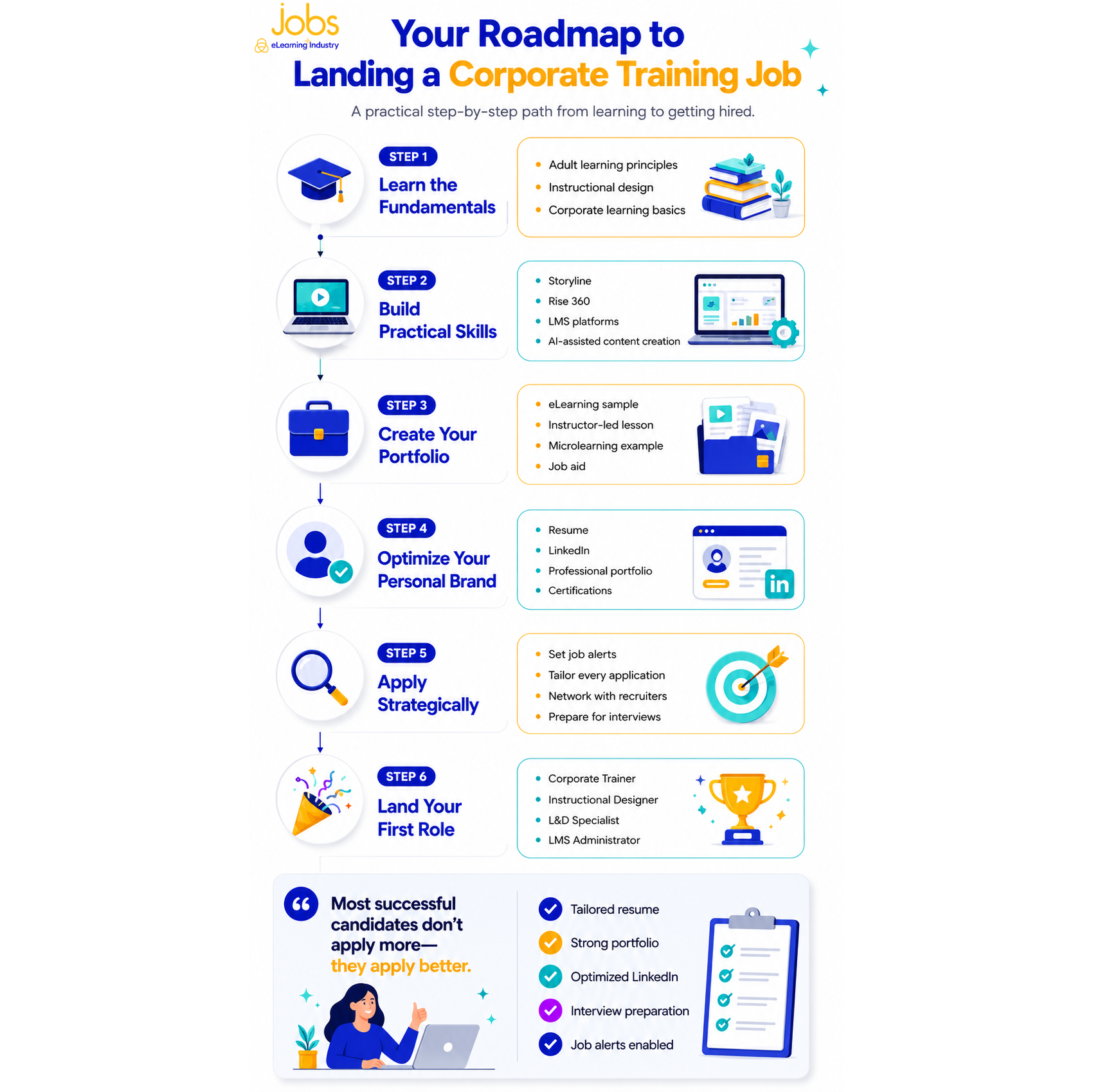
How To Land Your First Corporate Training Job
Breaking into corporate learning is easier when you follow a structured approach.
- Learn the fundamentals of Instructional Design.
- Build a portfolio showcasing training projects.
- Gain experience with popular eLearning tools.
- Earn relevant certifications where appropriate.
- Optimize your resume with industry keywords.
- Create a strong LinkedIn profile.
- Apply consistently for entry-level and mid-level roles.
- Set job alerts to quickly discover new opportunities.
Even candidates without direct corporate experience can demonstrate transferable skills through volunteer work, freelance projects, classroom experience, or personal learning initiatives.
Get Ready To Land Your Next Role
Found a corporate training job that interests you? Increase your chances of getting hired with expert resources designed to help you stand out throughout the hiring process.
- Cover Letter Sample: Templates & Examples For Every Job
- Top Job Interview Questions And How To Answer Them (2026 Guide)
- Icebreaker Questions For Work: 50+ Ideas For Interviews, Meetings, And Team Building
Industries Hiring Corporate Training Professionals
A major benefit of working in corporate training is that many industries are seeking learning professionals. Most organizations need people who can help onboard new employees, build leadership skills, make sure everyone follows the rules, and encourage ongoing learning. As more companies go digital, there is a growing need for professionals who can design effective and engaging training that helps businesses succeed.
The table below shows some of the main industries hiring corporate training professionals and the types of training they usually offer. Knowing where your skills fit can help you find employers that match your interests and career goals.
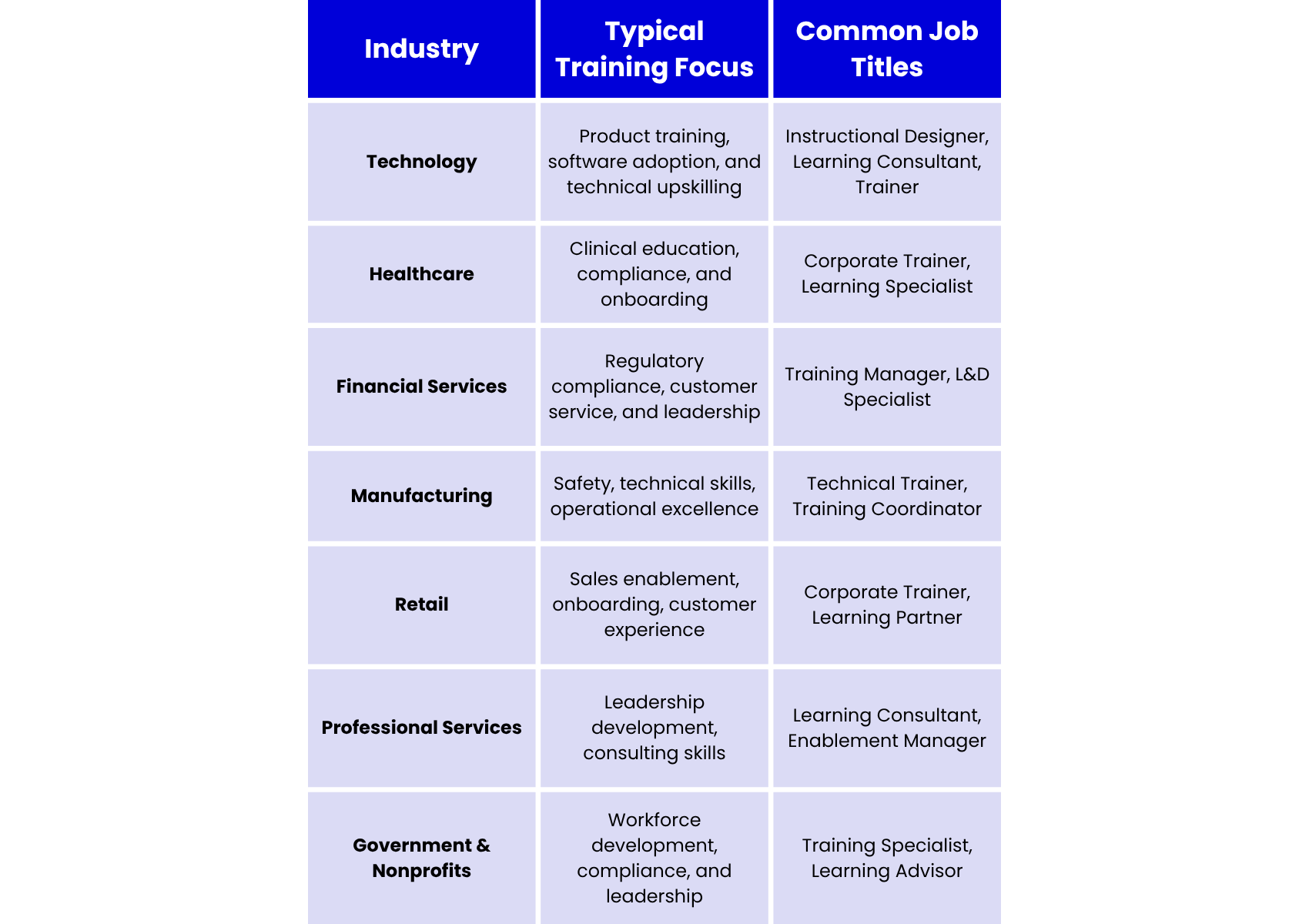
No matter your background, you can find opportunities in many fields, including Fortune 500 companies, startups, and nonprofit organizations. If you are moving from education or searching for remote corporate training jobs, exploring different industries can help you find a role that aligns with your experience, interests, and long-term goals.
FAQs About Corporate Training Jobs
1. What are corporate training jobs?
Corporate training jobs involve designing, delivering, and managing employee learning programs that improve workplace skills, performance, onboarding, leadership development, and compliance.
2. What qualifications do I need for a corporate training job?
Many employers look for experience in education, instructional design, HR, Learning & Development, or business training. Skills with LMS platforms and eLearning authoring tools are also highly valued.
3. Are remote corporate training jobs available?
Yes. Many organizations hire remote instructional designers, corporate trainers, LMS administrators, learning consultants, and eLearning developers to support distributed workforces.
4. Can former teachers transition into corporate training?
Absolutely. Former teachers often excel in corporate training because they already have expertise in lesson planning, facilitation, learner engagement, and assessment. Building an instructional design portfolio can strengthen the transition.
5. How much do corporate training professionals earn?
Salaries vary by role and experience. Entry-level corporate trainers may earn around $60,000 annually, while experienced training managers and learning consultants can earn $140,000 or more.
6. Which skills are most important for corporate training careers?
The most sought-after skills include instructional design, adult learning, facilitation, Learning Management Systems, eLearning development, communication, project management, learning analytics, and AI-assisted learning technologies.
Jobs {{total_jobs_count}}
{{pagination_label}}
No jobs were found.
Loading...
{{notification.msg}}