
Why "Best Job Search Engines" Isn't A Simple Answer Anymore
Calling any platform the "best job search engine" feels antiquated today, since the job-hunting experience has fundamentally changed in recent years. Job search fatigue is real: candidates scroll for hours, tweak resumes endlessly, and still feel stuck. One major reason is volume without value. There are simply too many listings and too little relevance. Aggregators pull in duplicate, expired, or poorly matched roles, forcing job seekers to do the filtering work that tools once took care of.
That's why "best" can't be used universally anymore. The right engine depends on fit, not sheer volume. A niche board that lines up with your industry, seniority, or values can outperform a massive platform if it connects you with fewer but better matches. For some people, that's a network-driven site. For others, it's a specialized marketplace or even direct company pages. In today's market, job-search success is measured by clarity and alignment, not by how many jobs you can scroll past before calling it a day.
In this guide, we'll cover which job search engines you should use and a few reasons why you may not be getting the results you're looking for.
Do you want to get notified when relevant roles open? Subscribe to our newsletter!
At A Glance
- Not all job search engines deliver the same quality of results.
- Large job boards prioritize volume, not relevance.
- Niche job boards surface more targeted, higher-intent opportunities.
- Choosing the right platform can significantly reduce job search time.
What Are Job Search Engines And How Do They Work?
Job search engines are online tools that help people discover open roles across the internet, all in one place. Think of them as intermediaries between job seekers and employers, coordinating opportunities so candidates can search, filter, and apply without the headache of applying company by company.
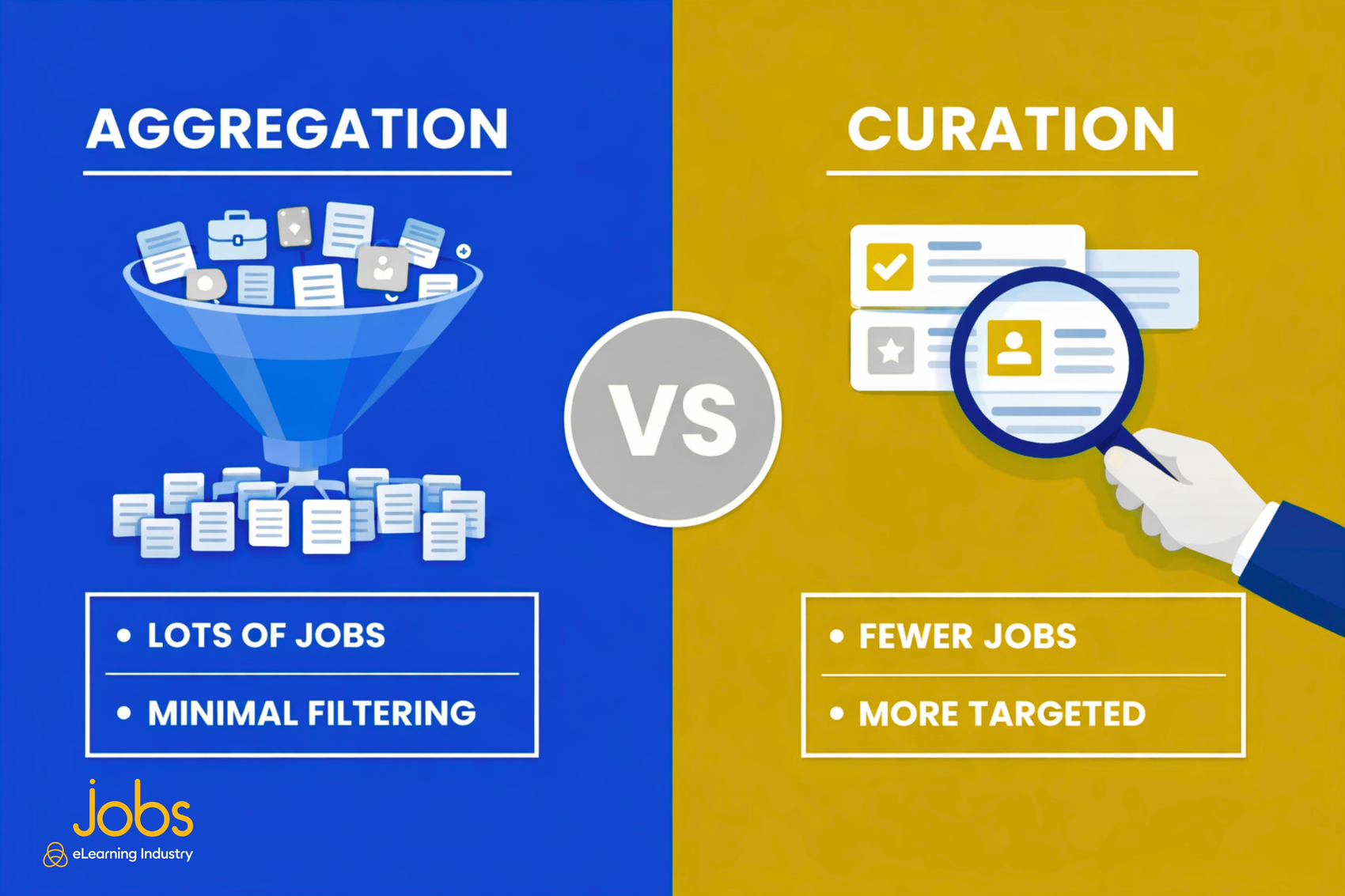
Listings appear on these platforms in two main ways: aggregation or curation. Aggregated engines automatically collect postings from thousands of sources, including company career pages, job boards, and staffing agencies. This delivers scale, but it can also lead to duplicates, outdated roles, or not-so-ideal matches. Curated platforms take a more selective approach, manually vetting employers or roles. They use algorithms or human review to ensure relevance, quality, or alignment with specific criteria. For example, making certain that the role matches your skills, experience level, or values.
It's also important to understand the differences between search engines, job boards, and niche platforms. Job search engines primarily index and organize listings from other sources, acting like a search layer rather than a destination for employers. Job boards, on the other hand, host postings directly. Employers pay to list roles, and interested candidates apply directly. Niche platforms narrow the focus further, serving specific industries, demographics, or career paths, often opting for volume over precision.
Types Of Job Search Engines You'll Find In 2026
In 2026, job search engines are less about a single destination and more about an ecosystem of tools that are each designed for different needs, career stages, and search styles. So, let's delve into the main types so that you can focus on what actually works for you.
General Job Search Engines
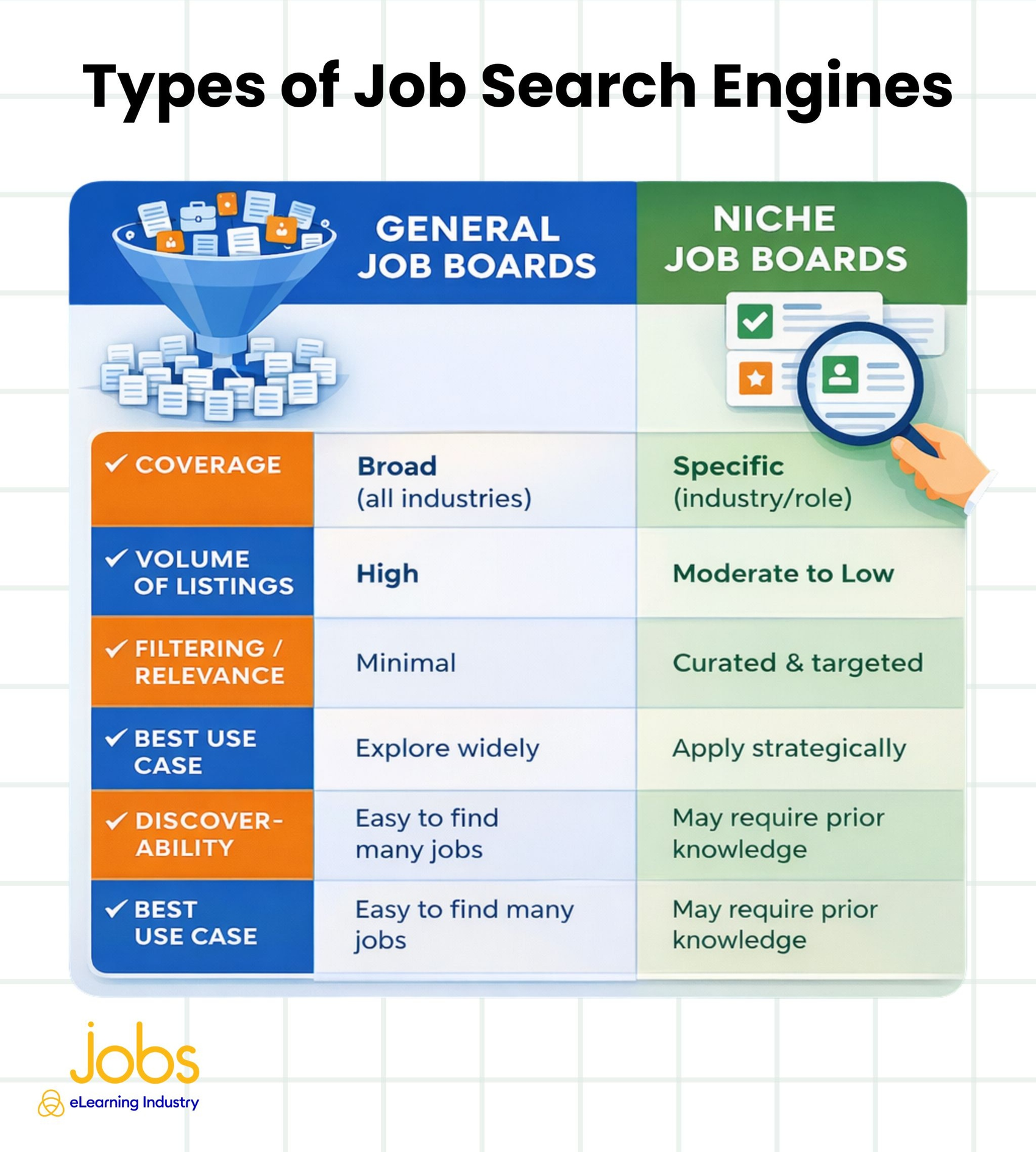
These platforms offer broad coverage and an extremely high volume of listings, pulling roles from countless industries, locations, and experience levels. Their biggest strength is reach, and they're ideal for people who are exploring options, changing fields, relocating, or trying to understand what's available in the market. Typical use cases include early-stage searching, salary research, or scanning trends across multiple roles. The tradeoff here is relevance. Because these job search websites prioritize scale, you might encounter duplicate postings, outdated roles, and matches that require extensive filtering to be useful.
Company Career Pages & Aggregators
Company career pages and aggregators play a different role. Applying directly through an employer's career site often gives candidates more confidence that listings are current and applications are going straight to the source. Aggregators that organize company career pages help streamline this process by grouping roles from verified employers in one place. This approach allows for direct applications and can feel more transparent, especially for candidates targeting specific organizations. However, limited discoverability is the downside. If you don't already know which companies to look for, you may miss opportunities entirely. These tools work best for focused searches rather than career fact-finding missions.
Niche Job Boards
Niche online job boards have grown even more popular as job seekers push back against information overload. These platforms focus on specified industries, roles, or audiences, serving areas like tech, healthcare, creative work, remote roles, or executive leadership. Instead of delivering volume, niche boards are all about curated opportunities and higher relevance. Listings are often screened, employers are more targeted, and filters reflect real-world job requirements rather than generic categories. For candidates with defined skills or career goals, this focus can significantly reduce search time and fatigue. The downside is a narrower scope, as you won't see everything. The perk is that what you do see is more likely to fit.
 Why Niche Job Boards Are Better For Serious Job Seekers
For serious job seekers, niche job boards are one of the most effective ways to find meaningful opportunities. As the job market grows more crowded and automated, general platforms often cast the net too wide. Job boards by industry, on the other hand, prioritize relevance, clarity, and intent. All of these critical actors matter when your goal isn't just finding any job, but the right one.
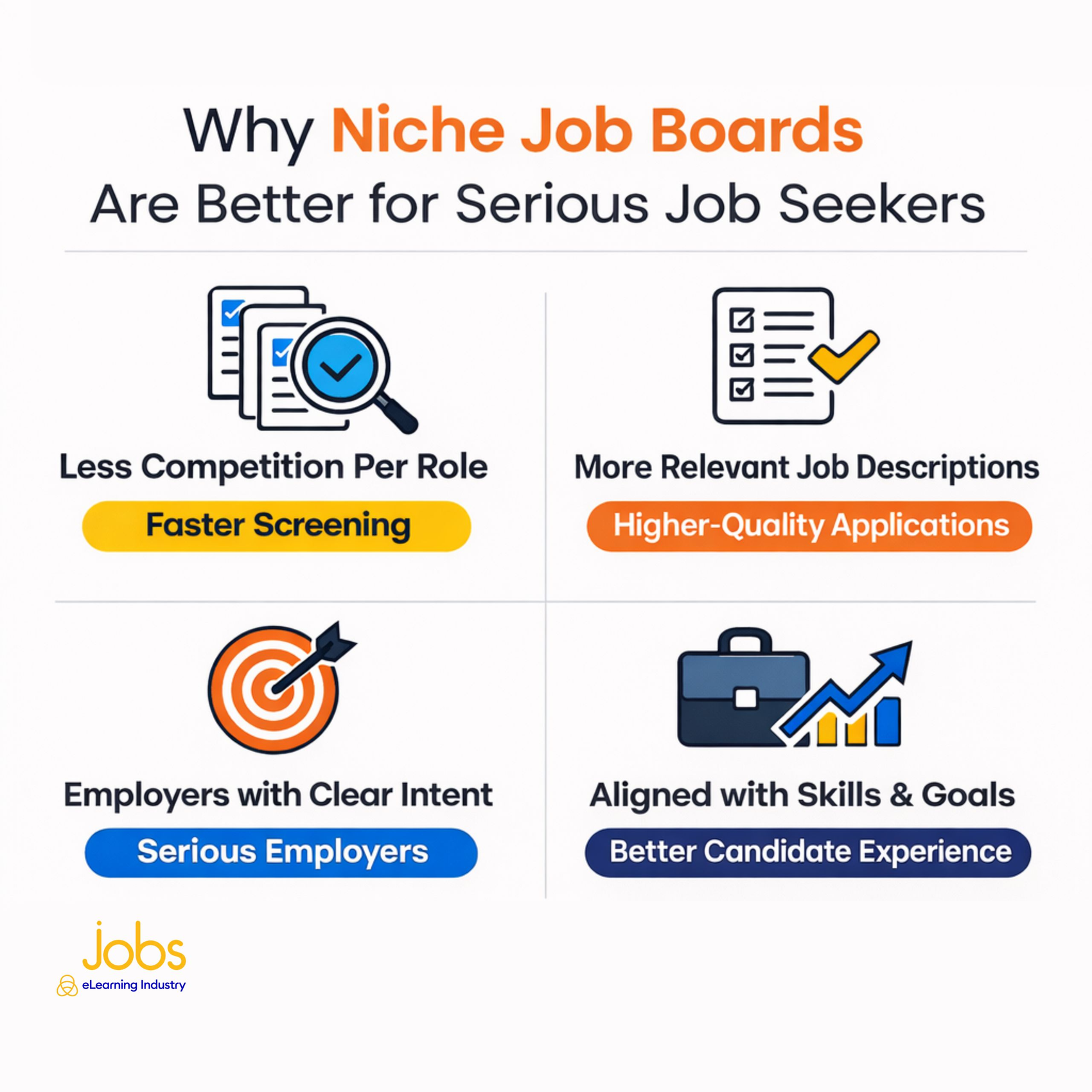
One of the biggest niche job boards benefits is less competition per role. Because niche boards focus on specific industries, roles, or experience levels, the audience is naturally smaller and more qualified. Employers aren't flooded with thousands of loosely matched applications, which increases the visibility of each candidate. For job seekers, this means your resume is more likely to be reviewed by a human rather than filtered out by volume-based AI screening systems before you even get a chance to show off your qualifications.
Niche boards also tend to feature more relevant job descriptions. Employers posting on specialized platforms know they're speaking to an audience that knows their stuff, so listings are often clearer about responsibilities, required skills, and expectations. This transparency helps candidates quickly assess fit instead of trying to decode vague or generic postings. When job descriptions are precise, job seekers waste less time applying to roles that were never right in the first place.
Another key difference is employer intent. Companies that invest in niche platforms are usually hiring with a very specific purpose in mind. They're not testing the market or reposting roles endlessly. In fact, they're usually actively looking for candidates with specific expertise. That clarity benefits both sides. Employers get applicants who understand the work, and candidates connect with organizations that value their skill set.
Why All Of This Matters
Better alignment leads to better outcomes. Employers are able to screen applications faster because they are more targeted and easier to evaluate. They can speed up the process by reviewing qualified candidates rather than sorting through irrelevant resumes. Likewise, job seekers can submit their high-quality applications selectively and tailor their materials to roles that actually match their backgrounds.
Above all else, specialized boards create a better candidate experience. The process feels more intentional and less overwhelming. Job hunters spend less time scrolling and more time engaging with opportunities that match their skills and career goals.
When General Job Search Engines Still Make Sense
Despite the fact that many platforms are overloaded, general job search websites still play an important role when you're trying to land a job. They're more situational than obsolete. One area where general engines make sense is early career exploration. For students, recent graduates, or professionals considering a shift, these platforms offer a high-level overview of what roles exist and how they're described. This comes in handy when you may not know the exact title, industry, or path you're aiming for yet. Scanning a larger set of listings helps you pinpoint options you may not even know exist and shows you how different fields zero in on similar skills.
When weighing general vs niche job boards, it's important to point out that general websites are also useful for broad market research. If you're trying to understand hiring trends, in-demand skills, or which industries are growing, volume is key. Seeing thousands of listings across regions and sectors helps you spot patterns. For example, you can determine which certifications are repeatedly requested, how job titles vary by company, or where there's more hiring activity.
Another practical use case for general job search engines for professionals is salary benchmarking. Larger platforms often provide enough data to show realistic compensation ranges across roles, experience levels, and locations. While individual listings may vary greatly based on job responsibilities and experience level, aggregated data can help you set your expectations, prepare for negotiations, or even evaluate whether a potential career move meets your needs from a financial perspective.
How To Choose The Best Job Search Engine For You
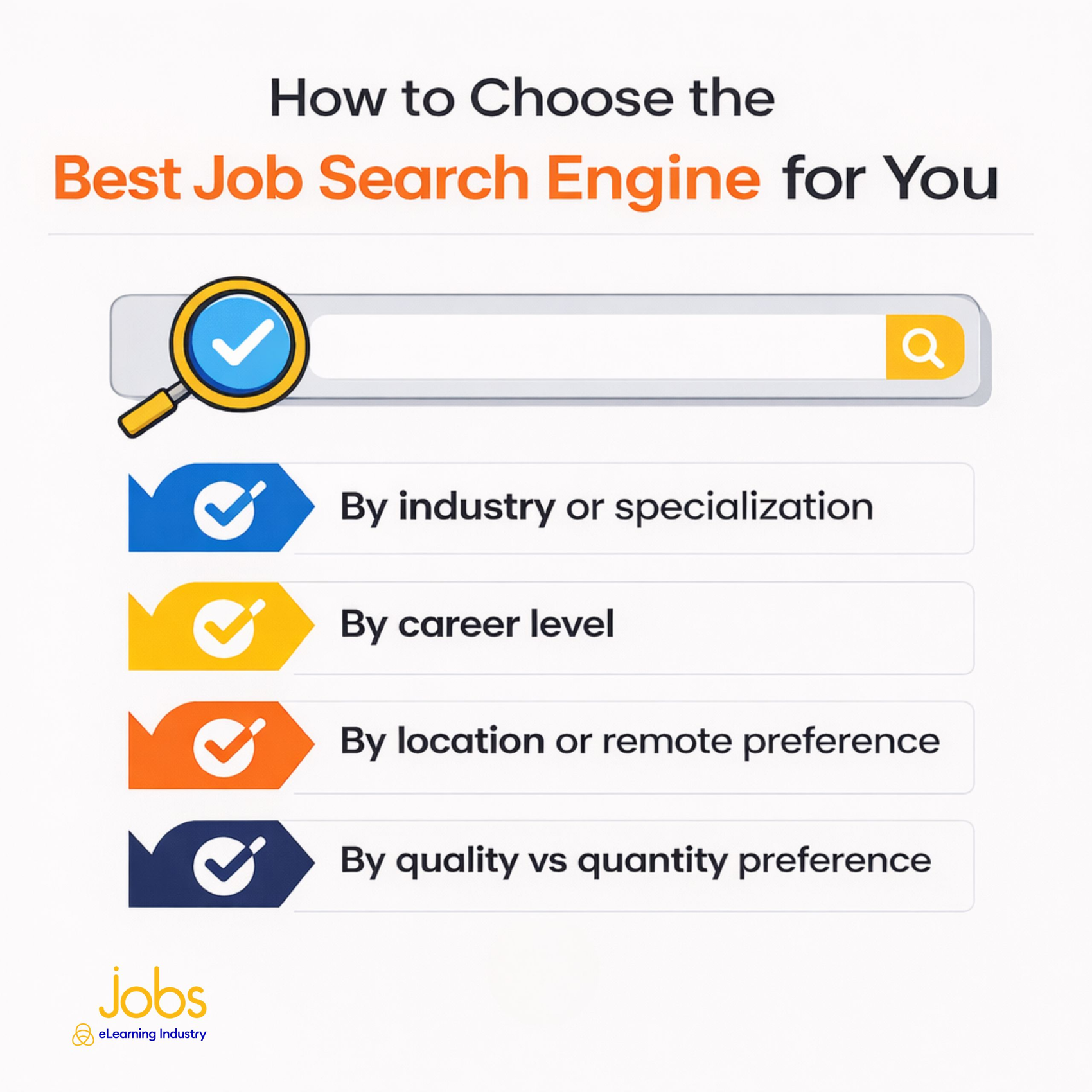
To choose the best job search engine for you, start with your industry or specialization. Highly technical or creative fields, like eLearning and EdTech, usually benefit from niche platforms that speak the industry's language versus general platforms that cover a broad range of sectors. So, decide which area you're most interested in to narrow the options. For instance, would you prefer to work on eLearning product development or creating L&D experiences for a corporation?
Next, consider career level. Early-career candidates can often use large platforms to find entry-level roles that are widely posted and have flexible requirements. On the other hand, mid- to senior-level candidates may find better results on specialized online job boards or direct company pages where roles are more tailored and less saturated.
Location or remote preference also plays a part. General engines are helpful for geographic searches, relocations, or understanding regional demand. However, if remote work is your priority, niche platforms that clearly distinguish between fully remote, hybrid, and location-restricted roles can save significant time compared to broad engines with unclear labelling.
Finally, a factor for how to choose the best job search engine is to figure out your quality versus quantity preference. If you have limited time or high burnout, fewer high-quality listings may be what you're looking for. Then again, if you're researching, comparing, or casting a wide net, quantity can still serve a purpose in the first round of your job search.
How To Use Job Search Engines More Strategically
One common challenge to keep in mind is duplicate listings. The same role is often posted across multiple platforms or reposted weekly by recruiters. Repeated applications waste time and can make tracking confusing. To avoid this, pay attention to company names, job descriptions, and posting dates. You can even create a simple spreadsheet with the role title, company, and date applied to quickly spot repeats and focus only on new opportunities.
Job alerts are another underused tool in the best job search engines. Rather than setting broad alerts that flood your inbox, create targeted ones to speed up the search. Use specific job titles, locations, and keywords that truly match your goals. For example, "entry-level eLearning data analyst" will yield more relevant results than just "data analyst." Review alerts regularly and refine them if they're delivering too many irrelevant postings.
Narrowing searches with clear intent is just as important. Before you search, define what you want, such as industry, role level, work arrangement, and salary range. Filters are there to help ensure that each application aligns with your skills and career direction.
Last but not least, track applications to stay organized and record where and when you applied, the version of your resume used, and any follow-up dates. This not only prevents duplicate applications but also prepares you for interviews and follow-ups. Over time, tracking can help you identify patterns about which roles get responses so that you can adjust your strategy and increase your chances of landing an interview.
Common Mistakes Job Seekers Make
A mistake that many candidates make is applying everywhere without discrimination. Sending out dozens of generic applications may feel productive, but it often leads to poor matches. Remember that employers can tell when a candidate hasn't truly read the posting or considered whether they're a good fit. Applying strategically to roles that align with your skills, experience, and goals allows you to put more effort into each application and showcase your qualifications in the most favorable light.
Another overlooked misstep is ignoring niche platforms. While large online job boards are useful, as we covered earlier, they aren't the only place quality roles are posted. Industry-specific job boards, professional associations, and community-based platforms often feature opportunities that never appear on major engines. These roles may also attract fewer applicants, which increases your visibility and chances of getting noticed.
Not tailoring searches is also a common issue. Many job seekers use the same broad keywords over and over, which can display irrelevant or overly competitive postings. Adjusting search terms based on role level, specialization, or tools you use can improve results. So, be intentional with filters like location, remote options, and experience level to ensure the roles you see are ones you actually want (and qualify for).
Finally, overrelying on one job search engine can limit your opportunities. Each platform pulls from different sources and prioritizes listings differently. Depending on just one engine means missing out on roles posted somewhere else. Combining multiple engines, networking, and direct company searches gives you a more holistic job search strategy.
Where To Find High-Quality, Role-Specific Job Opportunities
Finding high-quality, role-specific job opportunities in eLearning requires more than a quick search on general job boards. Because the field blends education, technology, and Instructional Design, the best eLearning jobs are often found on platforms built specifically for the industry.
Specialized job boards, like Jobs by eLearning Industry, offer a major advantage by curating roles that match eLearning skill sets. Instead of wading through unrelated education or tech postings, candidates can focus on positions such as Instructional Designer, Learning Experience designer, LMS administrator, or eLearning developer. These platforms are often used by employers who understand the field, which leads to clearer job descriptions, more realistic requirements, and roles that mesh with industry standards.
Specialization also improves outcomes for job seekers. When you search within the best job search engines in 2026, you're more likely to find roles that match your experience level, tools, and learning methodologies. This also allows you to tailor your portfolio to what hiring managers actually value. Specialized job search websites reduce competition and increase the chances that your application reaches someone familiar with the ins and outs of eLearning projects.
Beyond immediate job placement, niche boards can support long-term career growth. Many industry-specific platforms offer more than listings. They delve into salary insights, trend reports, professional development resources, and community connections. This helps professionals track how roles are evolving, which skills are in demand, and where new opportunities are emerging. As such, you can make better-informed upskilling decisions and career pivots within the field.
By focusing on industry-specific platforms, eLearning professionals can find the right roles at the right time in their career paths, present themselves more strategically, and invest their time more wisely in fine-tuning their portfolios and building practical experience.
Ready to take your next step in L&D? Upload your CV!