
Good Questions to Ask in an Interview: What to Ask, When, and Why
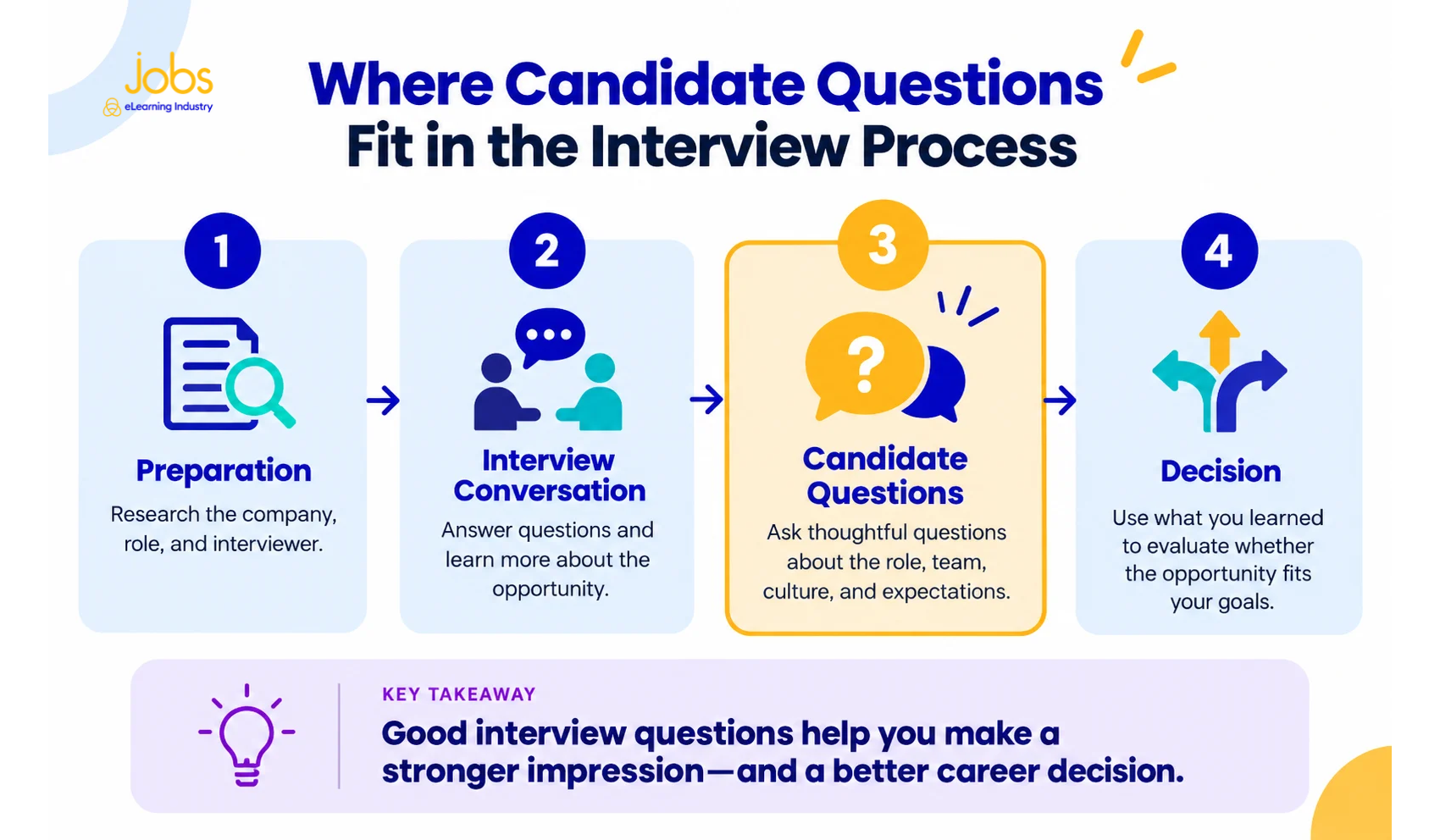
Most candidates spend interview preparation time thinking about how they will answer questions. However, preparing good questions to ask in an interview is just as important.
The questions you ask can show an interviewer that you have researched the opportunity, thought carefully about the role, and are genuinely interested in understanding how you could contribute. They can also demonstrate curiosity, communication skills, and strategic thinking.
More importantly, asking questions is not only about making a strong impression. An interview is a two-way conversation. You are also deciding whether the position, manager, team, and organization are right for you.
That means the best questions to ask in an interview should help you accomplish two things at once: learn information you could not easily find elsewhere and evaluate whether the opportunity matches what you want from your next role.
Key Takeaways
- Asking thoughtful questions shows preparation and genuine interest in the role.
- Different interview stages require different questions, from practical recruiter questions to strategic final interview questions.
- Avoid asking questions that are already clearly answered on the company's website, job posting, or other materials.
- Strong questions help you evaluate the manager, team, culture, expectations, and career opportunities.
- Prepare several questions in advance, but adapt them based on what you learn during the conversation.
Preparing for interviews?
Browse current opportunities and tailor your questions to the companies you're meeting.
Why Interviewers Expect You to Ask Questions
Good questions to ask in an interview can turn it from a one-sided assessment into a real conversation. If an interviewer asks, "Do you have any questions for me?" and you say "No," you might miss a valuable chance to learn more about the job.
When candidates ask questions, it gives interviewers helpful insights.
- First, they demonstrate engagement. Someone who asks specific questions about the position, team, or current priorities is showing that they are actively considering the opportunity.
- They can also demonstrate critical thinking. For example, asking how success will be measured shows that you are thinking beyond the job title and considering actual performance expectations.
- Your questions also reveal something about your communication style. Thoughtful follow-up questions show that you were listening rather than simply waiting for your turn to speak.
- Finally, asking questions helps both you and the employer figure out if you are a good fit for each other. The interview is not just for them to see if you can do the job; it is also your chance to see if the company and its culture are right for you.
Best Questions to Ask About the Role
Some of the most useful questions to ask an interviewer focus directly on what you would actually be doing. Job descriptions provide an overview, but they rarely explain every priority, challenge, or expectation.
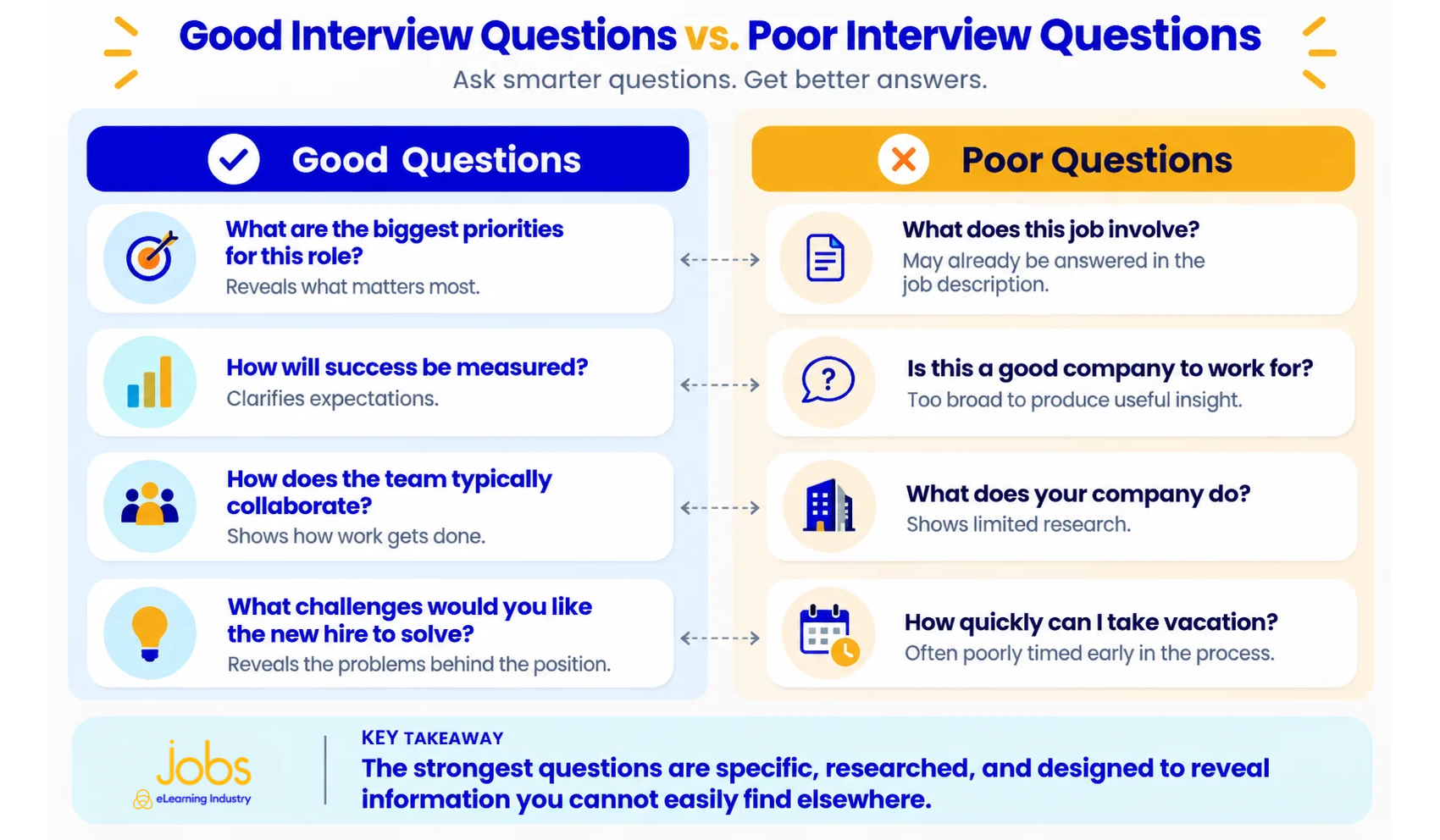
What Does Success Look Like in the First 90 Days?
This question helps you understand what the employer expects from a new hire in the first few months.
Pay attention to whether the employer mentions specific goals, such as completing onboarding, taking charge of certain projects, meeting key people, or improving a process.
For example, if you’re an Instructional Designer, success might mean learning how the organization develops courses and delivering your first one. If you’re an L&D manager, you might be expected to review current programs or start building relationships with business leaders.
If the employer gives a clear answer, it usually means they have put thought into how they onboard new hires and measure performance.
What Are the Biggest Priorities for This Position?
Job descriptions often list many responsibilities. By asking about priorities, you can find out which tasks are most important.
The answer can also show you why the company is hiring. Maybe the team needs to update their LMS, boost learner engagement, adopt new learning technologies, or expand training across more departments.
Understanding the top priorities helps you see whether your experience aligns with what the employer needs most right now.
What Challenges Is the New Hire Expected to Solve?
This is one of the smartest questions to ask in an interview because it shifts the conversation from just responsibilities to the real problems you’d be solving.
The interviewer might mention things like limited resources, old processes, trouble getting everyone on the same page, low course completion rates, rapid growth, or other challenges.
Their answer gives you a clearer idea of what the job is really like. It can also give you a chance to show how your past experience can help solve the problems they’re facing.
Questions to Ask About the Team
Good interview questions should help you learn about the people and processes you’ll work with daily. This matters a lot in eLearning and L&D jobs, since you often team up with subject matter experts, designers, HR, tech specialists, and business leaders.
How Is the Team Structured?
Find out who you’ll work with directly, who you’ll report to, and what other teams are involved.
For instance, an Instructional Designer might be part of the L&D team but often works closely with HR, compliance, operations, or outside subject matter experts.
Knowing the team structure shows you how the role fits into the bigger organization.
How Do Team Members Collaborate?
This question helps you learn how the team actually works day to day.
Pay attention to details about meetings, project management tools, how feedback is given, how decisions are made, and how teams work together.
The answer can show if the team works on their own, together, at different times, or with set routines.
What Makes Someone Successful on This Team?
Instead of just asking what the company values, this question helps you learn what matters most to the team itself.
The interviewer might mention things like communication, working independently, managing stakeholders, being adaptable, creative, or having technical skills.
Think about how these expectations match your own work style and strengths.
Questions to Ask About Company Culture
Questions about company culture are most helpful when they go past general statements like "We are collaborative" or "We move quickly." Good interview questions encourage the employer to share specific examples.
How Would You Describe the Company Culture?
This is a good place to start, especially if you ask for an example afterward.
Listen to how the interviewer talks about communication, decision-making, flexibility, accountability, and teamwork.
What Do Employees Enjoy Most About Working Here?
This question encourages the interviewer to share their own experience instead of just repeating the company’s branding.
Different interviewers might mention the people, the company’s mission, flexibility, career growth, independence, or interesting projects.
Their answer can help you see what employees truly value.
How Does the Company Support Professional Development?
For L&D and EdTech professionals, this question shows whether the company invests in developing its employees’ skills.
You can ask about budgets for professional development, in-house training, certifications, conferences, coaching, mentoring, special projects, or chances to learn new technologies.
Questions to Ask About Growth Opportunities
The best questions to ask in an interview should also help you understand what could happen after you become comfortable in the role.
What Learning Opportunities Are Available?
You might hear about formal courses, help with certifications, conferences, internal training, job shadowing, or learning by working on new projects.
Ask for specific examples instead of just accepting a general promise about development opportunities.
How Do Employees Typically Grow in This Role?
This question can help you explore different career paths you could pursue.
Some jobs might lead to management roles. Others could help you move into senior specialist, learning strategist, learning experience design, enablement, or technology roles.
There does not have to be just one career path, but the interviewer should be able to share how others have grown in the role.
Are There Mentoring Programs?
Not every company has formal mentoring, but asking about it can show you how much the company supports employee growth. If there is no formal program, you can ask if managers, senior colleagues, or internal groups offer coaching or share knowledge.
Questions to Ask the Hiring Manager
When talking to the hiring manager, ask questions that dig into expectations, leadership, priorities, and how the team works. The hiring manager can usually share more about what the job is really like day-to-day than a recruiter can.
What Leadership Style Do You Value?
If the hiring manager would be your boss, you can ask directly, "How would you describe your management style?"
Their answer can show how they give feedback, assign tasks, set priorities, and talk with their team.
What Qualities Do Your Top Performers Share?
This question helps you find out what the manager actually values and rewards.
The answer might mention qualities not highlighted in the job ad, such as taking initiative, managing stakeholders, paying attention to detail, or working well independently.
What Are Your Expectations During the First Six Months?
A 90-day question is about getting started, but this one asks about expectations a bit further down the road. It helps you learn when the manager expects you to be fully up to speed and what big goals they want you to reach in the first few months.
Still preparing your application?
Reviewing a strong Resume Guide and Cover Letter Template can help you present your experience clearly before the interview stage.
You can also explore broader Job Hunting Tips to plan your search, applications, interviews, and follow-ups more effectively.
Questions to Ask During a Final Interview
At the final interview, your questions should help clear up any last uncertainties and show you what to expect next. By now, you likely already know the main job duties and basic company details.
Some useful final interview questions to ask include:
Do You Have Any Concerns About My Experience or Fit for the Role?
This question lets the interviewer bring up any concerns you might still have a chance to address.
For example, they might have questions about your experience in the industry, your technical skills, your management background, or whether you have worked with a certain platform.
You can explain your experience calmly, without getting defensive or thinking their concern means you are out of the running.
What Are the Next Steps in the Hiring Process?
This is a very practical question to ask as your interview wraps up.
It helps you find out if there are more interviews, tests, or reference checks ahead, and gives you an idea of the hiring timeline.
Is There Anything Else I Can Clarify About My Experience?
This gives the interviewer a last chance to ask for any more information from you.
It also helps you finish the conversation knowing you answered the employer’s main questions about your application.
Questions to Ask Based on What Matters Most to You
Good questions to ask in an interview should not only impress the employer. They should help you evaluate the factors that matter most to you when choosing a job.
Before your interview, think about your top two or three priorities and come up with questions based on them.
Company Culture
Ask:
- How does the team handle disagreements or competing priorities?
- How are important decisions communicated to employees?
- What behaviors tend to be rewarded within the organization?
These questions usually give you better insights than just asking if the company culture is "good."
Career Growth
Ask:
- What career paths have people in this position taken?
- How are development goals discussed with employees?
- How often do managers have career development conversations with their teams?
The answers to these questions can show you if the company really supports professional growth.
Compensation and Benefits
It's normal to consider pay when looking at a job, but when you ask about it is important. During an early recruiter conversation, you might ask:
- What salary range has been budgeted for the position?
- Could you explain the overall benefits package?
As you move further in the process, especially before you accept an offer, ask about things like bonuses, retirement plans, healthcare, paid time off, equity, learning budgets, or any other benefits that matter to you.
Work-Life Balance
Instead of just asking if the company has "good work-life balance," try asking questions that show what the real expectations are.
For example:
- What does a typical working week look like for this team?
- Are there periods when overtime is commonly required?
- How does the team manage workload during busy periods?
You'll get more helpful information if you ask specific questions.
Leadership and Management
If having a good relationship with your manager is important to you, you might want to ask:
- How do managers typically provide feedback?
- How much autonomy do team members have?
- How are priorities set when several projects compete for attention?
The answers can help you see if the management style fits how you like to work.
Remote or Hybrid Work
Remote and hybrid work policies can vary widely from one company or team to another.
Ask:
- How often is the team expected to work from the office?
- Does the team have set collaboration days?
- How are meetings and communication managed when some employees are remote?
If flexibility matters to you, make sure you understand what the company really expects, rather than just going by labels like "hybrid."
Learning and Development
If ongoing learning is important to you, consider asking:
- Is there a professional development budget?
- Are employees supported in earning certifications or attending conferences?
- How do people make time for learning alongside their normal responsibilities?
A company might offer development resources, but these questions can show you how easy they are to actually use.
Questions You Should Avoid Asking
Not every question will help you stand out or make a good decision. If you ask questions that are poorly timed or easy to find online, it might seem like you did not prepare much for the interview.
Asking About Salary Before Understanding the Role
You do not have to avoid talking about pay completely. Often, bringing up salary with a recruiter early on can save time for both you and the company if your expectations do not match.
But if you start your interview with the hiring manager by only asking about salary, bonuses, or raises, it can make the conversation feel too limited.
Make sure you ask these questions at the right time and to the right person.
Asking About Vacation Before Discussing the Position
Paid time off matters, especially before you accept a job offer.
However, asking a lot about vacation before you talk about the job’s responsibilities or expectations might be too soon. It is better to save detailed benefits questions for a recruiter or for later, unless the interviewer brings it up first.
Asking Questions Answered in the Job Description
Do not ask, "What does this job involve?" if the job responsibilities are already listed.
Instead, use what you already know to ask a more thoughtful question:
"Which of the responsibilities in the job description will be the biggest priority during the first six months?"
Avoid Asking Generic Questions That Show No Research
Questions like "What does your company do?" can usually be answered with a quick online search.
Stronger questions show you already know about the company and want to learn more. For instance:
"I saw that the organization has expanded its customer education offering. How will this role contribute to that work?"
How to Choose the Right Questions for Different Interview Stages
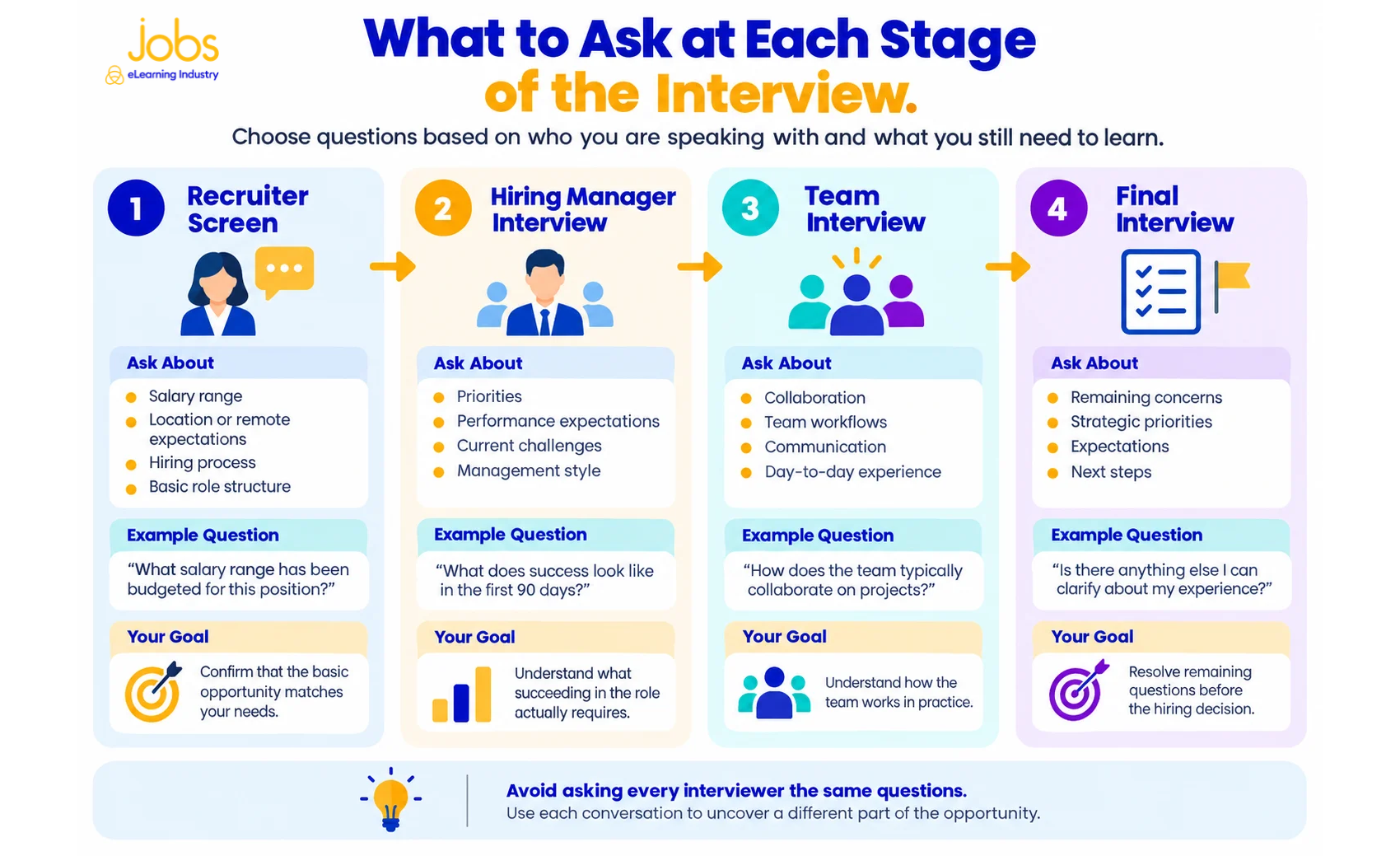
The right questions to ask an interviewer depend partly on who you are speaking with and where you are in the hiring process.
Recruiter Screen
When talking to a recruiter, focus your questions on the job as a whole and how the hiring process works. Useful topics include:
- Salary range
- Location or remote-work expectations
- Hiring timeline
- Basic role structure
- Interview stages
- Major requirements
Recruiters can usually answer practical questions, but they might not know all the details about what you would do each day.
Hiring Manager Interview
The hiring manager is the right person to ask about things like:
- Performance expectations
- Team priorities
- Current challenges
- Management style
- Required skills
- First-90-day goals
This is your chance to learn what it really takes to succeed in the role.
Team Interview
When you meet potential teammates, ask them what their work experience is like. Consider questions such as:
- How does the team collaborate on projects?
- What does a typical project look like from start to finish?
- What is one challenge the team is currently working through?
- How do team members share feedback?
Their answers can give you a different point of view than what you hear from recruiters or managers.
Final Interview
The final interview is a good time to clear up any questions you still have. Focus on:
- Strategic priorities
- Expectations
- Leadership unresolved concerns
- Next steps
- Information you still need before making a decision
At this point, try not to repeat questions that have already been answered, unless you want to hear a different person’s view.
Ready for your next interview?
Explore open positions on Jobs by eLearning Industry, create your candidate profile, upload your CV, and set job alerts for opportunities that match your career goals.
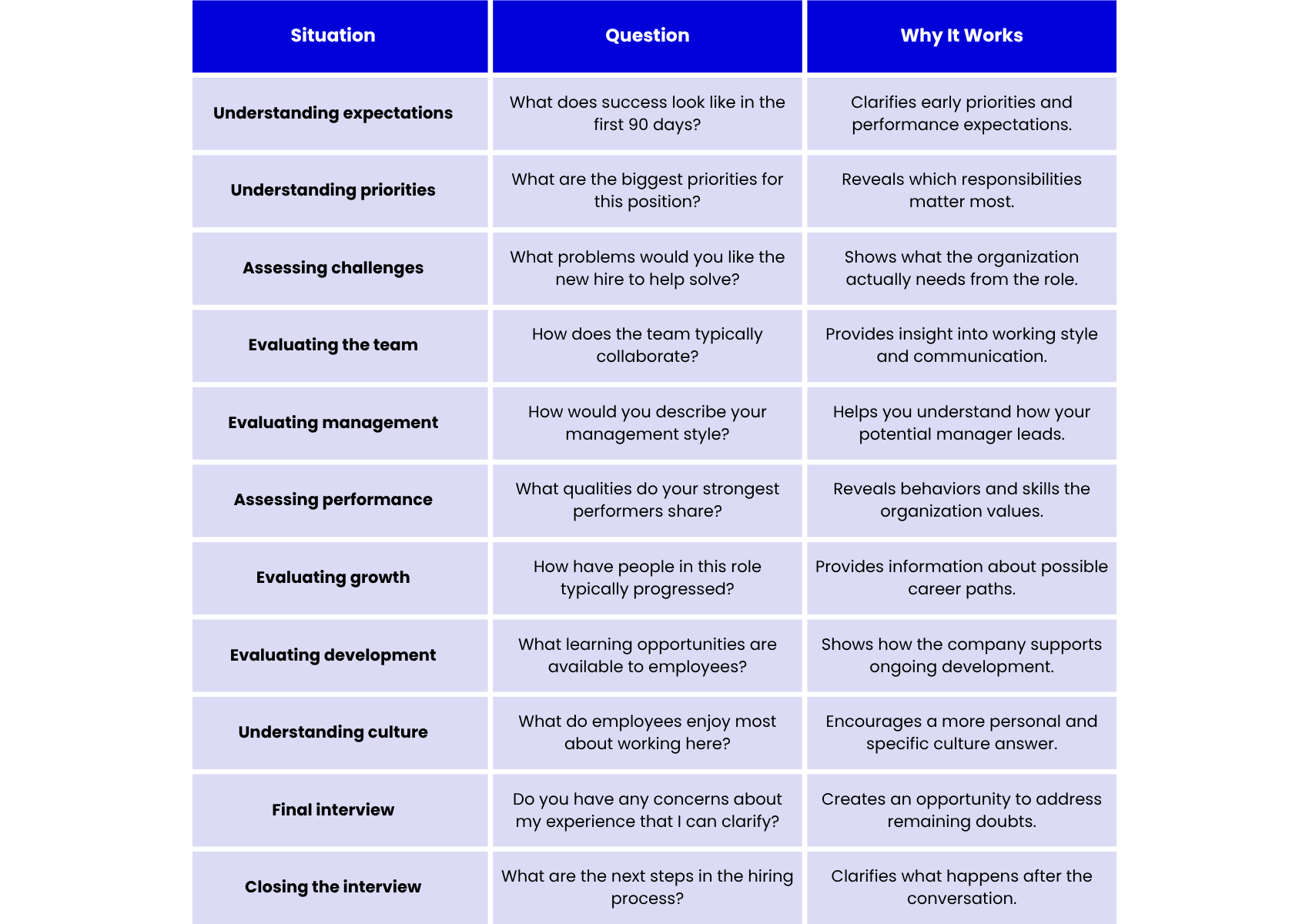
Interview Question Cheat Sheet
The following cheat sheet provides interview questions candidates should ask based on what they want to learn.
Before You Leave the Interview
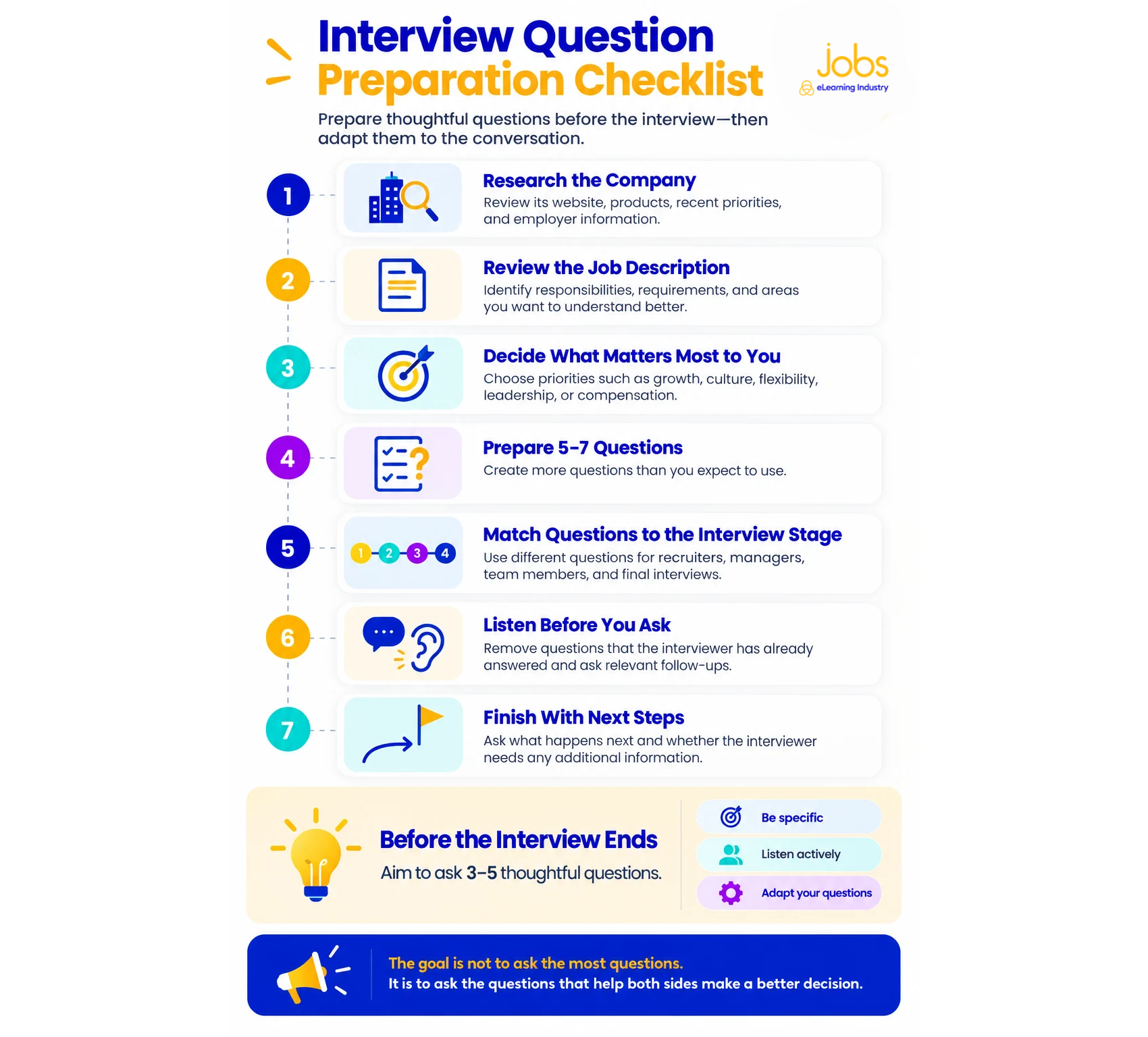
The best questions to ask at the end of an interview are those that come naturally from the conversation, not ones that sound rehearsed.
Before the interview ends:
1. Try to ask three to five thoughtful questions. It helps to prepare extra, since some might get answered as you talk.
2. Listen carefully so you don’t repeat questions the interviewer already answered.
3. Build on what the interviewer has already said. Asking follow-up questions usually leads to a better conversation than just sticking to your list.
4. Show real enthusiasm when it feels right. If the conversation makes you more interested in the job, let them know.
5. Ask what happens next in the process and if the employer needs anything else from you.
It’s also a good idea to look over common interview questions and answers ahead of time so you’re ready for both sides of the conversation.
FAQs
1. What are good questions to ask in an interview?
Good questions to ask in an interview focus on the role, team, manager, company culture, growth opportunities, and next steps. Examples include, “What does success look like in the first 90 days?” “What are the biggest priorities for this role?”, and “How does the team typically collaborate?” The best questions help you understand the opportunity while showing that you prepared for the conversation.
2. How many questions should I ask at the end of an interview?
Aim to ask around three to five thoughtful questions at the end of an interview. Prepare more than you expect to use because some may be answered during the conversation. Prioritize questions that help you understand the role, expectations, team, and hiring process rather than asking questions simply to fill time.
3. What should I ask in an interview to make a good impression?
Smart questions to ask in an interview are specific, relevant, and based on research. You might ask what challenges the new hire will need to solve, how success will be measured, or what qualities top performers share. These questions can demonstrate preparation and curiosity while giving you useful information about the position.
4. What questions should I ask a hiring manager?
Questions to ask a hiring manager should focus on day-to-day expectations, performance, leadership, and team priorities. Consider asking about their management style, what they expect during the first six months, what challenges the team is facing, and what qualities successful employees in the role tend to have.
5. What questions should I ask before accepting a job offer?
Questions to ask before accepting a job offer should cover any information you still need to make an informed decision. This may include compensation, benefits, working hours, remote or hybrid expectations, professional development, performance expectations, start date, and career progression. Clarifying these details before accepting can help you understand whether the role matches your priorities.