?
{{job.title}}
{{job.company_name}}
Private Employer
Hiring Trends In eLearning, L&D, And EdTech Jobs
Hiring trends in eLearning, Learning and Development (L&D), and EdTech show that the job market is getting more selective, specialized, and focused on technology. Employers still look for people who can design good learning experiences, manage platforms, create content, and link workforce skills to business performance. However, they increasingly expect candidates who bring learning expertise together with skills in AI, data analysis, project management, and business awareness.
For job seekers, that shift creates opportunity and competition, as candidates must show what they can build, improve, measure, or lead. Understanding current hiring trends can help you choose relevant skills, position your experience, and apply strategically.
eLearning And L&D Career Outlook
The long-term outlook for this field is strong. According to the U.S. Bureau of Labor Statistics, jobs for training and development specialists are expected to grow by 11% from 2025 to 2035, while the average for all jobs is just 3%. Each year, about 46,000 positions are expected to open. This demand comes from ongoing upskilling, new technology, and the need for policy and compliance training.
There are opportunities outside of traditional training departments, too. Professionals in this field can work in companies, universities, healthcare, software, consulting, government, nonprofits, and with learning vendors. Most roles focus on learning design, content development, learning technology, or strategy and leadership.
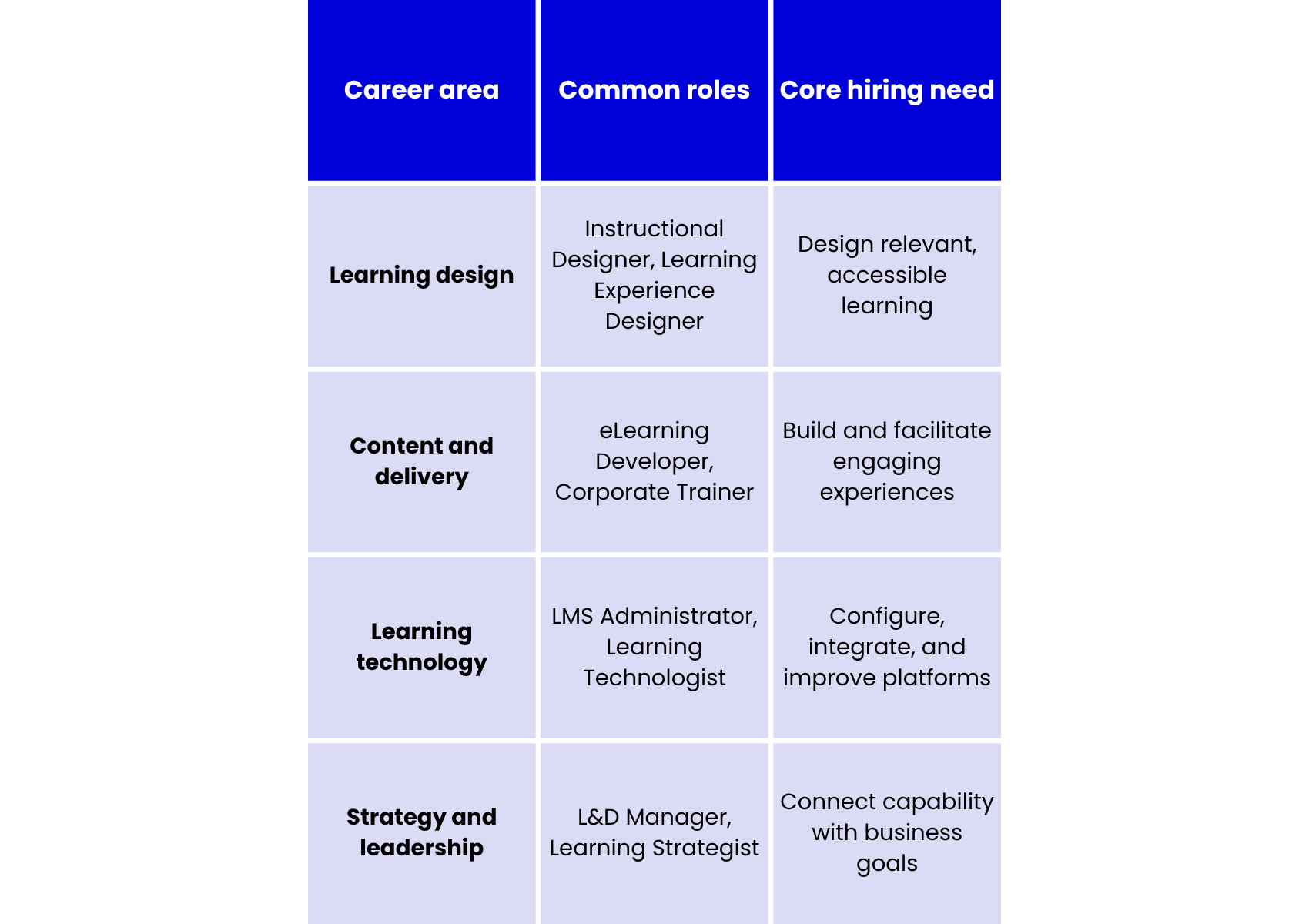
The table explains how employers organize learning roles when job titles vary. You can look up each title and its responsibilities. For example, an enablement specialist might handle Instructional Design, while a learning systems analyst could focus on LMS administration.
6 Hiring Trends Shaping The Market
1. AI Literacy Is Becoming A Baseline Skill
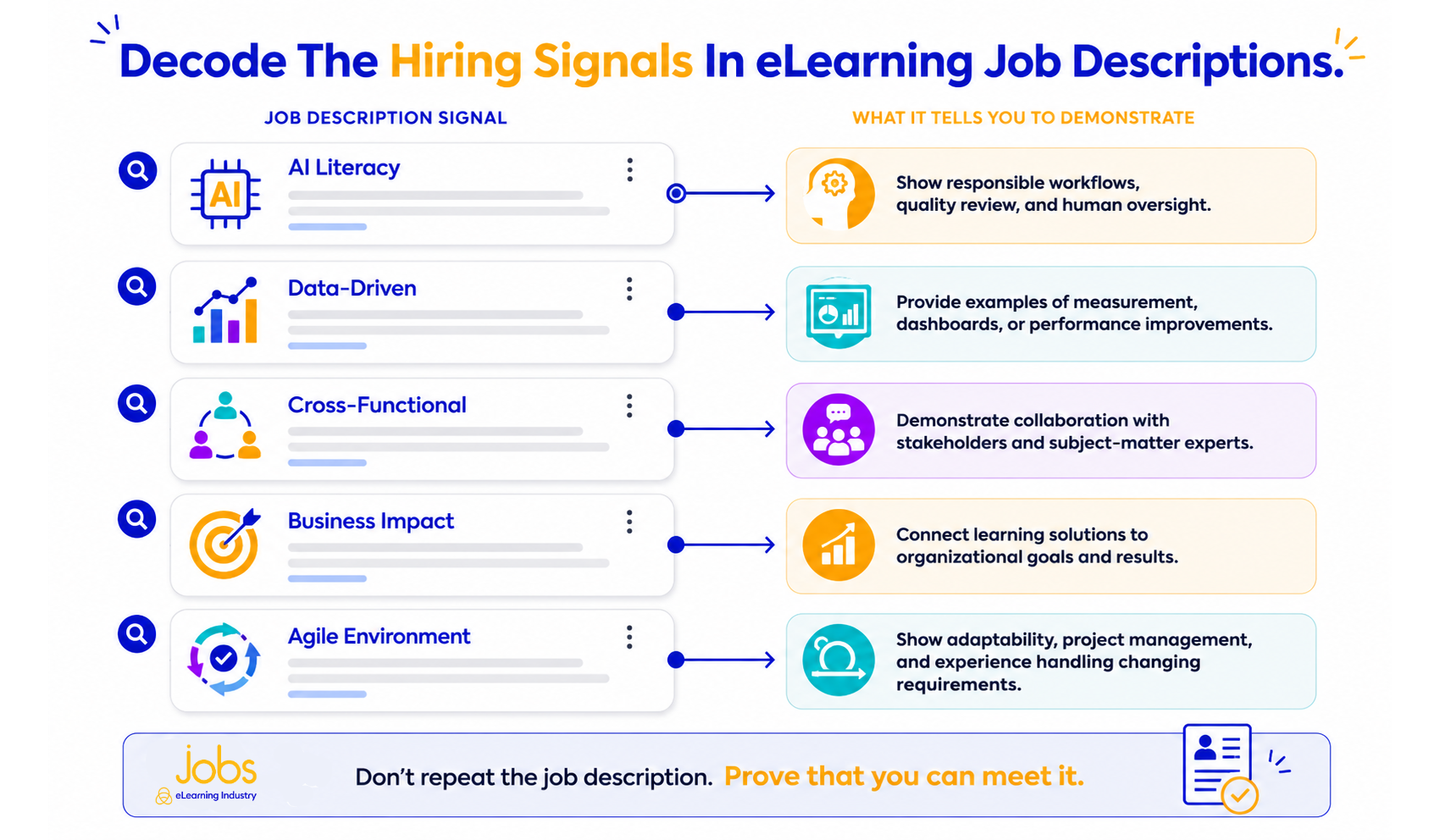
Employers are looking for candidates who know how to use generative AI to speed up research, storyboarding, assessment creation, personalization, and content production. But just knowing the tools is not enough. The best applicants can explain how they check AI outputs, protect sensitive data, avoid bias, respect copyright, and make sure people stay involved in the process.
Instead of just listing “ChatGPT” as a skill, show how you use AI responsibly and what results you achieved. For example: “Used an approved AI assistant to create first-draft scenario variations, then reviewed them with subject-matter experts, reducing development time by 20%.”
2. Portfolios Are Carrying More Weight
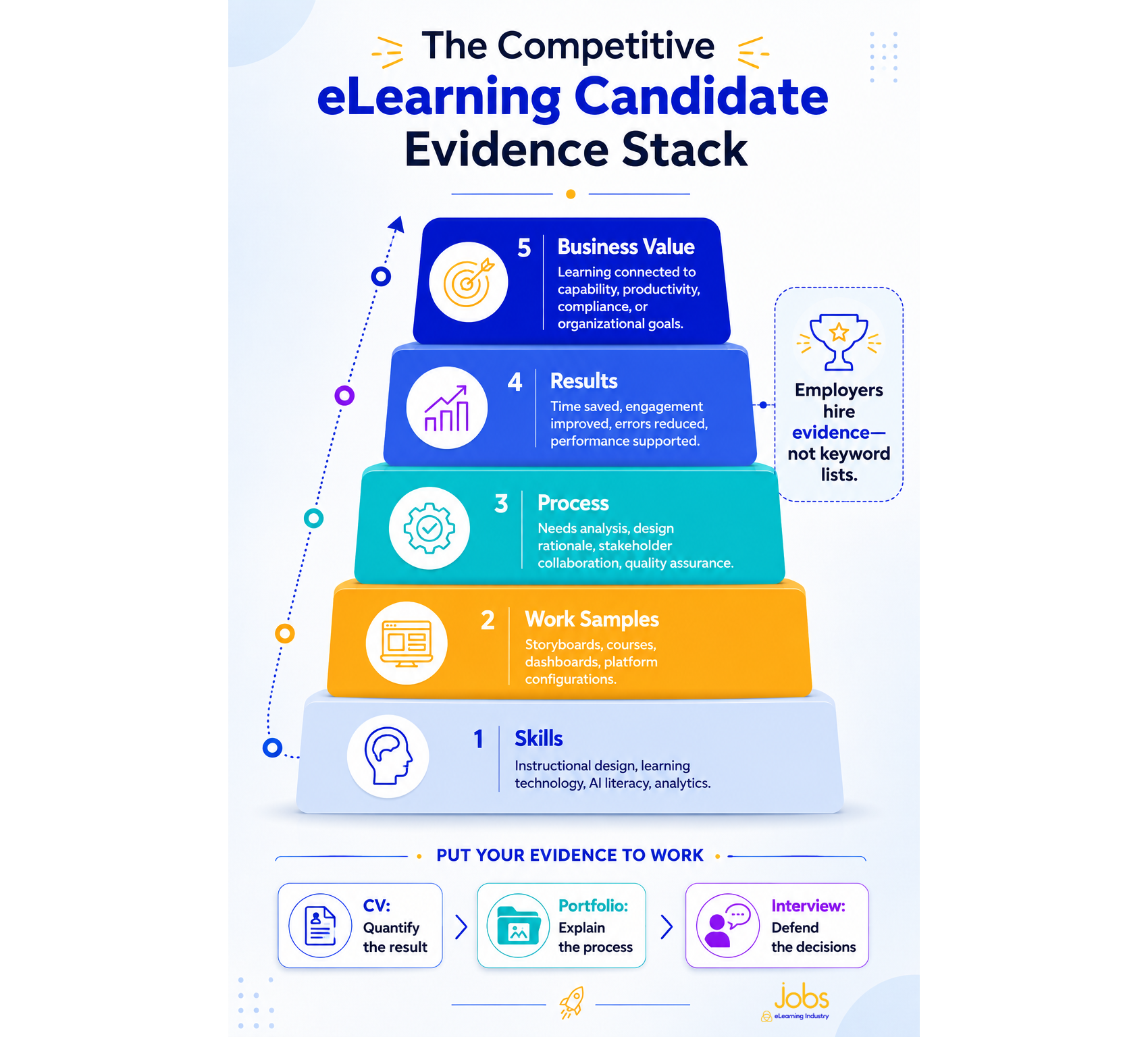
Skills-based hiring values real examples. Instructional Designers and eLearning Developers should add short case studies that explain the problem, audience, limits, design choices, what was delivered, and the outcome. If you are changing careers, you can make sample projects, but be sure to label them as concept work.
Useful portfolio evidence includes:
- A needs analysis linked to a business problem
- A storyboard and finished module
- An accessible learning sample
- A platform implementation or migration summary
- Evaluation data and resulting improvements
3. Measurement Skills Differentiate Candidates
Employers want proof that learning actually changed behavior or performance. Knowing how to use dashboards, assessments, LMS reports, and business metrics makes your application stronger. Choose reliable ways to measure results and explain what those numbers mean.
4. Hybrid Capability Matters More Than Location
Remote eLearning jobs are very competitive, and some employers now prefer hybrid teamwork. Good candidates can work on their own schedule, keep records of decisions, manage online projects, and work well in different formats. Looking for remote, hybrid, and in-person jobs gives you more options.
5. Specialized Knowledge Commands Attention
Generalists are still important, but having expertise in a specific area helps you stand out. Skills such as accessibility, analytics, healthcare compliance, sales enablement, customer education, platform administration, and multilingual learning are in demand.
6. Strategic And Commercial Skills Increase With Seniority
For senior roles, employers care less about creating courses and more about setting priorities, working with stakeholders, planning for team skills, managing vendors, budgeting, and delivering real results. L&D managers need to turn company goals into a learning plan. EdTech candidates may also need to understand products, customer success, implementation, or revenue.
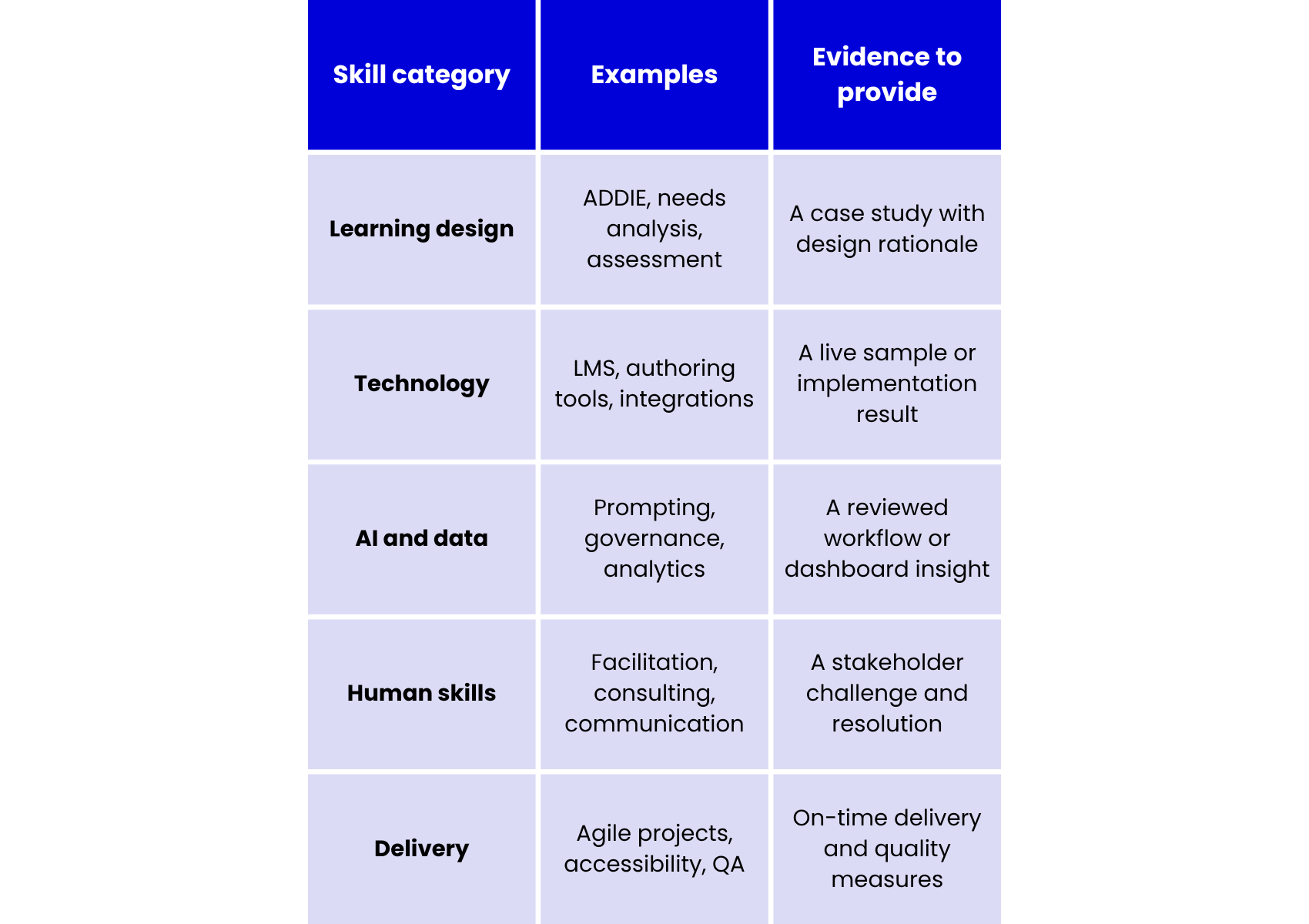
Skills Employers Look For
The table translates hiring trends into application priorities. Support each claimed skill with evidence in your CV, portfolio, or interview.
Salary Insights For Learning Careers
Salary can vary based on where you work, your industry, level of experience, area of expertise, and job duties. The national U.S. medians listed here use May 2025 data from the Bureau of Labor Statistics, published in 2026. These numbers are meant as general benchmarks, not guaranteed offers. Be sure to check current local job listings as well.
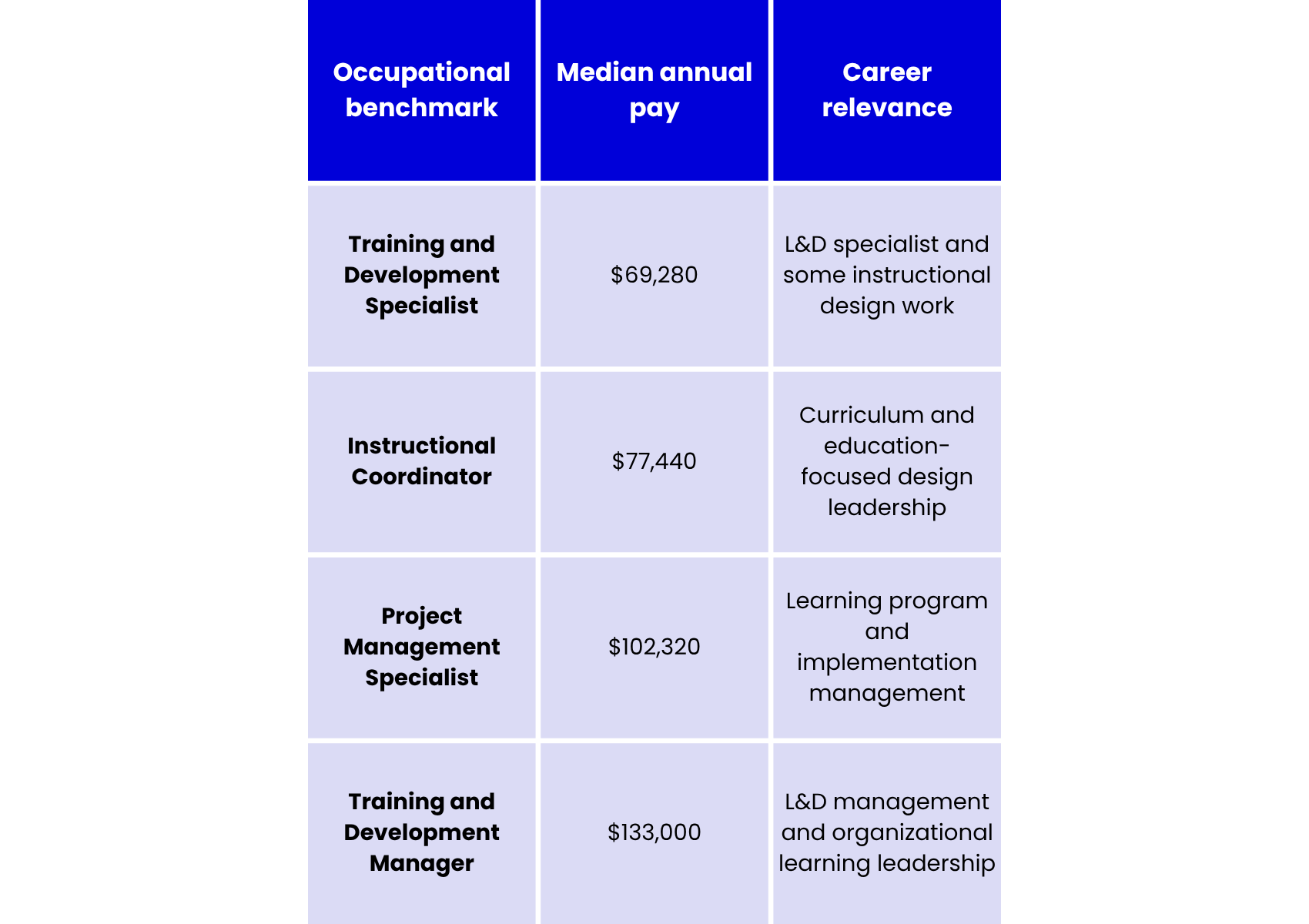
The table shows that pay typically increases as your responsibilities grow, from creating learning materials to managing programs, budgets, teams, and results. Specialists can boost their earnings with technical skills, industry knowledge, analytics, or leadership experience. Remember to look at total compensation, not just base salary.
Explore eLearning Salaries And Career Prospects
Want to understand what different eLearning roles pay and where the strongest career opportunities are? Explore our salary guides and career outlook resources to compare roles, evaluate earning potential, and plan your next move with confidence.
- Salary Guides
- eLearning Salaries In 2026: What Different Roles Really Pay
- Is eLearning A Good Career In 2026? Job Outlook & Salary Trends
How To Respond To These Hiring Trends
Pick a job you want, then look at 15 to 20 job postings. Write down the skills, tools, requirements, and results that show up often.
1. Update your CV to match what employers are looking for, and use numbers to show your results whenever you can.
2. Create two or three examples for your portfolio that show how you work, make decisions, and get results.
3. Get ready to share stories in interviews about handling disagreements, adapting to changes, tracking progress, and learning from mistakes.
4. Work on one important skill you’re missing by taking a course, joining a project, trying a new assignment, or volunteering.
5. Set up job alerts that match your interests. This way, you can apply early without having to check lots of job boards every day.
If you’re changing careers, show how your past experience fits the new role. For example, teachers can highlight their skills in leading groups and designing lessons. Project managers can focus on delivering results and working with different people. Marketers can point to their work in researching audiences, analyzing data, and teaching customers.
Turn Hiring Trends Into Your Next Career Move
See which eLearning and L&D roles are hiring, learn what employers expect from candidates, and discover how recruitment practices are changing. Use these practical guides to focus your job search and prepare a stronger application.
- Top Skills Employers Look For In eLearning Professionals (2026 Guide)
- Top eLearning & L&D Jobs Hiring Right Now
- Recruiting Process Optimization: Strategies To Hire Faster In 2026
FAQs About Hiring Trends
1. What are the biggest hiring trends in eLearning and L&D?
The most important trends include growing demand for AI literacy, stronger portfolio evidence, learning analytics, specialized domain knowledge, and strategic business alignment. Employers want candidates who can create learning efficiently and demonstrate why it works.
2. Are eLearning and L&D careers growing?
Yes. U.S. employment for training and development specialists is projected to grow 11% from 2025 to 2035, much faster than the average for all occupations.
3. Which eLearning jobs are most in demand?
Demand varies by industry, but commonly advertised paths include Instructional Designer, eLearning Developer, L&D Specialist, LMS Administrator, Learning Experience Designer, customer education professional, and L&D Manager.
4. Do I need AI skills for an Instructional Design job?
Not every employer requires them, but responsible AI literacy is increasingly valuable. Focus on practical uses, quality review, data protection, bias awareness, and measurable workflow improvements rather than tool names alone.
5. How can I enter L&D without experience?
Choose a target role, translate relevant experience, learn foundational design methods, and create portfolio samples based on realistic problems. Contract, volunteer, or internal projects can provide credible evidence.
6. What should I include in an eLearning job alert?
Use several related titles, your preferred location, remote or hybrid options, seniority, and important specialties. Review alerts regularly and refine filters when results become too broad.
Jobs {{total_jobs_count}}
{{pagination_label}}
No jobs were found.
Loading...
{{notification.msg}}