
How To Find Qualified Candidates: Recruitment Strategies For The Right Hire
Finding people to fill an open position is usually not the hardest part of recruiting. The real challenge is finding qualified candidates who have the right skills, understand the opportunity, and are genuinely interested in joining your team.
This challenge is even greater now, as employers compete for people with specialized skills and candidates are more selective about where they work. Many professionals look closely at salary, flexibility, career growth, company culture, leadership, and the hiring process before saying yes to a job. In fields like Learning and Development, HR, and EdTech, the pool of experienced candidates is especially small.
As a result, effective hiring requires more than publishing a vacancy and waiting for applications. Employers need a clear candidate profile, a strong sourcing strategy, an informative job posting, and a hiring process that keeps qualified people engaged.
If you are asking how to find people for your team, start by improving the entire recruitment process rather than relying on a single channel.
Key Takeaways
- To hire successfully, start by clearly outlining the role, the skills you need, and the type of person who would be a great fit.
- Try different ways to find candidates. This helps you connect with more qualified people.
- Write clear job postings and build a trustworthy employer brand. This attracts candidates who are a better match and improves application quality.
- Keep your hiring process organized and move quickly. This helps prevent losing good candidates along the way.
- Use specialized job platforms to find professionals who have the right industry experience for your roles.
Are you looking for skilled eLearning and L&D professionals?
Discover how targeted job postings can connect you with candidates whose experience and skills closely match your open positions.
Start By Defining The Right Candidate
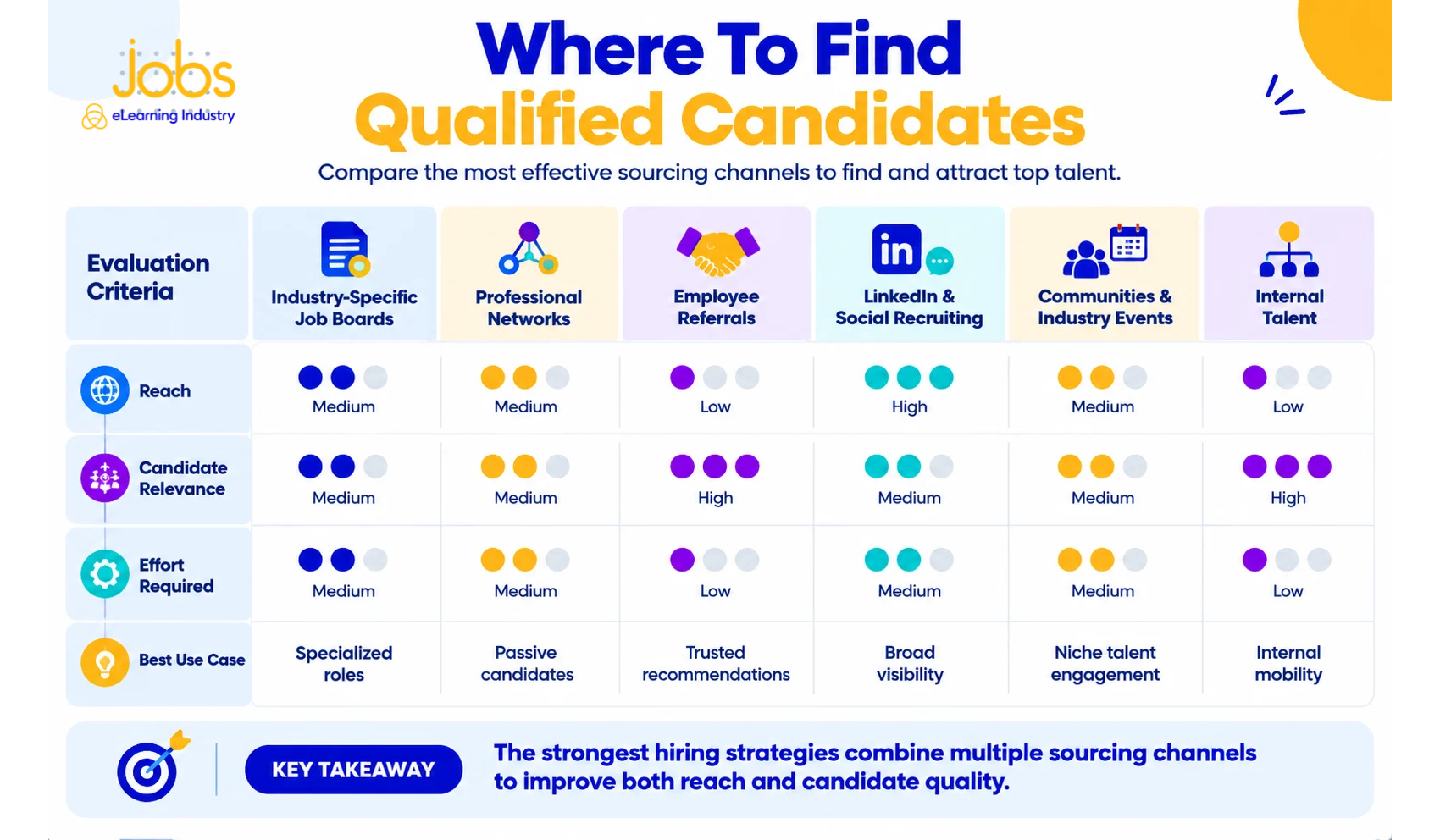
Before deciding where to find job candidates, define exactly who you are trying to reach.
One of the most common hiring problems begins before candidate sourcing even starts. When hiring managers do not agree on the skills, experience, and responsibilities required for a position, recruiters may attract large numbers of applicants without finding many strong matches.
A clear ideal candidate profile gives your recruitment strategy a starting point.
Identify The Skills The Role Actually Requires
Start by thinking about the actual work this person will do.
For example, an Instructional Designer might need to know about instructional design models, authoring tools, learning management systems, working with stakeholders, and developing assessments. But not every Instructional Designer needs advanced skills in video production, graphic design, LMS administration, or programming.
Figure out which skills are essential for good performance and which ones are just nice to have. Making this distinction helps employers avoid limiting their candidate pool too much.
Decide What Experience Is Necessary
Years of experience can be a helpful guideline, but they should not take the place of looking closely at what someone can actually do.
Think about what candidates should have done before to be successful in this job.
For instance, if you are hiring a Training Manager, it may be more important that the person has managed learning programs, worked with stakeholders, and measured training results than whether they have held the exact title "Training Manager" for a certain number of years.
This way, you can also spot candidates who have useful experience from other roles.
Separate Must-Have And Nice-To-Have Qualifications
Split your requirements into two groups:
1. Must-have qualifications: Skills, experience, certifications, or knowledge that candidates genuinely need to perform the role.
2. Preferred qualifications: Capabilities that would strengthen an application but could reasonably be learned after hiring.
If you list too many preferred qualifications as must-haves, good candidates might decide not to apply.
Prioritize Values Alignment Over "Culture Fit"
Employers often talk about "culture fit" when hiring. But this can get too subjective if it just means hiring people who think, communicate, or act like current employees.
It is more helpful to ask whether the candidate's working values align with the organization's.
Think about expectations for things like teamwork, accountability, communication, focus on learning, trying new things, flexibility, or decision-making. These are easier to explain and judge fairly.
How To Find Qualified People
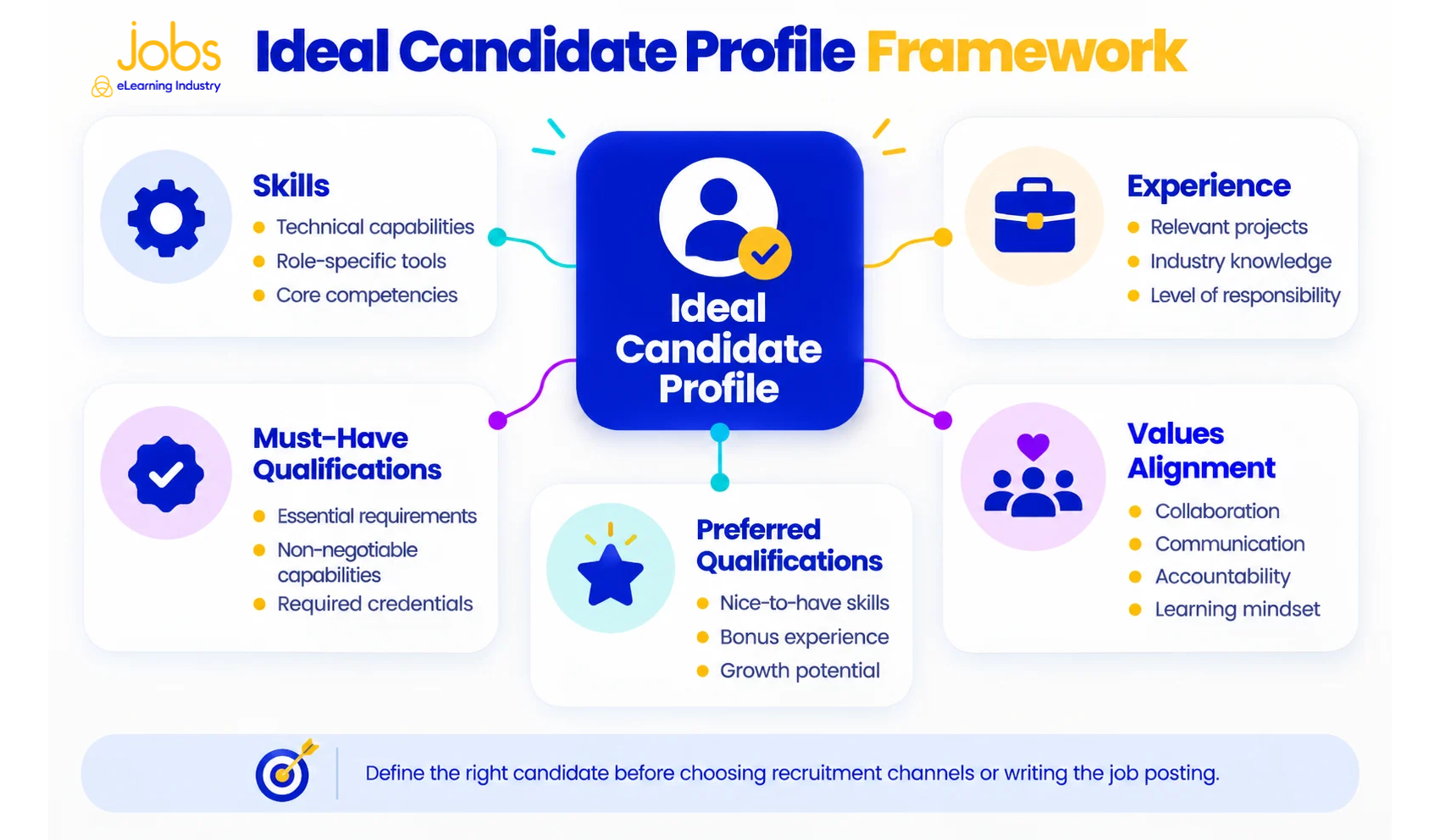
There is no single best recruitment channel for every position. The best way to find candidates depends on the role, level of seniority, required skills, location, and the talent available. Usually, using a mix of recruitment channels works better than relying on just one.
If you are researching how to find people for your team, consider the following channels.
Industry-Specific Job Boards
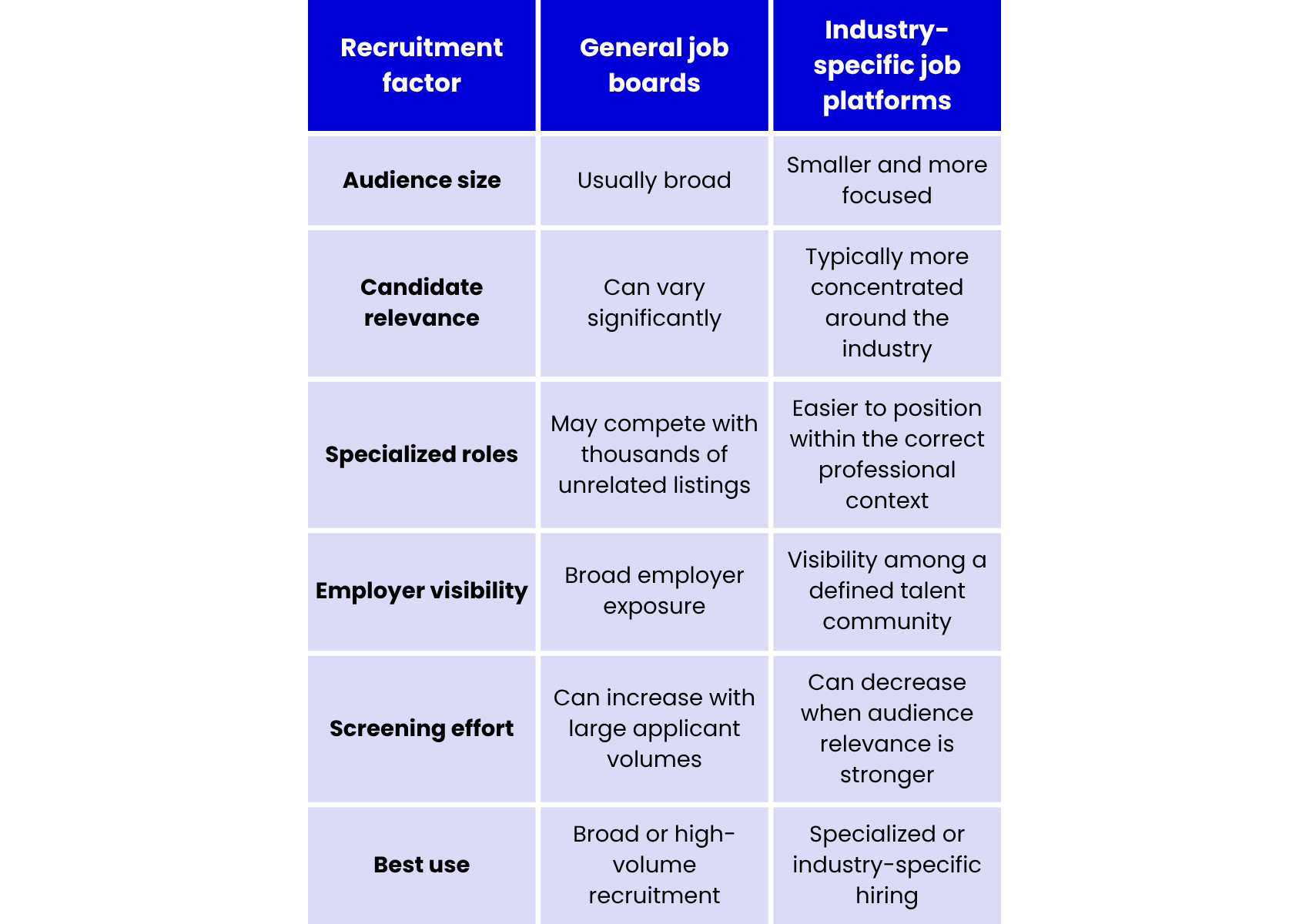
Specialized job boards target a specific profession, industry, or group of people. For employers, this helps balance reaching enough people with finding the right fit. General job boards may bring in many applicants, but industry-specific sites make it easier to connect with people who already work in the field or want to join it.
For example, if you are looking for Instructional Designers, Learning Experience Designers, L&D specialists, training professionals, or EdTech talent, it helps to post jobs where these professionals already look for opportunities.
Industry-specific platforms are especially helpful when a job needs special terms, too, such as tools, experience, or professional know-how.
Professional Networks
Professional networks help employers connect with candidates who might not regularly check job listings. Hiring managers and recruiters can use their connections with former colleagues, professional groups, partners, alumni, and industry contacts to spread the word about a job opening.
The goal should not simply be to ask, "Do you know anyone looking for a job?" Instead, provide enough information for contacts to recognize a relevant candidate. Don't forget to mention the role, key responsibilities, essential skills, location or working arrangement, and level of experience.
Employee Referrals
Employees often know people in their field who could be a good fit for your organization. Therefore, a well-organized employee referral program can help you find candidates, especially for specialized roles. However, referrals should add to your overall hiring strategy, not replace it. Relying too much on personal networks can limit the diversity of candidates.
Be careful, though; ensure you use the same screening and interview process for both referred and non-referred candidates.
LinkedIn And Social Recruiting
Professional social networks let recruiters search for people by job title, skills, industry, employer, and experience. These networks are especially helpful for finding passive candidates, or professionals who are not actively applying but might be interested in the right job.
Social recruiting is more than just reaching out directly. Sharing job openings on company pages, through employee networks, in professional groups, and in subject-matter communities can help more people see them.
So, the best outreach is specific. Tell the person why their background fits the role instead of sending a generic message.
Communities And Industry Events
Industry communities can be a great resource when you need to hire for roles that call for specific expertise. You can find candidates through professional associations, online groups, conferences, webinars, networking events, local meetups, and specialist forums.
These spaces offer more than just a place to post job openings. Employers can learn what professionals care about, which skills are in demand, and how candidates describe their work. By taking part regularly, you build credibility well before you need to fill a position.
Internal Talent
Sometimes, the best person for the job is already part of your team. Promoting internal mobility helps you keep valuable knowledge in the company and gives employees a chance to grow in their careers.
Before looking outside the company, think about whether someone on your team has the right skills, could move into the role from another position, or could be trained for it. This approach works well for jobs where it takes time to learn your company's systems, customers, processes, or products.
Write Job Postings That Attract Better Candidates
Even the best recruitment strategies may fall short if the job posting turns away qualified candidates. A good job posting should make it easy for someone to see what the role involves, what they'll do, which qualifications are important, and why the job is worth considering.
Begin with a job title that people are likely to search for and recognize. While creative internal titles like "Learning Ninja" or "Enablement Rockstar" might fit your company culture, most candidates look for standard titles like "Instructional Designer," "L&D Manager," or "Training Specialist."
Then, describe the main responsibilities by focusing on the actual work, instead of listing every possible task.
Being transparent is also important. Whenever you can, share helpful details about salary, work arrangements, location, benefits, career growth, who the role reports to, and what the hiring process looks like.
The goal isn't to get everyone to apply. A well-written posting helps the right candidates see that the job fits their background, and lets others decide it's not for them.
For a more detailed breakdown, see Job Postings: How to Write, Optimize, and Attract the Right Candidates.
Strengthen Your Employer Brand
Attracting candidates starts long before you post a job opening and continues after.
Before applying, many candidates research the organization to determine what working there might actually be like. They may visit the company's website, career pages, social profiles, employee reviews, and leadership content before deciding whether to continue. This is why employer branding is an important part of recruitment.
Build An Informative Career Page
A useful career page should answer practical questions candidates have about the organization.
Share what your company does, how teams work together, what employees can expect day-to-day, and what growth opportunities you offer. Try not to use only broad phrases like "great culture" or "fast-paced environment." Giving specific details is more believable.
Use Employee Perspectives
Employee testimonials give potential applicants real examples of what it's like to work at your company.
The best testimonials talk about real experiences, like career growth, teamwork, learning opportunities, interesting projects, flexibility, or support from leaders. Testimonials should sound like they come from real employees, not just marketing messages.
Explain Growth Opportunities
Opportunities for career development can affect whether someone decides to apply or accept a job offer.
Employers should explain how people can build new skills, take on more responsibility, access training, or move into different roles. This is especially important if you want to attract ambitious professionals in fast-changing fields like L&D and EdTech.
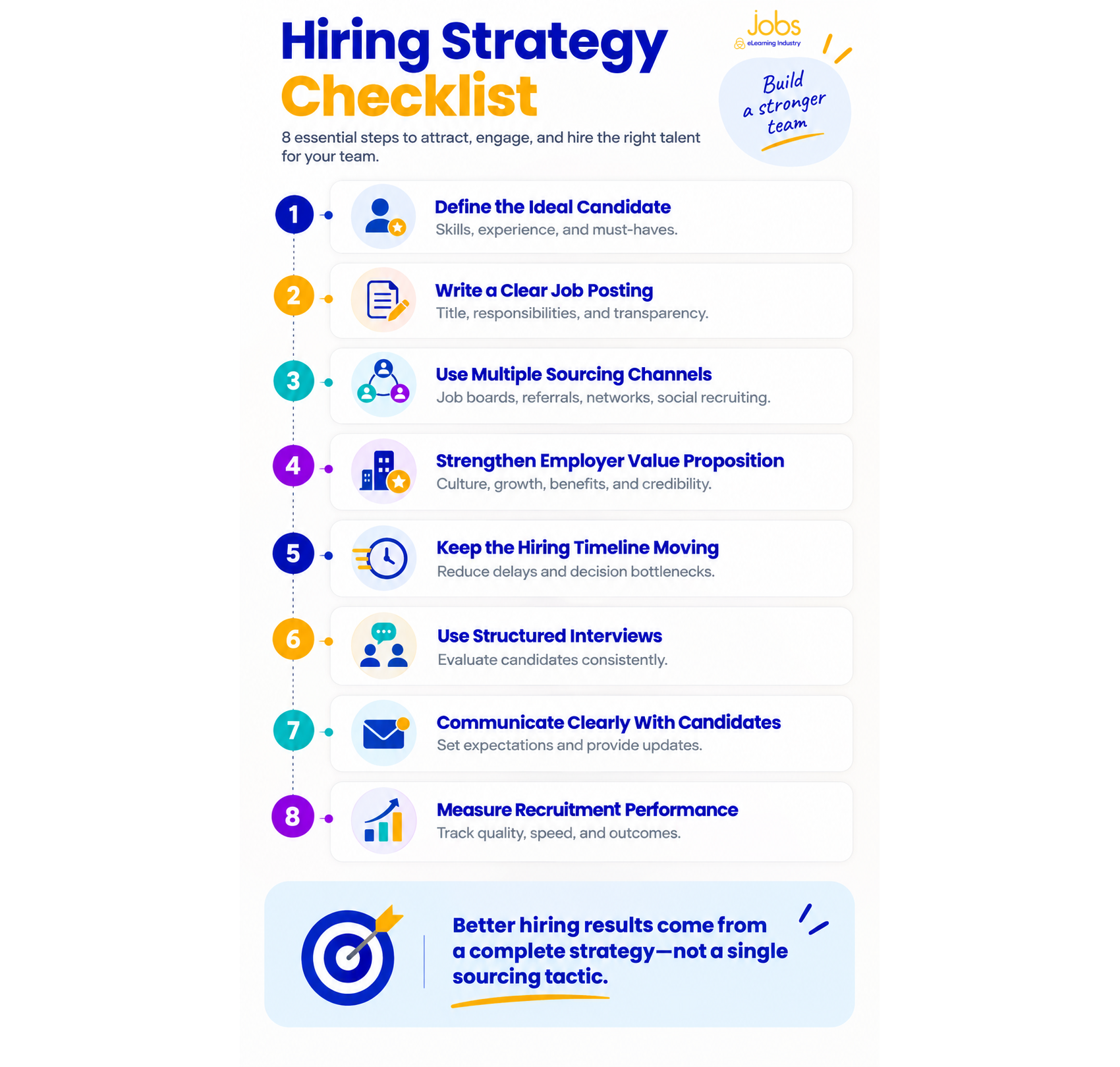
How To Find People For Your Team: Building A Structured Hiring Process
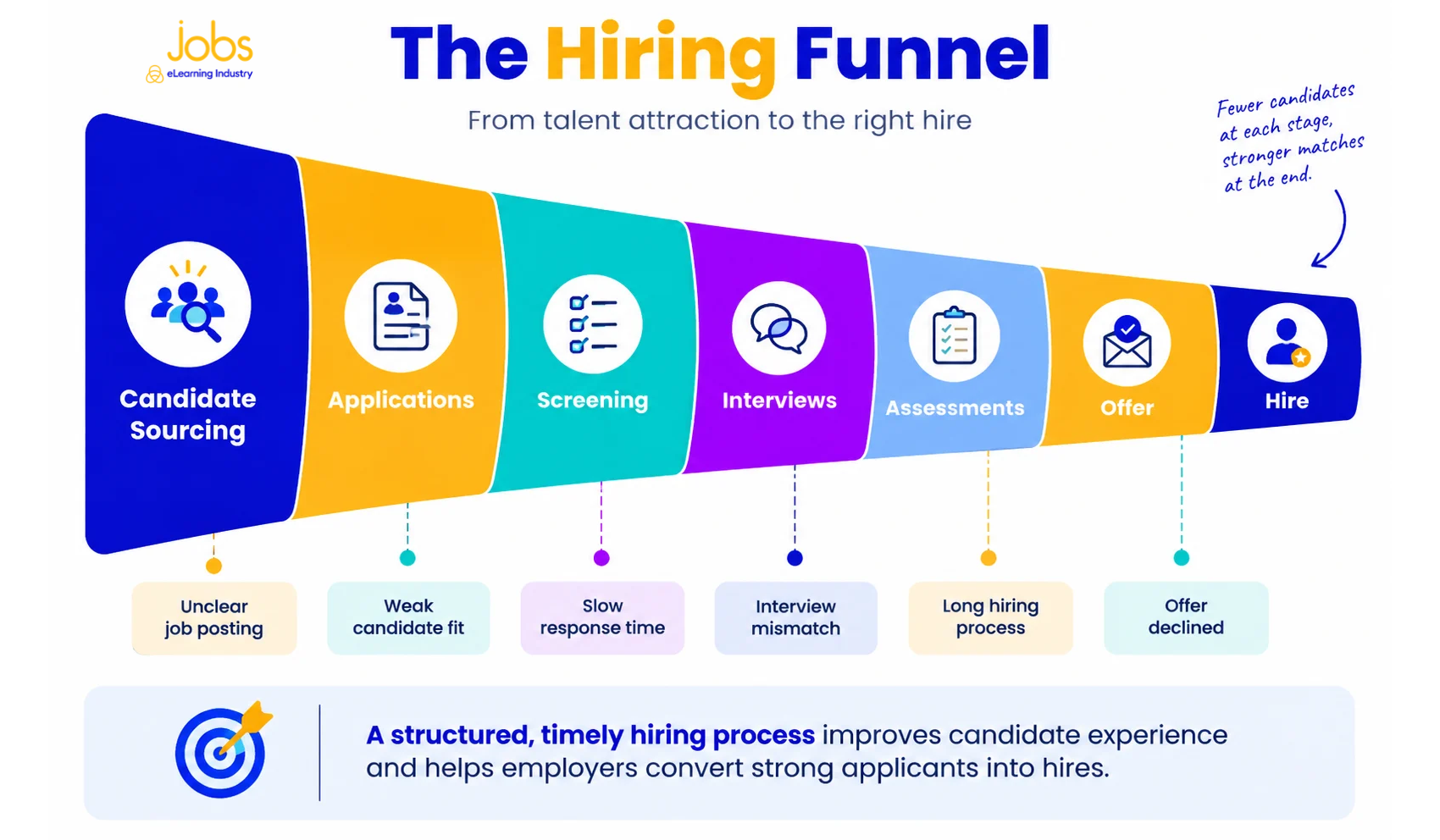
Finding qualified candidates is just one part of successful recruiting. Employers also need a process that helps them spot the best applicants without slowing things down.
A structured hiring process usually has five main stages.
1. Screen Against Defined Criteria
Check applications to see if they meet the must-have qualifications you set before you started looking for candidates.
Screening should focus on finding real proof of relevant skills and experience, not just matching keywords or past job titles.
For some jobs, a portfolio can give extra proof of skills. For example, Instructional Designers and Learning Experience Designers can show their approach with project samples, case studies, storyboards, or other examples from their portfolio.
2. Use Structured Interviews
Ask everyone applying for the same job the same set of main questions. Structured interviews make it easier to compare answers and help reduce the impact of first impressions. Questions should test areas directly connected to the role.
For additional guidance, employers can review Training Manager Interview Questions for Hiring Managers and relevant role-specific interview resources.
3. Use Assessments Only When They Add Value
Work samples can help employers see practical skills, but any assignments should match the level of the job. Avoid asking candidates to do long, unpaid projects that involve real work for your company.
If you need to give an assessment, explain what it measures, how long it should take, and how it will be used in your decision.
4. Communicate Throughout The Process
Let candidates know what to expect at each step.
Tell them about the main hiring stages, what will happen next, who they will meet, and if there will be any assessments. If the timeline changes, let candidates know instead of leaving them in the dark.
For a deeper look at reducing unnecessary delays, see Recruiting Process Optimization: Strategies to Hire Faster In 2026.
5. Make Decisions Against The Role Criteria
When making the final decision, go back to the requirements you set at the start.
Choose the candidate who shows the clearest proof they can do the job, not just the one who seemed most confident in the interview.
Common Hiring Mistakes That Reduce Candidate Quality
Recruitment challenges do not always come from a shortage of talent. Sometimes, the way you hire can actually lower the quality of your candidates. Some hiring mistakes recur.
Unrealistic Job Requirements
Listing too many required skills can keep good candidates from applying.
Look at each job requirement and ask if someone really needs it on day one. If a skill can be learned during onboarding, list it as preferred instead.
Slow Hiring Decisions
Strong candidates often interview with several employers at once. If your hiring process takes too long, top applicants may drop out or accept another job.
You still need to evaluate candidates carefully, but try to avoid delays from unclear roles, too many interviews, or slow approvals.
Poor Candidate Communication
When employers do not communicate with candidates, it leaves candidates uncertain about their status in the hiring process. Even if employers cannot make a quick decision, it helps candidates to know if they are still being considered and what the next steps will be.
A candidate's experience during the hiring process can affect whether they accept a job offer and how they view the company's reputation.
Generic Job Ads
If a job posting is too vague, it might attract more applicants, but not necessarily more qualified ones. Candidates need to know the job's purpose, main duties, required skills, and other important details before they apply.
Relying On One Sourcing Channel
Each recruitment channel connects with a different group of potential candidates. Relying only on one job board, social network, or referral source can limit both the quality and variety of candidates you find. Look at performance data to see which recruitment channels bring in the best candidates.
Recruiting Metrics That Matter
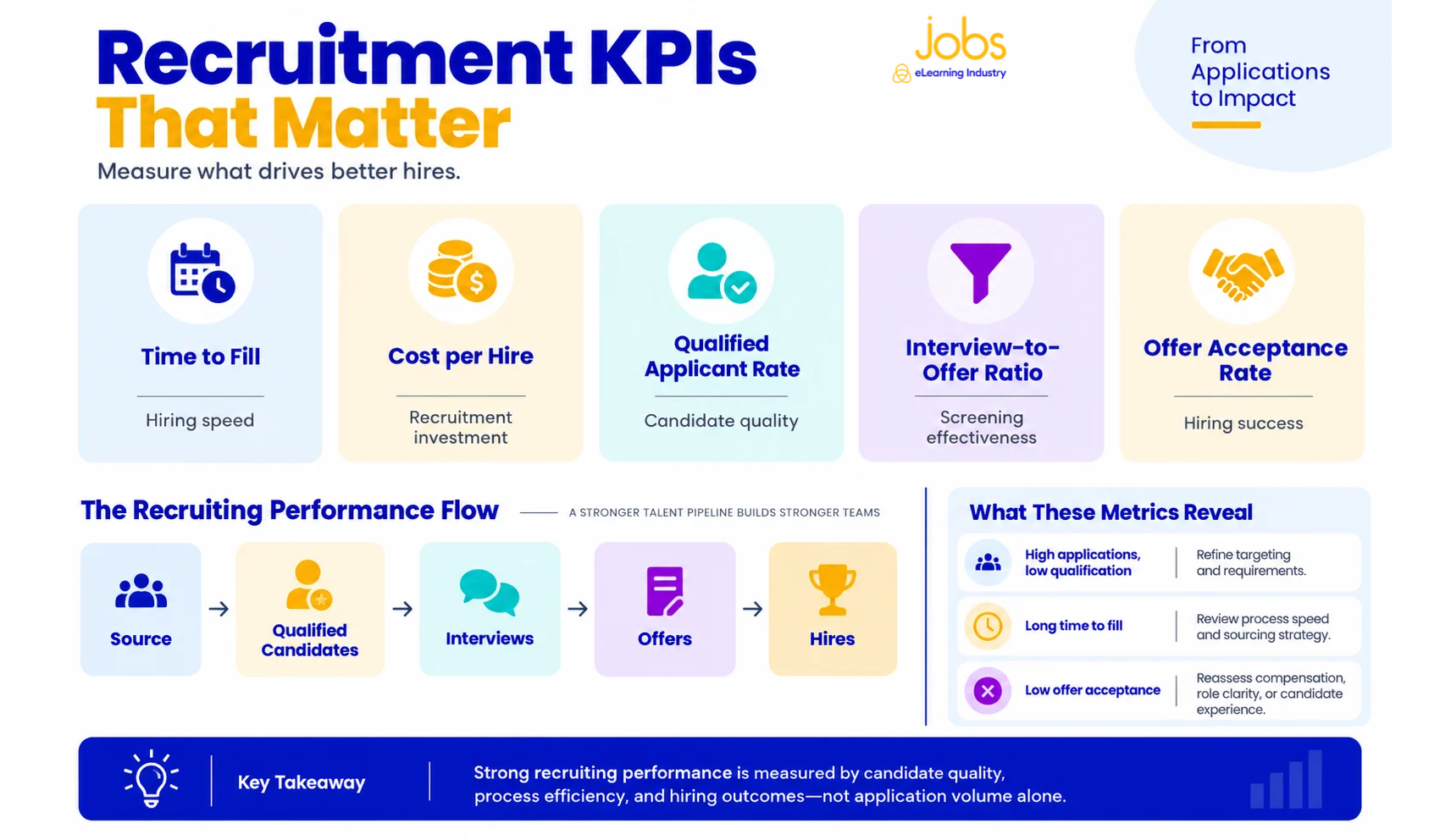
Recruiting metrics show employers if their hiring strategies are leading to better results. Counting applications alone does not tell the whole story. For example, a campaign with 300 applications but only five good candidates is less effective than one with 60 applications and 20 strong matches. Therefore, it is better to focus on metrics that measure efficiency and the quality of candidates.
1. Time-To-Fill
Time-to-fill tracks how many days it takes to hire someone for an open job. If time-to-fill is increasing, it could mean there are problems finding candidates, the job requirements are too strict, interviews are delayed, decisions are slow, or the pay is not competitive.
2. Cost-Per-Hire
Cost-per-hire shows how much it costs to fill a job opening. This can include costs like advertising, recruitment software, agency fees, recruiter hours, assessments, events, or referral bonuses, depending on the company. It is important to consider both cost and candidate quality, not just to spend as little as possible.
3. Qualified Applicant Rate
The qualified applicant rate indicates how many applicants meet the job's main requirements. This is one of the most helpful ways to judge how well different recruitment channels are working. If one platform brings in fewer applications but more qualified candidates, it can be more valuable than a source that just gets a lot of applications.
4. Interview-To-Offer Ratio
This ratio tells you how many people you need to interview before making a job offer. If the conversion rate is low, it might mean the screening criteria are too broad, interview standards are not clear, or the sourcing strategy is bringing in the wrong candidates.
5. Offer Acceptance Rate
The offer acceptance rate shows how many candidates say yes to a job offer out of all the offers you make. If good candidates often turn down offers, look into things like pay, flexibility, job expectations, how fast you hire, your company's reputation, and how you communicate during hiring.
Why Specialized Job Platforms Help You Find Better Candidates
General job boards are helpful for reaching many candidates, especially for common or high-volume jobs. Still, reaching people is just one part of successful hiring. When hiring for specialized roles, though, employers also need to make sure their job postings are relevant to the right candidates. Industry-specific job platforms connect employers with professionals who already work in a certain field or are looking to move into it.
If your organization is looking to hire learning and talent professionals, understanding this difference can really matter.
Jobs by eLearning Industry lets employers share job openings with professionals who are interested in Learning and Development, HR, training, and EdTech roles.
These roles can include:
2. Learning Experience Designer
6. EdTech specialist or manager
Organizations evaluating broader changes in the talent market can also explore Hiring Trends in eLearning & L&D.
Ready to build your team?
Publish your next opportunity on Jobs by eLearning Industry and connect with professionals actively looking for roles in Learning and Development, HR, and EdTech.
FAQs About How To Find People For Your Team
1. How do you find qualified candidates for a job?
Begin by clearly outlining the role, listing the skills, experience, and qualifications you need. Use different ways to find candidates, like job boards for your industry, professional networks, referrals, social media, and specialist groups. Keep track of which sources bring in the best applicants to make your future hiring even better.
2. What are the best ways to find people for your team?
The best ways to find people depend on the job and the industry. You can use a mix of job platforms, LinkedIn, referrals, professional groups, industry events, online communities, and your own employees. Using more than one method usually helps you reach more relevant candidates than sticking to just one.
3. How can employers attract better candidates?
To attract better candidates, post clear job ads, share honest details about the job and pay, talk about growth opportunities, and build a strong employer reputation. Moving quickly and having a clear hiring process also helps, since good candidates often have other options.
4. What recruitment strategies improve candidate quality?
Good recruitment strategies start with knowing what your ideal candidate looks like and separating must-have skills from nice-to-have ones. Use targeted ways to find people, set up clear interviews, and track how many qualified applicants you get. Focus on finding the right fit, not just getting more applications.
5. Are industry-specific job boards better for hiring specialized talent?
Job boards for specific industries are helpful for specialized roles because they reach people with the right background. General job boards might get you more applicants overall, but specialist sites connect you with candidates who already know the industry, which can save time when reviewing applications.