?
{{job.title}}
{{job.company_name}}
Private Employer
Remote Learning Jobs
Remote learning jobs are quickly becoming popular across fields such as corporate learning, EdTech, higher education, healthcare, and technology. More organizations now look for people who can create digital courses, run learning platforms, lead online training, and help employees build new skills from any location.
If you are changing careers, starting out in instructional design, or looking for senior remote L&D roles, you can find opportunities in almost every industry.
This guide covers the most common remote learning jobs, typical salaries, key skills, career paths, and tips to help you get hired. You will also learn which roles align with your experience and how employers evaluate applicants.
What Are Remote Learning Jobs?
Remote learning jobs support online education, employee training, digital learning, and skill development within organizations. These roles do not require you to work in a physical office.
People in these jobs usually work with teams in different locations. They use learning technology, project management tools, video calls, and Learning Management Systems (LMSs) to get their work done.
Common employers include:
- Corporate L&D departments
- EdTech companies
- Universities
- Government agencies
- Healthcare organizations
- Consulting firms
- Software companies
- Nonprofits
Popular remote learning jobs include:
- Remote Instructional Designer
- Learning Experience Designer (LXD)
- eLearning Developer
- LMS Administrator
- Learning Consultant
- Corporate Trainer
- Learning Technologist
- Curriculum Designer
- Learning Program Manager
- Training Specialist
Never Miss a Remote Learning Opportunity
The best remote learning jobs can fill quickly, especially for popular roles like Instructional Designer, eLearning Developer, Learning Experience Designer, and LMS Administrator. Create personalized job alerts to receive new opportunities that match your skills, preferred location, experience level, and career goals.
Popular Remote Learning Jobs And What They Do
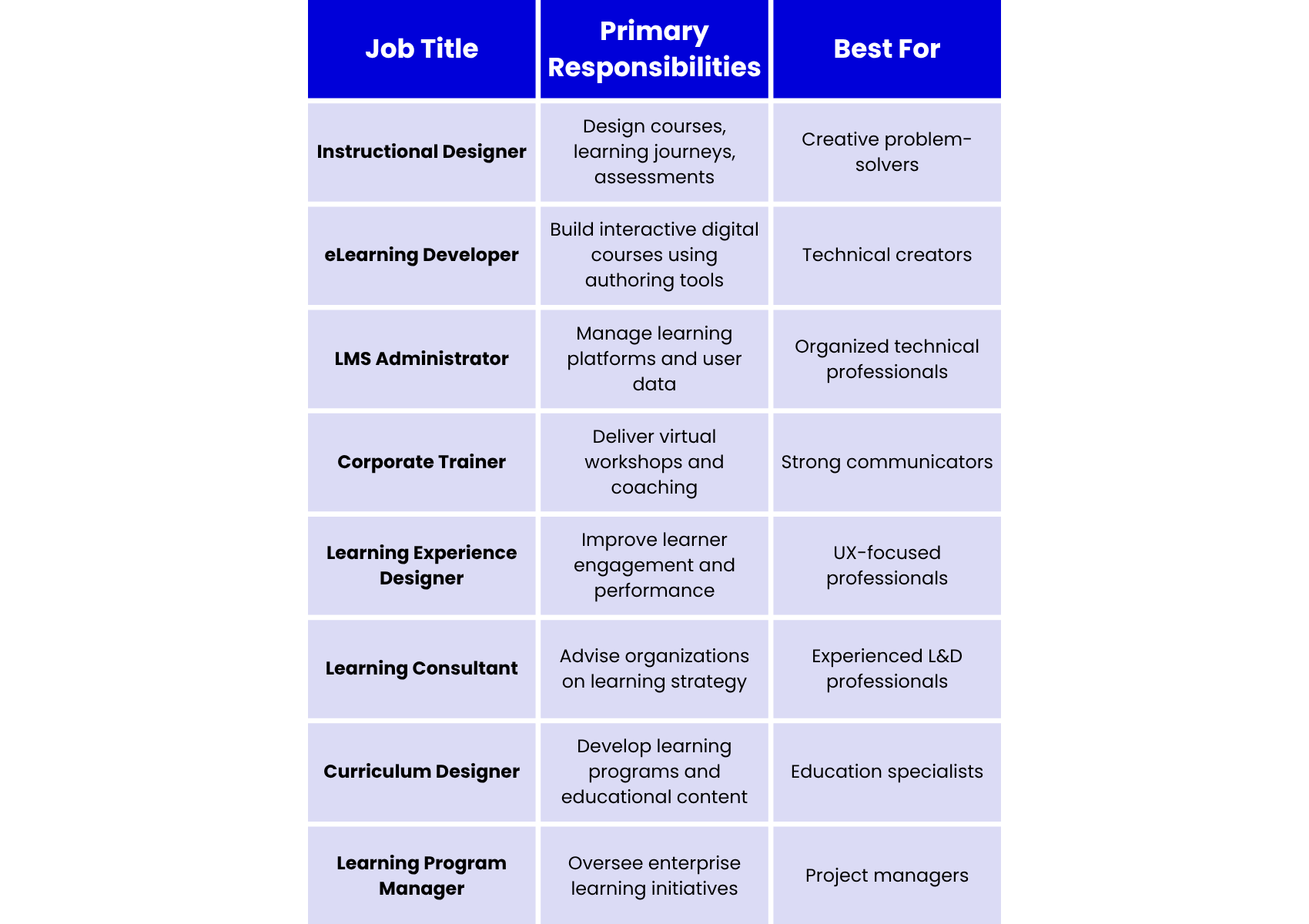
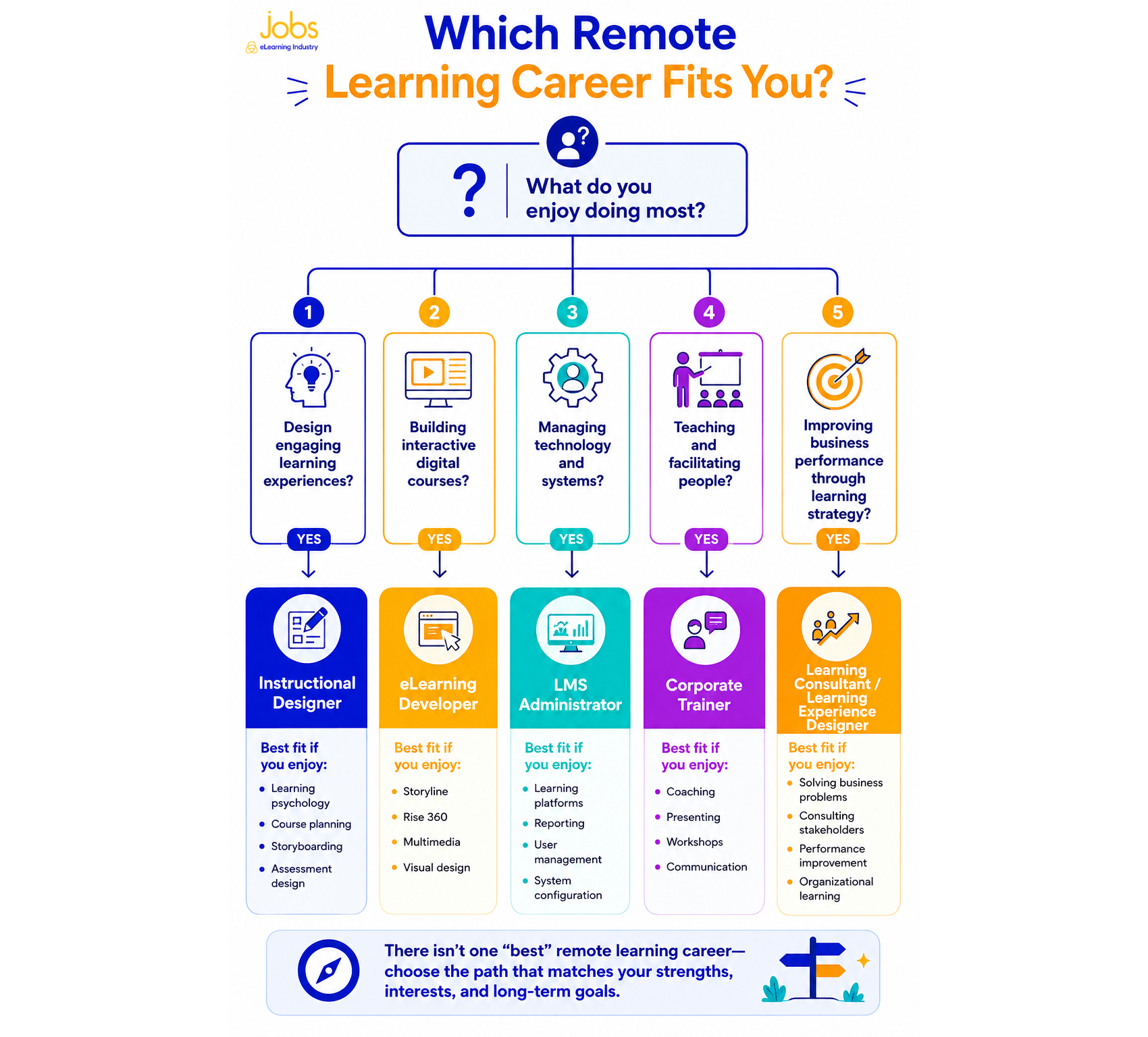
The table below highlights some of the most common remote learning jobs, what they involve, and who might enjoy them most. You can use it to compare your options before choosing where to focus your job search.
 What Skills Do Employers Want For Remote Learning Jobs?
When hiring for remote learning jobs, employers look for people who know how to teach and can work well with others online.
Some important technical skills are:
- Instructional Design
- Adult learning principles
- Storyline 360
- Adobe Captivate
- Rise 360
- LMS administration
- SCORM and xAPI
- Learning analytics
- AI-assisted content creation
- Accessibility standards
Employers also look for these professional skills:
- Written communication
- Stakeholder management
- Project management
- Time management
- Facilitation
- Problem-solving
- Collaboration across distributed teams
- Presentation skills
Experience with these tools is often a plus:
- Microsoft Teams
- Zoom
- Miro
- Asana
- Trello
- Notion
- SharePoint
Prepare for your next interview with confidence.
A strong application doesn't stop with finding the right opportunity. Learn how to write an eLearning CV that stands out, practice the most common interview questions, and build the communication skills employers look for during the hiring process.
- How To Write An eLearning CV That Gets Interviews
- Top Job Interview Questions And How To Answer Them (2026 Guide)
- Icebreaker Questions For Work: 50+ Ideas For Interviews, Meetings, And Team Building
Remote Learning Job Salaries
Salaries for remote learning jobs depend on your area of expertise, the industry, the size of the company, and where you live. Technical roles such as eLearning Developers and Learning Experience Designers usually pay more because they require both teaching know-how and digital skills.
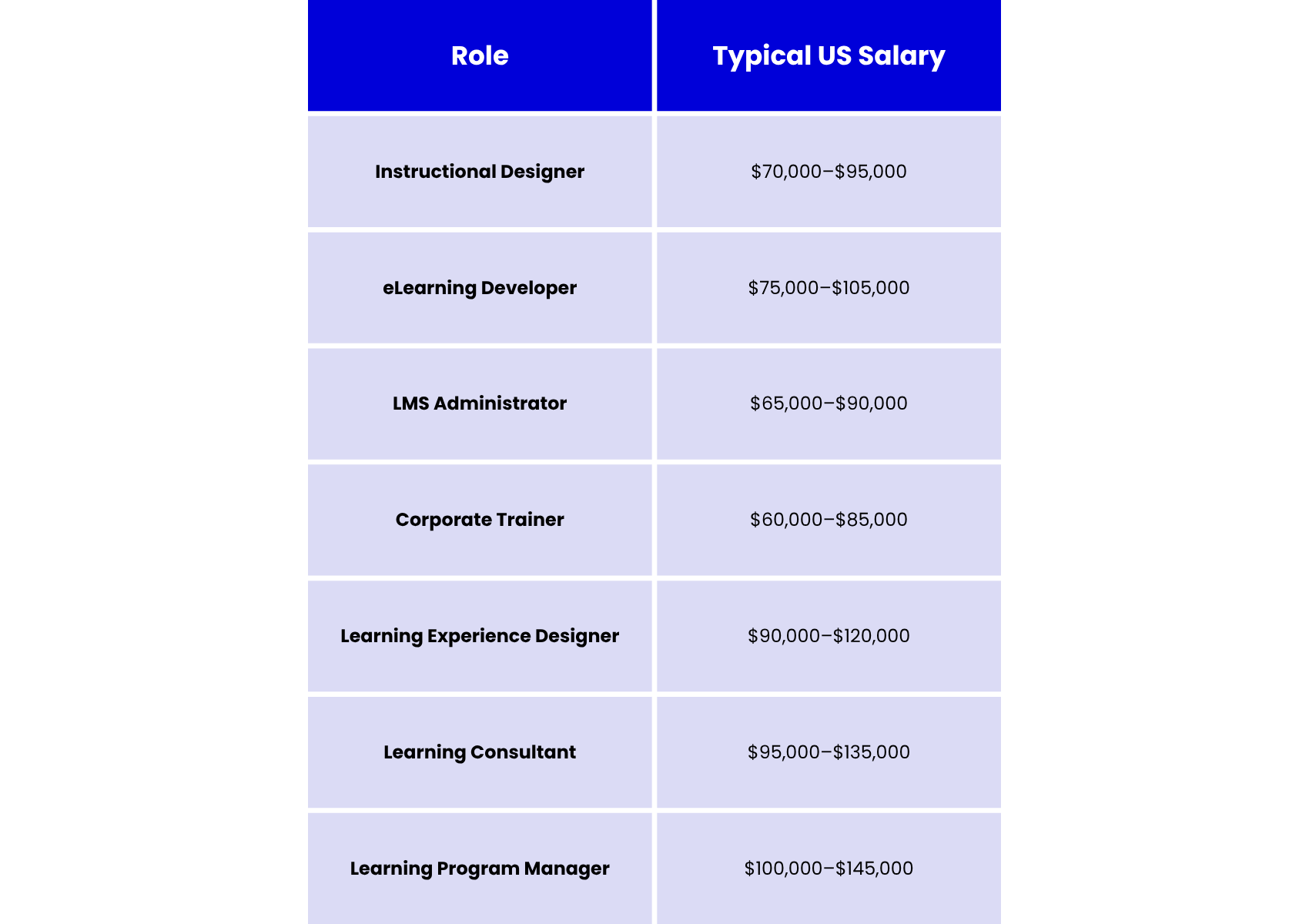
Salary ranges are approximate and vary by employer, experience, industry, and location.
Career Path For Remote Learning Professionals
Remote learning careers can lead to many different opportunities, depending on what you enjoy and where your strengths lie. Some people focus on creating content, while others move into areas like strategy, leadership, or learning technology.
Here’s a typical career path you might follow:
Entry level
- Learning Coordinator
- Training Assistant
- Junior Instructional Designer
↓
Mid level
- Instructional Designer
- LMS Administrator
- eLearning Developer
- Corporate Trainer
↓
Senior level
- Senior Instructional Designer
- Learning Experience Designer
- Learning Consultant
- Learning Strategist
↓
Leadership
- Learning Manager
- Director of Learning & Development
- Head of Learning Experience
- Chief Learning Officer
Ready to launch your eLearning career?
Whether you're changing careers or applying for your first remote learning role, having the right strategy can make all the difference. Explore our expert career guides to learn which skills employers value most, how to break into the industry, and the steps you can take to land your first eLearning job with confidence.
- How To Transition Into An eLearning Career (From Any Background)
- How to Get a Job in eLearning: A Step-by-Step Career Guide
- Top Skills Employers Look For In eLearning Professionals (2026 Guide)
How To Get A Remote Learning Job
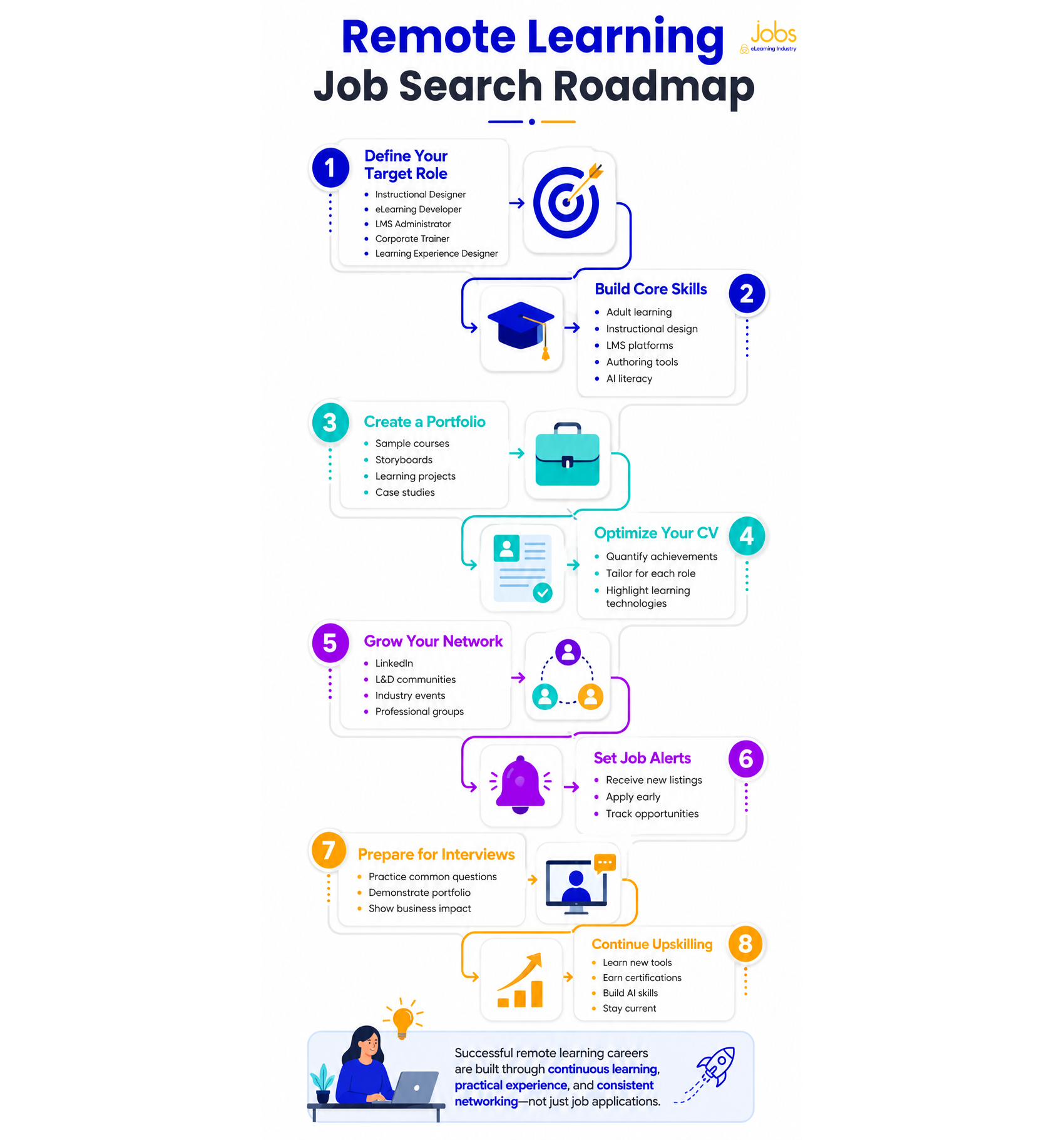
You don’t always need years of experience to start a career in remote learning and development. Many employers now look for proven skills, strong portfolios, and clear project results instead of just following traditional career paths.
Here are some ways to boost your chances:
- Put together a portfolio that shows your Instructional Design work.
- Learn how to use Storyline 360 or Rise 360.
- Get to know the main LMSs used in the field.
- Create a few sample learning projects to show your skills.
- Show measurable business results on your CV to demonstrate your impact.
- Try to get some experience leading virtual training sessions.
- Learn how to use AI tools to create learning content.
- Customize each job application to fit the specific role you want.
- Connect with other learning and development professionals to grow your network.
- Set up job alerts, so you hear about new remote learning opportunities as soon as they appear.
Let Employers Find You
Looking for your next remote learning role? Upload your CV to make it easier for employers searching for Instructional Designers, eLearning developers, LMS administrators, corporate trainers, and other learning professionals to discover your profile.
Why Remote Learning Careers Continue To Grow
More organizations now see learning as an important part of their overall business strategy, not just a separate training task. As companies focus on workforce development, digital transformation, and AI-powered learning, they need more professionals who can create engaging online experiences, manage learning technology, and show real business results.
Remote work lets employers hire specialized talent from around the world. This creates more opportunities for instructional designers, eLearning developers, LMS administrators, and learning strategists. People who have learning expertise, digital skills, data literacy, and strong teamwork skills are well-positioned for long-term career growth as the field evolves.
Remote Learning Jobs By Experience Level
You don’t need years of experience for every remote learning job. This field has roles for people at all stages, whether you’re just starting out or already leading big projects. If you know which jobs fit your skills, you can focus your search, find real opportunities, and plan your next step.
The table below shows common remote learning jobs by experience level. It also lists the qualifications employers usually look for and ways you can stand out as a candidate.
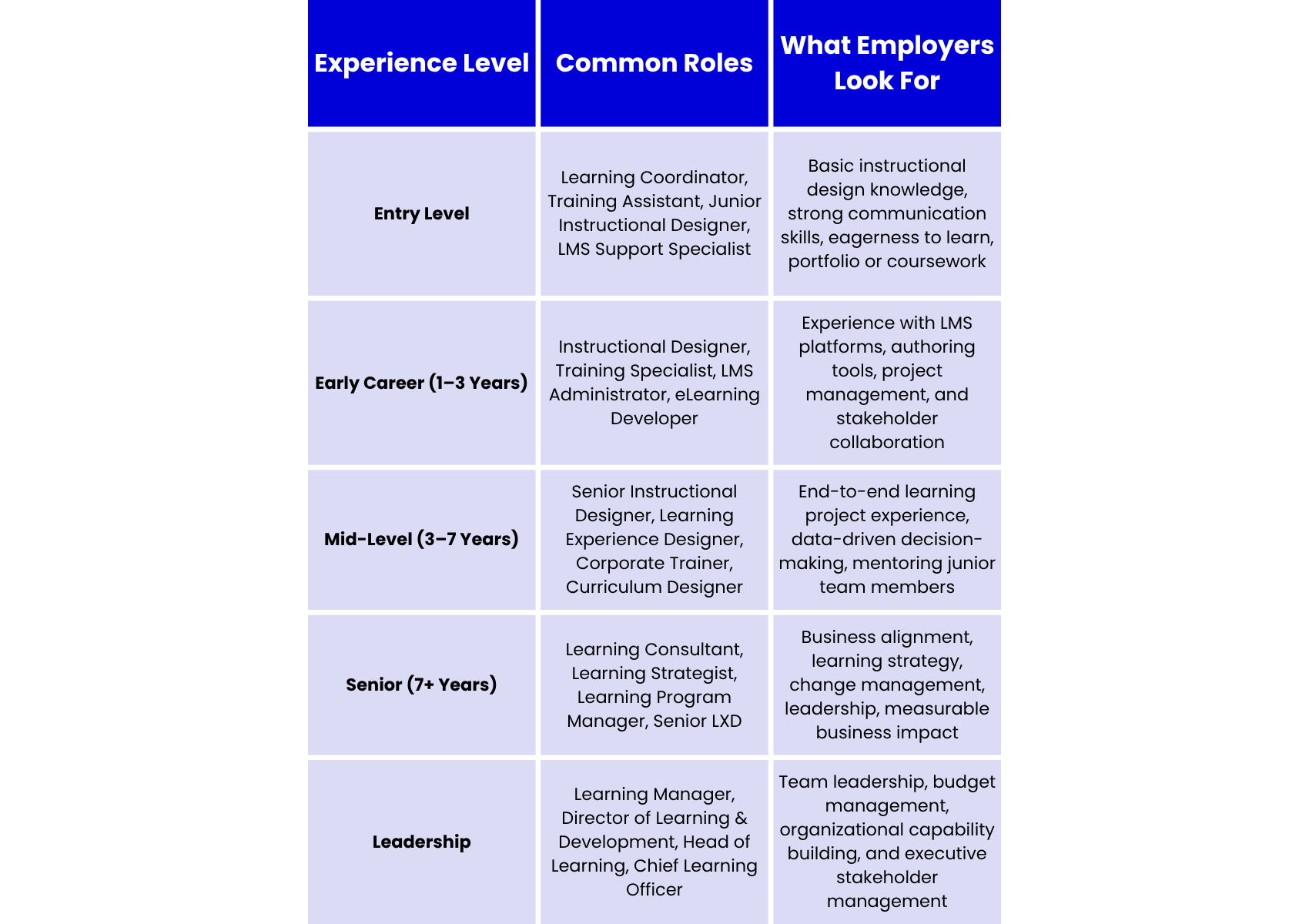 No matter your career stage, employers now look for real proof of your skills, not just your job titles. Building a strong portfolio, showing clear project results, using learning technologies well, and working smoothly with remote teams can help you stand out for remote learning jobs. As you gain more experience, learning about analytics, AI tools, accessibility, and learning strategy can lead to better-paying and more senior roles.
FAQs About Remote Learning Jobs
1. What are remote learning jobs?
Remote learning jobs are positions that support online education, employee training, Instructional Design, learning technology, and digital learning experiences while working remotely.
2. What qualifications do I need for remote Instructional Designer jobs?
Most employers look for Instructional Design knowledge, familiarity with adult learning principles, experience with authoring tools, a strong portfolio, and excellent communication skills.
3. Can beginners get remote learning jobs?
Yes. Entry-level opportunities include Learning Coordinator, Junior Instructional Designer, Training Specialist, and LMS Support roles. Building a portfolio and gaining practical experience can significantly improve your chances.
4. Which remote learning jobs pay the most?
Senior Learning Experience Designers, Learning Consultants, Learning Program Managers, and Learning Directors typically earn the highest salaries because they combine strategic leadership with specialized expertise.
5. Are remote eLearning jobs in demand?
Yes. Organizations across industries continue investing in digital learning, employee upskilling, compliance training, and learning technologies, creating sustained demand for remote learning professionals.
6. How can I increase my chances of getting hired at remote learning jobs?
Develop an impressive portfolio, tailor your CV for every application, learn industry-standard authoring tools, gain experience with LMS platforms, earn relevant certifications, and apply consistently while setting job alerts for new opportunities.
Jobs {{total_jobs_count}}
{{pagination_label}}
No jobs were found.
Loading...
{{notification.msg}}