?
{{job.title}}
{{job.company_name}}
Private Employer
Training And Skills Development Jobs
Training and skills development jobs help organizations create teams that are knowledgeable, productive, and ready for the future. People in these roles design, deliver, manage, and evaluate learning programs to boost employee performance, close skills gaps, and help businesses grow.
As companies put more focus on upskilling, reskilling, digital transformation, and ongoing learning, the need for Learning and Development (L&D) professionals is rising in many industries. Whether you are new to the field or want to move forward in your career, training and skills development jobs offer many paths, good pay, and strong long-term opportunities.
What Are Training And Skills Development Jobs?
Training and skills development professionals create learning experiences that help employees develop new knowledge, improve performance, and achieve organizational goals.
Common responsibilities include:
- Designing training programs.
- Developing learning materials.
- Facilitating workshops and courses.
- Managing learning technologies.
- Measuring training effectiveness.
- Supporting employee development initiatives.
- Conducting skills gap analyses.
- Creating leadership development programs.
- Implementing onboarding programs.
These roles exist across corporate learning, higher education, healthcare, technology, government, manufacturing, and professional services sectors.
Set Up Job Alerts
The demand for training, Learning and Development, and workforce development professionals continues to grow across industries. Stay ahead of new opportunities by creating personalized job alerts tailored to your skills, experience level, and career goals.
Why Set Up Job Alerts?
- Receive relevant job opportunities directly in your inbox.
- Be among the first applicants for newly posted roles.
- Discover training and development jobs that match your experience.
- Save time by automating your job search.
- Stay informed about salary trends and hiring demand.
Popular Training And Skills Development Roles
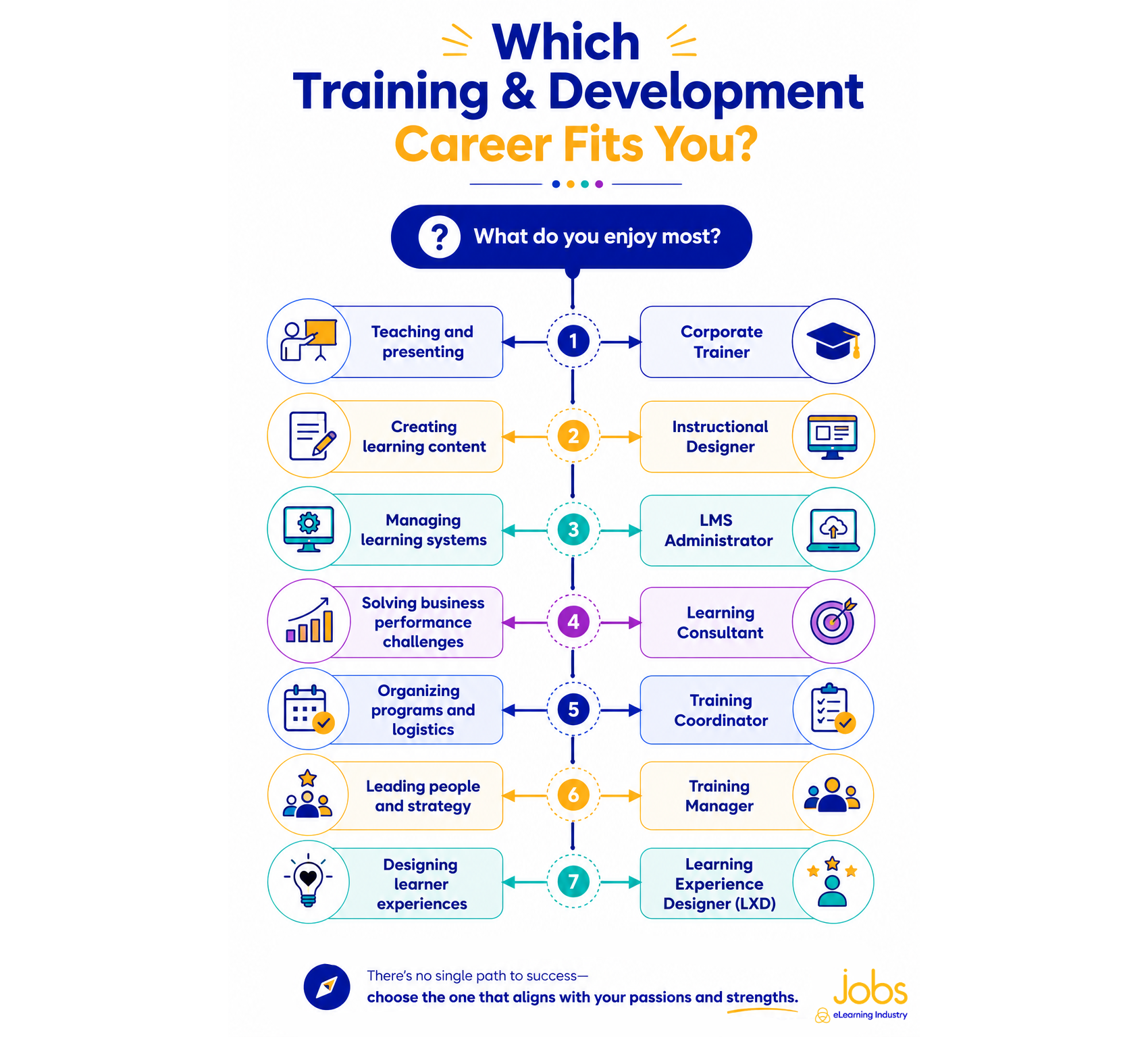
Training and skills development jobs cover a wide range of specialties, from coordinating learning programs to leading enterprise-wide talent development strategies. Some professionals focus on delivering training, while others design learning experiences, manage learning technologies, or align workforce development initiatives with business goals. Below are some of the most common roles employers hire for in learning and development (L&D), corporate training, and talent development.
- Training Coordinator: Supports the planning, scheduling, and administration of training programs and employee learning initiatives.
- Training Specialist: Delivers training sessions, develops learning materials, and helps employees build job-related skills.
- Learning and Development Specialist: Designs and manages programs that improve employee performance, engagement, and career growth.
- Instructional Designer: Creates effective learning experiences, eLearning courses, and training content using instructional design principles.
- LMS Administrator: Manages learning management systems (LMS), user enrollments, reporting, and learning technology operations.
- Corporate Trainer: Facilitates instructor-led, virtual, and blended training programs for employees across the organization.
- Learning Experience Designer (LXD): Develops learner-centered experiences that improve engagement, knowledge retention, and performance.
- Training Manager: Oversees training teams, budgets, learning strategies, and organizational development initiatives.
- Learning Consultant: Advises organizations on learning strategies, skills development programs, and workforce transformation efforts.
- Director of Learning and Development: Leads enterprise learning strategy, talent development programs, and long-term workforce capability planning.
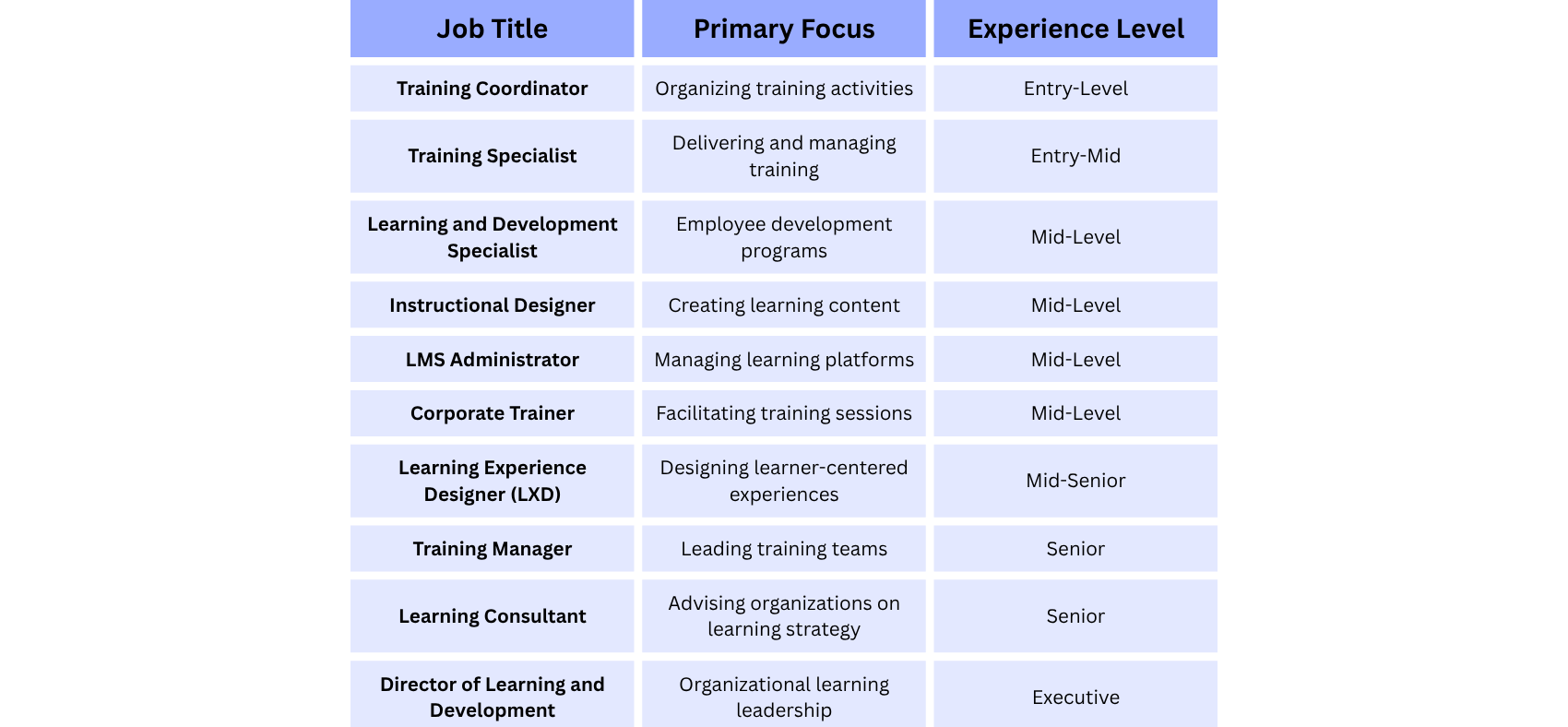
The table below provides a quick overview of these roles, their primary focus areas, and typical experience requirements.
Key Skills Employers Look For
Employers hiring for training and skills development jobs often seek a combination of learning expertise, business understanding, and communication skills.
Core Skills
- Training design
- Curriculum development
- Facilitation and presentation
- Learning needs analysis
- Stakeholder management
- Project management
- Performance consulting
- Assessment design
- Coaching and mentoring
Technical Skills
- Learning Management Systems (LMS)
- eLearning authoring tools
- Learning analytics
- Instructional Design methodologies
- Virtual classroom platforms
- Content development software
- AI-powered learning technologies
Soft Skills
- Communication
- Collaboration
- Problem-solving
- Adaptability
- Leadership
- Strategic thinking
- Creativity
What’s The Salary For Training And Skills Development Jobs?
Compensation varies based on experience, industry, location, and specialization.
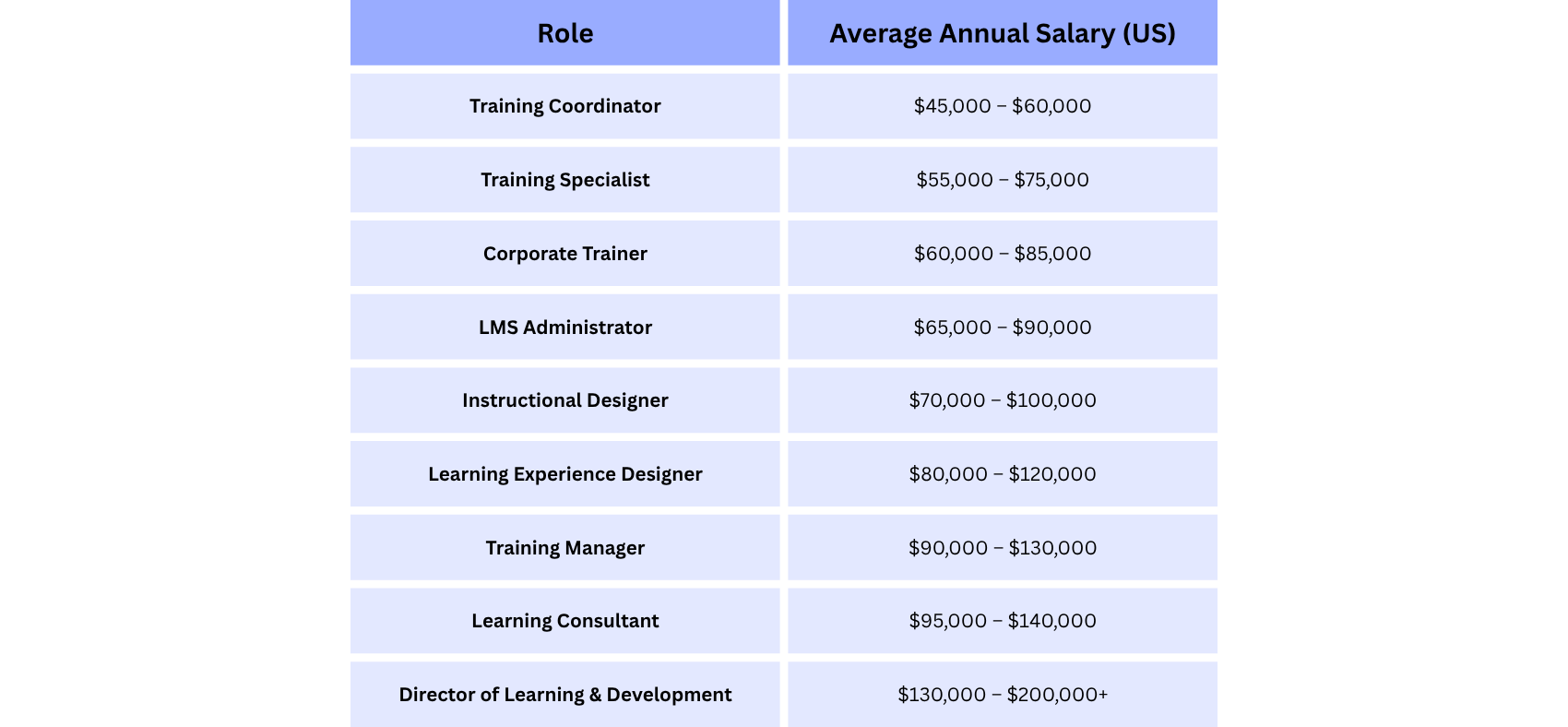
Professionals with expertise in digital learning, AI-powered training, learning analytics, and leadership development often command higher salaries.
Career Path In Training And Skills Development
Many professionals enter the field through HR, education, teaching, instructional design, or business roles.
Typical Career Progression
- Training Coordinator
- Training Specialist
- Learning and Development Specialist
- Senior Instructional Designer or Learning Consultant
- Training Manager
- Director of Learning and Development
Career advancement often depends on developing expertise in learning strategy, business alignment, digital learning technologies, and leadership.
Ready To Advance Your Career?
Whether you're looking for your first training and skills development role or your next career move, having an up-to-date CV can help you get noticed by employers actively hiring learning and development professionals.
- Apply for jobs faster.
- Get discovered by recruiters.
- Showcase your skills and experience.
- Receive relevant job opportunities.
- Stay competitive in a growing field.
Why Training And Skills Development Jobs Are Growing
Organizations are under steady pressure to keep up with new technologies, workforce changes, and shifting business needs. Because of this, learning is now seen as a key business function, not just a support role.
Some of the main factors driving this growth are:
- Digital transformation initiatives
- AI and automation adoption
- Workforce upskilling programs
- Leadership development investments
- Remote and hybrid work environments
- Skills-based talent strategies
- Continuous learning cultures
Professionals who can show clear business results from learning programs are especially valuable.
Continue Exploring Career Opportunities
Interested in building a career in learning, training, and workforce development? These resources can help you understand the industry, discover in-demand roles, explore salary expectations, and identify the skills employers are looking for.
- Is eLearning A Good Career In 2026? Job Outlook & Salary Trends
- eLearning Salaries In 2026: What Different Roles Really Pay
- Top Skills Employers Look For In eLearning Professionals (2026 Guide)
- How To Transition Into An eLearning Career (From Any Background)
- Entry-Level eLearning Jobs: What To Apply For With No Experience
- How to Get a Job in eLearning: A Step-by-Step Career Guide
How To Get Started
If you're new to the field, focus on building foundational knowledge and practical experience.
Recommended steps:
- Learn Instructional Design principles.
- Gain experience with LMS platforms.
- Develop facilitation skills.
- Create a portfolio of learning projects.
- Earn relevant certifications.
- Network with L&D professionals.
- Follow industry trends and technologies.
Many employers value demonstrated skills and project experience as much as formal education.
Get Ready For Your Next Job Application
Once you've identified the right career path, the next step is standing out to employers. These practical job search resources can help you improve your CV, write stronger applications, prepare for interviews, and find more opportunities.
- How To Write An eLearning CV That Gets Interviews
- Cover Letter Sample: Templates & Examples For Every Job
- How Long Should A Resume Be? One Page, Two Pages, Or More?
- Top Job Interview Questions And How To Answer Them (2026 Guide)
- Best Job Search Engines in 2026: Where to Find the Right Job Faster
FAQs About Training And Skills Development Jobs
1. What are training and skills development jobs?
Training and skills development jobs focus on helping employees acquire knowledge, improve performance, and develop capabilities that support organizational objectives.
2. What qualifications do I need for training and development careers?
Requirements vary by role, but employers often seek experience in learning, education, HR, instructional design, business, or workforce development, along with strong communication and facilitation skills.
3. Are training and skills development jobs in demand?
Yes. Organizations are investing heavily in upskilling, reskilling, leadership development, and digital learning initiatives, increasing demand for qualified professionals.
4. What is the highest-paying training and development role?
Senior leadership positions such as Director of Learning and Development, Head of Talent Development, and Learning Strategy Consultant typically offer the highest compensation.
5. Can I move into training and development from another career?
Yes. Many professionals successfully transition from teaching, HR, operations, customer success, consulting, and subject matter expert roles into learning and development careers.
6. What skills are most important in training and development?
Instructional design, facilitation, communication, learning technology, stakeholder management, project management, and business acumen are among the most sought-after skills.
Jobs {{total_jobs_count}}
{{pagination_label}}
No jobs were found.
Loading...
{{notification.msg}}